
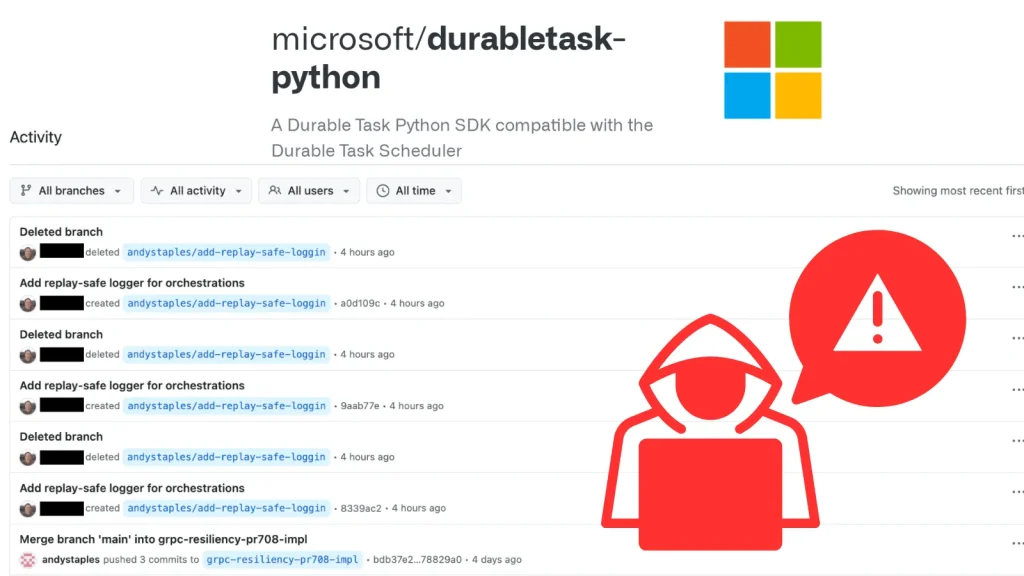
Microsoft Python Client DurableTask Compromised by TeamPCP Hackers
The Shadow Over DurableTask: TeamPCP’s Supply Chain Attack on Microsoft’s Python Client
The digital supply chain remains a prime target for sophisticated threat actors, and a recent incident involving Microsoft’s official Python workflow SDK, DurableTask, starkly underscores this reality. Security researchers at Wiz have unveiled a critical compromise: three consecutive releases of the DurableTask Python client were poisoned with a multi-cloud credential-stealing worm. This incident, attributed to the persistent TeamPCP threat group, highlights the escalating risks associated with software supply chain security, particularly for widely-used development frameworks.
TeamPCP, a group notorious for its aggressive 2026 supply chain campaign, has once again demonstrated its capability to infiltrate crucial development components. The targeting of DurableTask, Microsoft’s official Python client for the Durable Task workflow execution framework, sent ripples through the development and security communities. This post delves into the specifics of this attack, its implications, and the essential steps developers and organizations must take to mitigate such threats.
Understanding the TeamPCP Attack on DurableTask
The compromise affected DurableTask Python client versions v1.4.1, v1.4.2, and v1.4.3. These versions, intended to facilitate the development of robust, distributed applications using Microsoft’s Durable Task framework, were embedded with malicious code designed to exfiltrate sensitive cloud credentials. The method of infiltration, while still under full investigation, points towards a sophisticated supply chain attack, likely through compromised developer accounts or build pipelines.
TeamPCP’s modus operandi typically involves injecting malware into legitimate software packages. In this instance, the malicious payload was a multi-cloud credential-stealing worm, capable of targeting credentials across various cloud providers. This type of threat poses a significant risk as it can lead to widespread access to an organization’s cloud infrastructure, data breaches, and further lateral movement within compromised environments.
The Gravity of a Supply Chain Compromise
A supply chain attack, especially one targeting a foundational development tool like the DurableTask Python client, carries profound implications:
- Widespread Impact: Any organization or developer using the compromised versions would unknowingly integrate the malicious code into their applications.
- Credential Theft: The primary objective of the worm was to steal cloud credentials, granting attackers access to cloud accounts, resources, and sensitive data.
- Persistent Access: Stolen credentials can provide TeamPCP with long-term, stealthy access to an organization’s cloud environment, enabling ongoing espionage or data exfiltration.
- Trust Erosion: Such incidents erode trust in official software repositories and the integrity of the open-source ecosystem.
While a specific CVE number for this incident has not yet been publicly assigned, the nature of the compromise warrants the same level of urgency as any critical vulnerability.
Remediation Actions for DurableTask Users
If you or your organization has used or is currently using the Microsoft Python Client DurableTask, immediate action is crucial:
- Identify Affected Versions: Check your project dependencies and environments for DurableTask Python client versions
v1.4.1,v1.4.2, andv1.4.3. - Update Immediately: Upgrade to the latest known clean version of the DurableTask Python client. Microsoft and the open-source community generally move swiftly to provide clean releases following such disclosures. Always verify the authenticity of updates.
- Rotate Cloud Credentials: Assume compromise for any cloud credentials that may have been exposed through systems using the affected versions. This includes API keys, access tokens, and user passwords. Implement a comprehensive credential rotation strategy.
- Conduct Thorough Audits: Perform a security audit of all cloud environments and applications that consumed the compromised DurableTask versions. Look for any unusual activity, unauthorized access, or data exfiltration.
- Implement Supply Chain Security Best Practices: Enhance your organization’s software supply chain security measures. This includes using software composition analysis (SCA) tools, verifying package integrity, and implementing strict access controls for build systems.
- Monitor for Anomalies: Increase vigilance for suspicious network activity, unexpected cloud resource utilization, or unusual API calls within your environments.
Tools for Detection and Mitigation
Proactive security measures and effective tools are indispensable in preventing and responding to supply chain attacks. Here are some relevant tools:
| Tool Name | Purpose | Link |
|---|---|---|
| Black Duck (Synopsys) | Software Composition Analysis (SCA) for open-source component vulnerability and license management. | https://www.synopsys.com/software-integrity/products/software-composition-analysis/black-duck.html |
| Snyk | Developer-first security for finding and fixing vulnerabilities in dependencies, containers, and code. | https://snyk.io/ |
| OWASP Dependency-Check | Identifies project dependencies and checks if there are any known, publicly disclosed vulnerabilities. | https://owasp.org/www-project-dependency-check/ |
| TruffleHog | Scans repositories for exposed secrets and credentials, including API keys and tokens. | https://trufflesecurity.com/ |
| Cloud Security Posture Management (CSPM) tools | Continuously monitor cloud environments for misconfigurations, compliance violations, and threat detection. Examples include Palo Alto Networks Prisma Cloud, Wiz, Orca Security. | (Varies by vendor) |
The Evolving Threat Landscape of Supply Chain Attacks
The compromise of the Microsoft Python Client DurableTask by TeamPCP is a stark reminder that supply chain attacks are no longer theoretical threats but a continuous, active danger. As development practices increasingly rely on open-source components and complex dependency trees, the attack surface expands dramatically. Organizations must adopt a “shift left” security approach, integrating security throughout the development lifecycle, and remain vigilant against both known and emerging threats.
This incident underscores the need for robust verification processes for all third-party components, continuous monitoring of software dependencies, and immediate response capabilities when vulnerabilities or compromises are disclosed. The fight against supply chain attacks is ongoing, demanding perpetual vigilance and collaborative efforts from developers, security professionals, and major software vendors.




