
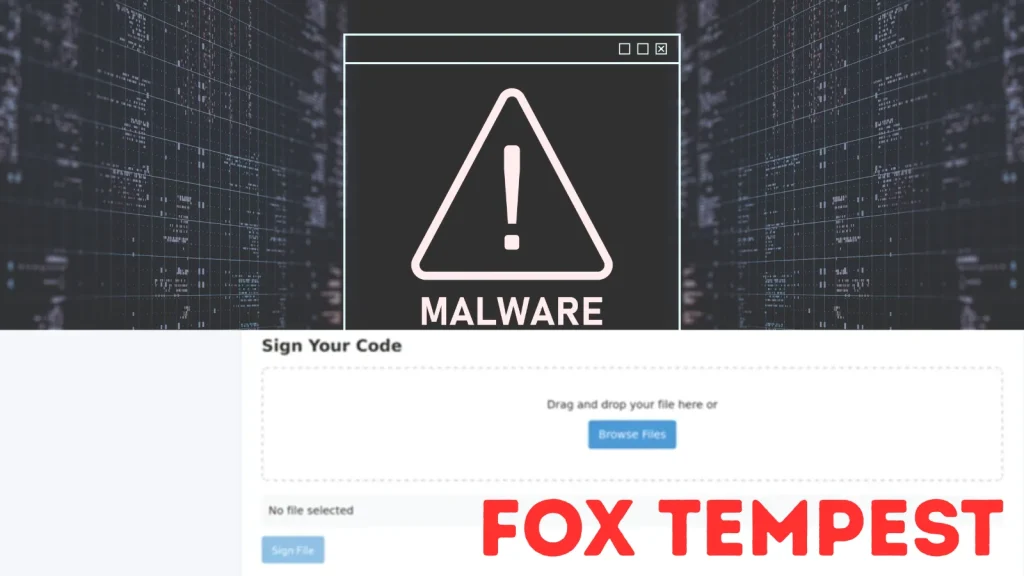
Fox Tempest Malware-Signing Service Abused Microsoft Artifact Signing to Certify Malware
The Deceptive Cloak: Fox Tempest Abuses Microsoft Artifact Signing to Certify Malware
The digital landscape is a constant battleground, where the lines between legitimate and malicious intent are increasingly blurred. A recent investigation has uncovered a disturbing trend: a financially motivated threat actor, operating under the moniker Fox Tempest, has been leveraging a sophisticated Malware-Signing-as-a-Service (MSaaS) platform. Their alarming innovation? Abusing Microsoft’s own Artifact Signing infrastructure to confer an aura of legitimacy upon their malicious code. This tactic, as reported by Cybersecurity News, allowed cybercriminals to bypass critical security controls, distributing malware seemingly blessed with a trusted digital signature.
Understanding Malware-Signing-as-a-Service (MSaaS)
MSaaS platforms represent a significant escalation in the cybercriminal toolkit. Traditionally, obtaining legitimate code-signing certificates was a complex and often expensive endeavor, requiring identity verification and adherence to stringent security practices. Fox Tempest’s MSaaS offering streamlines this process for other malicious actors, providing a service where they can submit their malware and receive it back digitally signed. This effectively democratizes a crucial evasion technique, making it accessible to a wider range of threat actors.
The core of this particular incident lies in the abuse of Microsoft’s Artifact Signing. Artifact Signing is a legitimate mechanism designed to ensure the authenticity and integrity of software components and updates within the Microsoft ecosystem. By exploiting vulnerabilities or misconfigurations within this infrastructure, Fox Tempest was able to trick Microsoft’s systems into signing their malware, transforming untrusted binaries into seemingly legitimate applications.
The Impact of Signed Malware on Security Controls
Digitally signed malware poses a profound challenge to conventional security measures. Enterprise security solutions, endpoint detection and response (EDR) systems, and even many antivirus programs rely heavily on digital signatures to differentiate between trusted and untrusted executables. A legitimate digital signature often acts as a “green light,” allowing the signed application to execute with minimal scrutiny.
- Bypassing Antivirus and EDR: Signed malware is far more likely to slip past initial security checks, as it appears to originate from a reputable source.
- Increased User Trust: Users are less likely to question the legitimacy of a program that carries a valid digital signature, increasing the likelihood of successful infection.
- Persistence and Lateral Movement: Once inside a network, signed malware can achieve greater persistence, as it may be less frequently flagged by continuous monitoring solutions.
Remediation Actions for Organizations
Combating the threat of signed malware requires a layered and proactive security strategy. Organizations must adopt a zero-trust mindset and implement robust controls that go beyond simple signature verification.
- Implement Application Whitelisting: Strict application whitelisting policies ensure that only approved and verified applications are allowed to run on endpoints. This is a powerful defense against even legitimately signed malicious executables.
- Strengthen Code Signing Certificate Management: Regularly audit and revoke any compromised or unnecessary code signing certificates. Implement multi-factor authentication for certificate access and robust lifecycle management.
- Enhance Behavioral Analysis: Focus on EDR and network security solutions that specialize in behavioral analysis. Even if malware is signed, its execution patterns and network activity can reveal its malicious intent.
- User Education: Train employees to be suspicious of unexpected software updates or installations, even if they appear to be legitimately signed. Phishing and social engineering remain primary vectors for initial compromise.
- Monitor Certificate Transparency Logs: Actively monitor certificate transparency logs for any unexpected or suspicious certificates issued for your organization’s domain or applications.
- Patch Management: Maintain a rigorous patch management program for all operating systems and applications. While not a direct remediation for signed malware, keeping systems updated reduces the attack surface for other vulnerabilities that threat actors might exploit to gain initial access.
Tools for Detection and Mitigation
Leveraging the right tools is crucial in detecting and mitigating the risks associated with signed malware.
| Tool Name | Purpose | Link |
|---|---|---|
| YARA Rules | Signature-based detection of known malware families and TTPs. While signed, specific patterns can still be identified. | https://virustotal.github.io/yara/ |
| Sysmon | Monitors and logs system activity, providing detailed insights into process creation, network connections, and file modifications. Essential for behavioral analysis. | https://learn.microsoft.com/en-us/sysinternals/downloads/sysmon |
| Endpoint Detection and Response (EDR) Solutions | Advanced threat detection, investigation, and response capabilities that can identify anomalous behavior even from signed executables. (e.g., CrowdStrike, SentinelOne, Microsoft Defender for Endpoint) | (Consult vendor specific links) |
| Application Control Solutions | Enforces whitelisting and blacklisting policies for executable files and scripts, preventing unauthorized code execution. | (Consult vendor specific links) |
| Revocation List Checkers (e.g., OpenSSL) | Verifies the validity of digital certificates against Certificate Revocation Lists (CRLs) and Online Certificate Status Protocol (OCSP) responders. | https://www.openssl.org/ |
Conclusion: The Evolving Threat of Trust Abuse
The Fox Tempest operation underscores a critical evolution in the threat landscape: the increasing sophistication of techniques designed to abuse established trust mechanisms. When threat actors can leverage seemingly legitimate infrastructure—even Microsoft’s own artifact signing—to certify their malicious payloads, the burden shifts to organizations to implement deeper, behavioral-based security controls. Relying solely on signature-based detection or the mere presence of a digital signature is no longer sufficient. Proactive defense, continuous monitoring, and a robust security posture focused on the principles of zero trust are essential to navigating this complex and ever-changing environment.




