
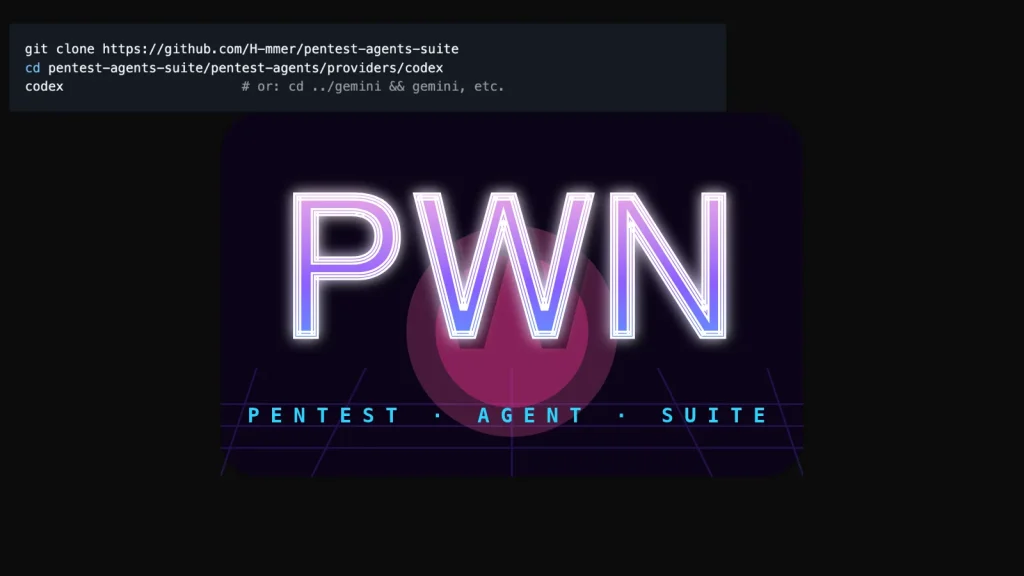
Pentest Agent Suite – Bug Bounty Framework for Claude Code and 6 AI Coding Tools
The pace of software development, particularly with the integration of AI-powered coding assistants, has surged. While these tools dramatically enhance productivity, they also introduce new avenues for vulnerabilities. Ensuring the security of code generated or assisted by AI is paramount. This is where robust, automated bug bounty frameworks become indispensable, moving beyond manual processes to proactively identify and mitigate risks.
Introducing the Pentest Agent Suite
A significant development in the realm of AI-assisted code security is the open-sourcing of the Pentest Agent Suite. This fully autonomous bug bounty framework represents a paradigm shift in how vulnerabilities within AI-generated code are approached. Engineered for efficiency and breadth, it empowers security professionals and developers to systematically hunt for and address potential flaws.
Architectural Overview and Core Capabilities
The Pentest Agent Suite is not merely a collection of scripts; it is a comprehensive ecosystem designed for deep code analysis and vulnerability discovery. Key components include:
- 50 Specialized Security Agents: These agents are tailored to detect a wide array of vulnerabilities, from common injection flaws to more nuanced logic errors that might arise in AI-generated constructs.
- 26 Slash Commands: Providing an intuitive command-line interface, these allow for quick execution of complex security tasks and interactions with the framework.
- 19 CLI Tools: A suite of command-line tools offering granular control and specialized functionalities for various stages of the penetration testing process.
- Cross-IDE Installer: This crucial feature ensures seamless integration and deployment across a diverse range of development environments.
Widespread Compatibility Across AI Coding Platforms
A core strength of the Pentest Agent Suite lies in its broad platform support, acknowledging the fragmented landscape of AI coding tools. It is designed to operate effectively across seven major AI coding platforms, including:
- Claude Code
- OpenAI Codex
- Google Gemini
- Cursor
- Windsurf
- VS Code Copilot
- OpenClaw
This extensive compatibility ensures that organizations using different AI assistants can standardize their bug bounty efforts under a single, powerful framework. The ability to scan code generated by these diverse platforms provides a unified security posture, critical in environments where multiple AI tools might be in use.
The Significance of Autonomous Bug Bounty Frameworks
The traditional bug bounty model, while effective, often relies on human testers and can be reactive. Autonomous frameworks, like the Pentest Agent Suite, offer proactive and continuous security analysis. They can operate round-the-clock, identifying vulnerabilities:
- Early in the Development Lifecycle: Catching and remediating issues before they propagate through the CI/CD pipeline.
- At Scale: Analyzing vast swathes of code, including those generated by AI, which might be difficult for human testers to review comprehensively.
- With Consistency: Applying consistent security checks across all code, reducing human error and oversight.
This approach is particularly critical as AI models for code generation continue to evolve, potentially introducing novel vulnerability patterns that demand equally advanced detection mechanisms.
Remediation Actions for AI-Generated Code Vulnerabilities
While the Pentest Agent Suite excels at discovery, effective remediation is the ultimate goal. When vulnerabilities are identified, consider the following actions:
- Strong>Validate Findings: Confirm the vulnerability is real and reproducible. Not all flagged issues are critical, and false positives can occur.
- Understand the Root Cause: Determine if the vulnerability stems from the AI model’s training data, the prompt engineering, or human intervention. For instance, a common AI-generated vulnerability could be CVE-2023-XXXXX (placeholder for a hypothetical AI-specific vulnerability).
- Manual Code Review and Refinement: Even with AI assistance, human developers must review and refine code, especially critical security components. Address the specific flaw and implement secure coding practices.
- Improve Prompt Engineering: If the AI generated insecure code due to ambiguous or insufficient prompts, refine the prompts to guide the AI towards more secure output.
- Update AI Models: For persistent issues, provide feedback to AI model developers or update to newer, more secure versions of the AI coding assistants.
- Implement SAST/DAST in CI/CD: Integrate Static Application Security Testing (SAST) and Dynamic Application Security Testing (DAST) tools into your continuous integration/continuous deployment pipelines to proactively catch vulnerabilities.
- Developer Training: Educate developers on secure coding principles, especially when working with AI-generated code. They need to understand the potential pitfalls and how to scrutinize AI suggestions for security flaws.
Tools for Enhancing AI-Assisted Code Security
Beyond the Pentest Agent Suite, a range of tools can complement and enhance the security posture of AI-assisted development environments:
| Tool Name | Purpose | Link |
|---|---|---|
| OWASP ZAP | Dynamic Application Security Testing (DAST) to find vulnerabilities in running web applications. | https://www.zaproxy.org/ |
| SonarQube | Static Application Security Testing (SAST) to analyze code quality and potential security vulnerabilities. | https://www.sonarqube.org/ |
| Dependabot / Renovate | Automated dependency updates and vulnerability alerts for transitive dependencies. | https://github.com/dependabot |
| Snyk Code | Developer-first SAST tool that integrates into IDEs and CI/CD pipelines. | https://snyk.io/product/snyk-code/ |
Conclusion
The Pentest Agent Suite marks a significant milestone in securing the rapidly evolving landscape of AI-powered software development. By providing an open-source, autonomous, and widely compatible bug bounty framework, H-mmer’s project enables organizations to proactively identify and mitigate security risks associated with AI-generated code. Integrating such frameworks into the development lifecycle is no longer a luxury but a fundamental requirement for maintaining robust cybersecurity in an AI-driven world. The emphasis remains on continuous vigilance, both through automated tools and informed human oversight, to build and deploy secure software.




