
Hackers Abuse Shared CDN Infrastructure to Bypass Domain Reputation Security Controls
The Underminr Threat: How Shared CDN Abuse Bypasses Your Security Defenses
The digital landscape often presents a deceptive veneer of security, particularly when relying on established infrastructure. A disturbing trend has emerged, one that directly challenges our assumptions about trusted domains and the efficacy of traditional security controls. Hackers are now actively exploiting a fundamental design aspect of shared Content Delivery Network (CDN) infrastructure, effectively camouflaging malicious traffic behind legitimate and high-reputation websites. This technique, dubbed “Underminr,” is not a software bug but a clever abuse of how CDNs are designed to operate, allowing threat actors to bypass security tools that organizations depend on daily.
Understanding the CDN Vulnerability: Underminr Explained
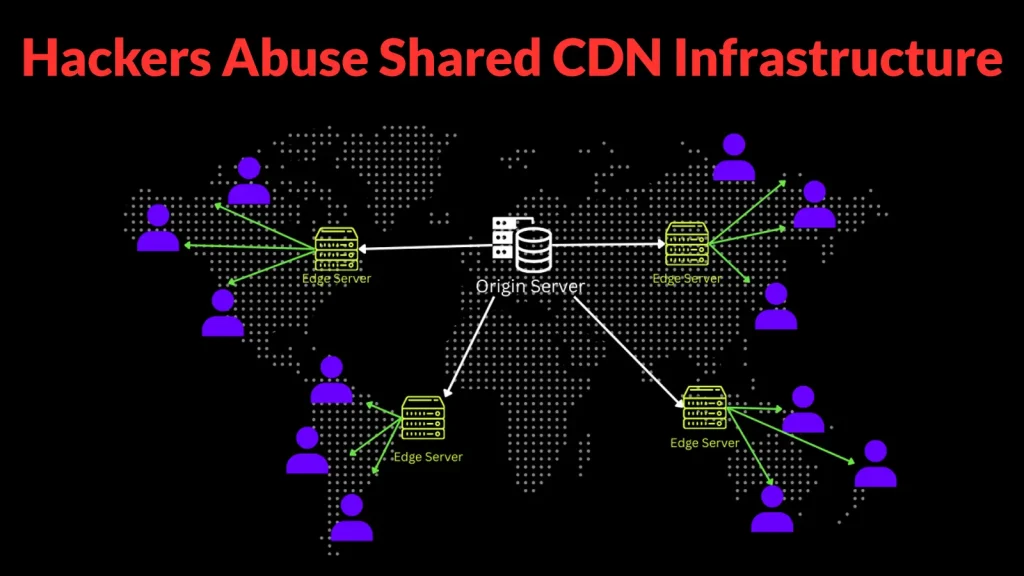
Content Delivery Networks are the backbone of modern web performance, distributing web content closer to users to reduce latency and improve load times. They achieve this by utilizing a network of geographically dispersed servers, or edge nodes, to cache and deliver content. Organizations often share CDN infrastructure, meaning multiple domains can resolve to the same underlying CDN IP addresses. The critical flaw Underminr exploits lies in this shared nature.
When a security solution, such as a firewall or a web application firewall (WAF), encounters traffic originating from a known CDN IP address, it often trusts that traffic because many legitimate domains also reside on that same IP. Hackers leverage this by hosting malicious content or redirecting users through the shared CDN infrastructure. Because the initial connection appears to originate from a trusted CDN, and potentially from an IP associated with a reputable domain also using that CDN, security tools are less likely to flag it as suspicious. This allows malicious payloads, phishing campaigns, and command-and-control (C2) communications to seamlessly slip past an organization’s perimeter defenses.
Impact on Domain Reputation and Security Controls
The abuse of shared CDN infrastructure has significant implications for domain reputation-based security. Many security products rely heavily on threat intelligence feeds that categorize IP addresses and domains as malicious or benign. An IP address associated with a reputable CDN is inherently trusted. Underminr compromises this trust model. By hiding behind these trusted IPs, attackers can:
- Evade IP Blacklists: Malicious traffic originates from a trusted CDN IP, rendering traditional IP blocking ineffective.
- Bypass Domain-Specific Protections: Security tools looking for specific malicious domains within traffic might miss threats that are proxied through a trusted CDN domain.
- Enhance Phishing Success: Phishing links can appear to originate from or be routed through highly reputable domains, increasing the likelihood of user engagement.
- Mask C2 Infrastructure: Command-and-control servers for malware can hide their true origin, making detection and blocking significantly harder for incident response teams.
Remediation Actions for Underminr
Addressing the Underminr threat requires a multi-layered approach that moves beyond simple IP-based blocking. Organizations must adopt more sophisticated detection and prevention mechanisms.
- Deep Packet Inspection (DPI) and Behavioral Analysis: Implement security solutions capable of deeper packet inspection to analyze the actual content and behavior of network traffic, rather than just its source IP. Look for anomalies in HTTP headers, TLS handshake details, and application layer protocols that might indicate malicious intent, even if the origin IP is trusted.
- DNS Over TLS/HTTPS (DoT/DoH) Monitoring: While DoT/DoH encrypts DNS queries, monitoring these connections for unusual patterns or queries to known malicious domains can help identify compromised systems.
- Enhanced Endpoint Detection and Response (EDR): Focus on endpoint protection to detect malicious activity once it bypasses network defenses. EDR solutions can identify suspicious processes, file modifications, and network connections originating from compromised endpoints, regardless of how they initially accessed the network.
- Web Application Firewall (WAF) Configuration: Ensure WAFs are configured with advanced rules that analyze request parameters, body content, and user agent strings for irregularities. While CDNs introduce complexity, robust WAF rules can still offer a crucial layer of defense.
- Threat Intelligence Integration: Continuously update and integrate threat intelligence feeds specifically focused on CDN abuse, malicious redirects, and newly identified phishing campaigns that leverage trusted infrastructure.
- Zero Trust Architecture: Adopt a Zero Trust security model, where no user, device, or application is inherently trusted, regardless of its location or perceived origin. Micro-segmentation and strict access controls can limit the lateral movement of threats that bypass initial perimeter defenses.
Tools for Detection and Mitigation
Implementing the recommended remediation actions often involves leveraging specialized security tools:
| Tool Name | Purpose | Link |
|---|---|---|
| Snort/Suricata | Network Intrusion Detection/Prevention Systems (NIDS/NIPS) for deep packet inspection and rule-based anomaly detection. | https://www.snort.org/ |
| Palo Alto Networks Next-Generation Firewalls | Advanced threat prevention, WAF capabilities, and behavioral analysis. | https://www.paloaltonetworks.com/ |
| CrowdStrike Falcon Insight | Endpoint Detection and Response (EDR) for detecting and responding to threats at the endpoint level. | https://www.crowdstrike.com/products/endpoint-security/falcon-insight-edr/ |
| Cloudflare WAF | Cloud-based Web Application Firewall with advanced rule sets and bot protection. | https://www.cloudflare.com/waf/ |
| Splunk Enterprise Security | SIEM solution for aggregating logs, performing correlation, and advanced threat detection. | https://www.splunk.com/en_us/software/splunk-enterprise-security.html/ |
Conclusion
The Underminr technique serves as a stark reminder that attackers will always find innovative ways to exploit infrastructure design, not just software vulnerabilities. The reliance on shared CDN infrastructure, while beneficial for performance, introduces a blind spot that traditional security controls struggle to address. Organizations must evolve their security strategies, shifting from purely reputation-based assessments to deeper behavioral and content analysis. By embracing advanced threat detection, robust endpoint security, and Zero Trust principles, security teams can effectively counter the threat posed by attackers leveraging trusted CDN paths to deliver their malicious payloads.




