
How Tier 1 Can Process Alerts 3x Faster with Threat Intelligence
Unmasking the Signal: How Threat Intelligence Empowers Tier 1 Analysts
The digital battlefield is relentless. As a Tier 1 cybersecurity analyst, you know this feeling intimately: the shift begins, and the security queue is already a formidable wall of alerts. Within that flood – often hundreds strong – lies the truly critical event. It could be the first whisper of a sophisticated ransomware attack, lateral movement from a compromised host, or a command-and-control (C2) beacon cleverly disguised. Your mission, often against the clock, is to sift through the noise and pinpoint that one crucial signal before the window of opportunity for defense slams shut. This is the formidable weight Tier 1 teams carry.
Processing security alerts with speed and accuracy is paramount. Every second counts when an attacker is actively exploiting vulnerabilities or moving through your network. This is where the strategic integration of threat intelligence becomes not just beneficial, but transformative. By leveraging high-fidelity threat intelligence, Tier 1 analysts can exponentially accelerate their alert triage, shifting from reactive overload to proactive precision and potentially processing alerts up to 3x faster.
The Alert Overload Conundrum for Tier 1
Modern security information and event management (SIEM) systems and endpoint detection and response (EDR) platforms generate a staggering volume of alerts. While designed to catch suspicious activity, raw alerts often lack context, leading to a high percentage of false positives. For a Tier 1 analyst, this translates into:
- Investigation Fatigue: Manual investigation of numerous benign or low-priority alerts drains analyst resources and leads to burnout.
- Increased Mean Time to Detect (MTTD) and Respond (MTTR): Critical threats get buried in the noise, delaying detection and subsequent incident response.
- Skill Gap Amplification: Less experienced analysts struggle to differentiate genuine threats from false alarms without adequate contextual data.
- Missed Critical Incidents: The ultimate risk – a genuine breach escalating because the initial alert was overlooked or deprioritized.
This is where threat intelligence steps in as a force multiplier, arming analysts with the immediate context needed to make rapid, informed decisions.
What is Threat Intelligence and Why Does Tier 1 Need It?
Threat intelligence is evidence-based knowledge, including context, mechanisms, indicators, implications, and actionable advice about an existing or emerging menace or hazard to assets. For Tier 1 analysts, this translates to:
- Known Malicious Indicators: IP addresses, domains, file hashes (e.g., for malware like CVE-2023-XXXXX related to a specific malware family), and URLs known to be associated with hostile actors or campaigns.
- Tactics, Techniques, and Procedures (TTPs): Insight into how threat actors operate, their preferred tools, and attack methodologies. This helps identify behavioral anomalies.
- Vulnerability Context: Information on newly discovered vulnerabilities, their exploitation potential, and typical attack vectors. While a specific CVE might be relevant to a separate remediation discussion, understanding common exploitation techniques (e.g., CVE-2021-44228 for Log4Shell) provides immediate context to related alerts.
- Attribution and Motivation: Understanding who might be attacking and why, which can help prioritize threats and predict future actions.
By automatically correlating incoming alerts with this rich intelligence, Tier 1 analysts can instantly elevate high-priority threats, dismiss known benign events, and gain crucial context for ambiguous alerts.
How Threat Intelligence Accelerates Alert Processing 3x Faster
Integrating threat intelligence streams directly into security operations workflows provides several concrete benefits that dramatically speed up alert triage:
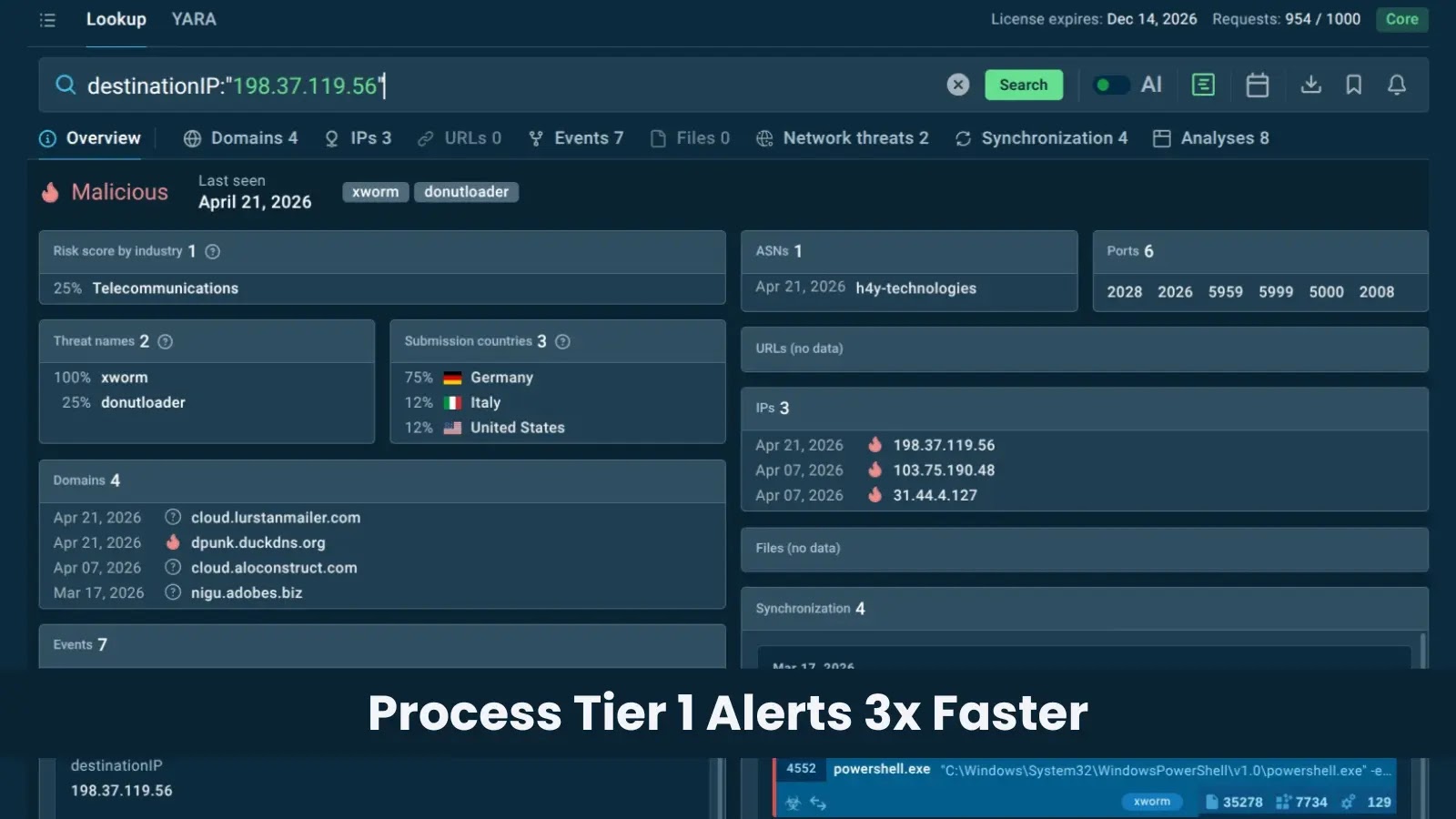
- Automated Prioritization and Enrichment: Instead of manual lookups, automated systems cross-reference internal alerts with external threat feeds. If an alert involves a known malicious IP or domain, its priority skyrockets, and the analyst immediately sees contextual information without leaving their console. This automation eliminates significant manual research time.
- Reduced False Positives: When an alert triggers on an activity that threat intelligence identifies as benign (e.g., a known legitimate security scanner, specific cloud service communication), Tier 1 can instantly suppress or deprioritize it. This dramatically cuts down the sheer volume of alerts requiring human intervention.
- Faster Contextualization: For alerts that aren’t immediately clear, threat intelligence provides rapid context. If an endpoint is communicating with an unusual domain, a quick check against threat feeds might reveal it’s a newly identified C2 server, instantly escalating the incident. Conversely, if it’s a newly acquired legitimate SaaS provider, the alert can be closed.
- Empowered Decision-Making: With immediate access to reputational scores, associated campaigns, and TTPs, Tier 1 analysts can make faster, more confident decisions about whether to escalate, block, or dismiss an alert. This reduces the back-and-forth often seen between Tier 1 and Tier 2 teams.
This streamlined process allows analysts to focus their valuable time and expertise on the true threats, rather than drowning in a sea of generic security events. The shift from “what is this?” to “this is important because…” is instantaneous.
Practical Implementation: Integrating Threat Intelligence for Tier 1
To effectively leverage threat intelligence, organizations should consider:
- Curated Feeds: Focus on high-fidelity, actionable threat intelligence feeds relevant to your industry and organizational attack surface.
- Automated Integration: Ensure your SIEM, SOAR, and EDR platforms are configured to ingest and automatically correlate alerts with threat intelligence.
- Contextual Display: Present threat intelligence data clearly within the analyst’s workflow, minimizing the need to switch tools or screens.
- Playbooks and Automation: Develop automated playbooks that trigger specific actions (e.g., block IP, isolate host) for alerts that strongly correlate with high-severity threat intelligence.
- Continuous Feedback Loop: Regularly review the effectiveness of threat intelligence sources and adjust as needed, incorporating internal observations of emerging threats.
Remediation Actions for Alert Overload
While threat intelligence helps process existing alerts, proactive measures can reduce the baseline volume:
- Refine SIEM Rules: Regularly review and tune SIEM correlation rules to reduce false positives and focus on high-impact events.
- Behavioral Analytics: Implement user and entity behavior analytics (UEBA) to detect anomalies that might not trigger traditional signature-based alerts.
- Endpoint Detection and Response (EDR): Utilize EDR solutions for deeper visibility and automated response capabilities at the endpoint level.
- Security Awareness Training: Educate users to recognize phishing attempts and suspicious activities, reducing the initial infection vector.
- Asset Management: Maintain an accurate inventory of all assets and their criticality to prioritize alerts impacting high-value targets.
Conclusion: The Future of Tier 1 Operations
The relentless pace of cyber threats demands efficiency and precision from security teams. For Tier 1 analysts, who stand on the front lines, the ability to rapidly distinguish critical threats from benign noise is non-negotiable. By strategically integrating high-quality threat intelligence, organizations empower their Tier 1 teams to move beyond alert fatigue. This shift enables faster investigations, significantly reduces false positives, and ultimately fortifies the organization’s defense posture. Investing in threat intelligence isn’t just about efficiency; it’s about giving your first responders the clarity and speed they need to win the daily battle against sophisticated cyber adversaries.




