
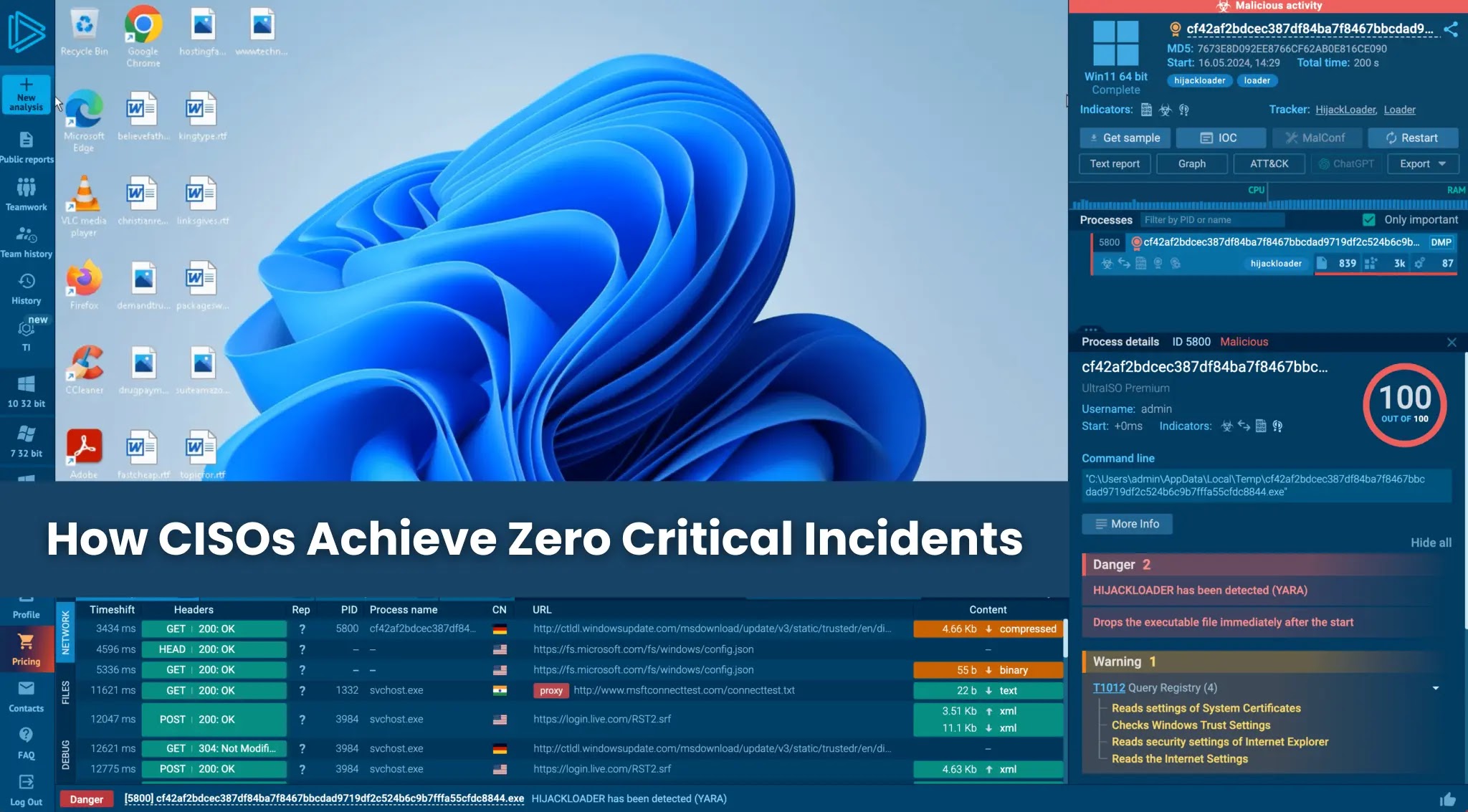
How Top CISOs Increase Risk Visibility for Zero Critical Incidents
For many cybersecurity leaders, the critical question isn’t if their Security Operations Center (SOC) is inundated with alerts, but rather, how many of those alerts truly represent a business-critical threat versus mere urgent-looking noise. This fundamental challenge—the lack of clear context around security incidents—is a primary obstacle CISOs face daily. Without enhanced risk visibility, security teams can easily become overwhelmed, expending valuable resources chasing false positives while genuine phishing attempts, malware infestations, and other sophisticated attacks silently infiltrate deeper into the organization’s infrastructure.
This post delves into the strategies top CISOs employ to dramatically improve risk visibility, aiming for a proactive posture that drives towards zero critical incidents. We’ll explore how they cut through the noise, prioritize effectively, and leverage intelligence to safeguard their organizations.
The Pervasive Problem of Alert Fatigue
The sheer volume of security alerts generated by modern IT environments is staggering. Endpoint Detection and Response (EDR) solutions, Security Information and Event Management (SIEM) systems, Intrusion Detection Systems (IDS), and countless other security tools constantly flag anomalies. While each alert might represent a legitimate security event, the collective deluge often leads to alert fatigue, where analysts become desensitized, increasing the likelihood of missing a truly critical incident. This challenge is compounded when alerts lack sufficient contextual information regarding the asset’s importance, the user’s role, or the potential business impact of a compromise.
Context is King: Beyond Raw Data
Top CISOs understand that raw security data, no matter how comprehensive, is insufficient on its own. True risk visibility emerges from enriched, contextualized data. This means integrating information from various sources to paint a complete picture:
- Asset Criticality: Is the alert coming from a non-production test server or a mission-critical database holding sensitive customer data? Knowing the business value of the affected asset helps prioritize response.
- User Behavior Analytics (UBA): Is the flagged activity typical for that user, or is it an anomalous login from an unusual geographic location or at an odd hour?
- Threat Intelligence Feeds: Is the suspicious IP address or domain associated with known malicious actors or campaigns (e.g., linked to specific CVEs like CVE-2023-3881 for a critical RCE vulnerability, or CVE-2023-2825 for a Windows zero-day)?
- Configuration Management Database (CMDB): Understanding the software, hardware, and network configurations of an affected system adds crucial context to an alert.
Strategies for Enhanced Risk Visibility
Consolidating Security Data
One of the first steps is to consolidate security data from disparate sources into a central platform. This often involves leveraging a robust SIEM or Extended Detection and Response (XDR) solution. By bringing all relevant logs, events, and telemetry into a single pane of glass, CISOs enable analysts to correlate events and extract deeper insights that would be impossible with isolated data sets.
Automated Triage and Prioritization
Given the volume of alerts, manual triage is unsustainable. Leading CISOs implement automation to score and prioritize alerts based on predefined rules, machine learning algorithms, and integration with asset criticality ratings. This ensures that the most dangerous threats—those with high confidence and high potential business impact—are surfaced immediately, allowing human analysts to focus on complex investigations rather than sifting through noise.
Threat Modeling and Attack Surface Management
Proactive CISOs don’t just react to alerts; they understand their organization’s unique threat landscape. This involves extensive threat modeling to identify potential attack paths and vulnerabilities. Coupled with continuous attack surface management, they gain a comprehensive understanding of where their organization is most exposed, both internally and externally. This insight informs security controls and helps interpret alerts within the context of known risks.
Regular Security Assessments and Penetration Testing
To truly understand risk, organizations must actively test their defenses. Regular vulnerability scanning, penetration testing, and red team exercises simulate real-world attacks. The findings from these assessments provide direct visibility into potential weaknesses that could be exploited, helping to validate existing controls and prioritize remediation efforts. For instance, discovering an unpatched vulnerability like CVE-2024-27357 during a scan directly informs risk and remediation.
Building a Strong Security Culture
Technology alone cannot achieve zero critical incidents. A strong security culture, where every employee understands their role in protecting the organization, is paramount. This includes regular security awareness training, clearly defined incident response procedures, and fostering an environment where suspicious activity is reported without fear of reprisal. A well-informed human element significantly augments automated detection capabilities.
Key Takeaways for Achieving Zero Critical Incidents
- Contextualize Everything: Move beyond raw alerts by integrating data on asset criticality, user behavior, and threat intelligence.
- Automate Triage: Implement intelligent automation to prioritize alerts, allowing highly skilled analysts to focus on true threats.
- Know Your Attack Surface: Proactively identify and monitor potential vulnerabilities through threat modeling and continuous assessment.
- Test Your Defenses: Regular penetration testing and vulnerability scanning provide valuable, real-world risk insights.
- Empower Your People: Foster a strong security culture to create an additional, invaluable layer of defense.
By adopting these strategies, top CISOs are not merely reacting to incidents but actively shaping their security posture, dramatically increasing risk visibility and moving closer to the ambitious, yet achievable, goal of zero critical incidents.




