Malicious NuGet Package as Sicoob SDK Exfiltrates Banking Passwords
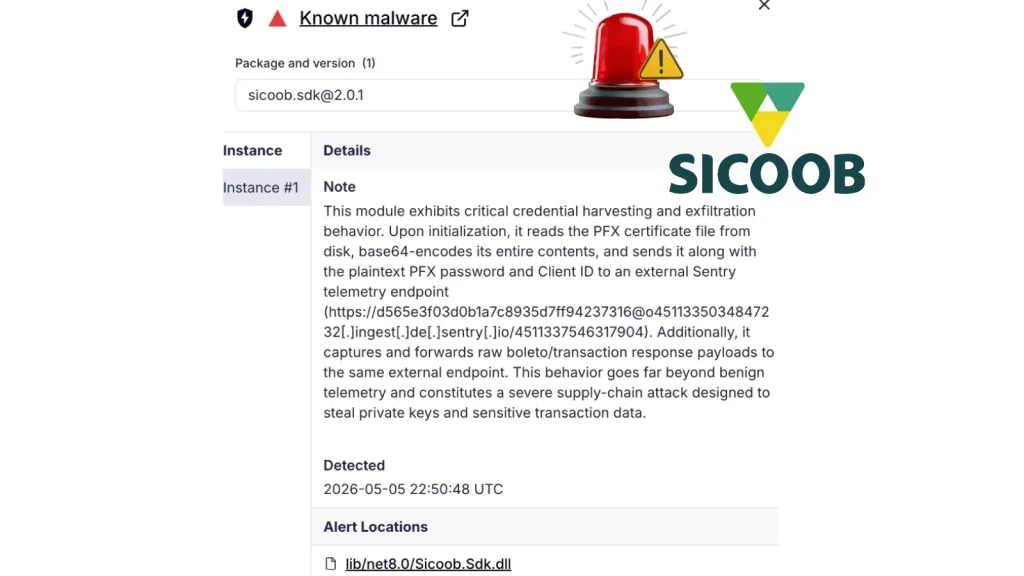
The digital supply chain, a critical nexus of modern software development, has once again been breached with alarming consequences. A recently uncovered malicious NuGet package, deceptively named “Sicoob. Sdk,” has been actively exfiltrating sensitive banking credentials. Masquerading as an official Software Development Kit (SDK) for Brazil’s prominent Sicoob banking institution, this incident underscores a deepening threat to financial ecosystems and the urgent need for enhanced supply chain security measures.
The Malicious NuGet Package: A Closer Look
The “Sicoob. Sdk” package, initially appearing legitimate, was designed to target developers integrating with Sicoob’s banking APIs. Its true intent, however, was far more sinister: to silently harvest authentication details. This sophisticated attack leverages the trust inherent in open-source registries like NuGet, where developers often download packages without rigorous scrutiny. The attacker’s strategy involved injecting insidious code that, once incorporated into legitimate applications, would lie dormant until triggered, then siphon off critical user data, specifically banking passwords and other sensitive information.
This incident highlights a growing trend where attackers compromise widely used development tools and libraries. By inserting malicious code into these dependencies, they gain an insidious backdoor into countless applications and, by extension, their end-users’ data. The implicit trust developers place in these public repositories is being consistently exploited, demanding a paradigm shift in how software components are vetted and integrated.
Impact on Financial Sector and Developers
The financial sector is a prime target for such sophisticated supply chain attacks due to the high value of the data it possesses. For financial institutions like Sicoob, the compromise of an SDK can have cascading effects, potentially exposing customer accounts, eroding trust, and leading to significant financial and reputational damage. Developers, often under tight deadlines, may inadvertently incorporate these compromised packages, unknowingly exposing their applications and users to risk.
The exfiltration of banking credentials represents a direct threat to end-user financial security. Once these credentials are stolen, attackers can gain unauthorized access to bank accounts, conduct fraudulent transactions, and potentially initiate further identity theft. The ripple effect extends beyond the immediate victims, creating a broader environment of distrust and insecurity in digital banking services.
Remediation Actions and Best Practices
Addressing the threat posed by malicious packages like “Sicoob. Sdk” requires a multi-faceted approach involving developers, security teams, and repository maintainers. Immediate and long-term strategies are essential to mitigate current risks and prevent future incidents.
- Verify Package Authenticity: Always verify the publisher and source of NuGet packages, especially for critical integrations. Prioritize official and verified packages from reputable vendors.
- Implement Software Composition Analysis (SCA): Utilize SCA tools to automatically scan dependencies for known vulnerabilities and malicious code. These tools can identify suspicious patterns and advise on safer alternatives.
- Regular Security Audits: Conduct frequent security audits of your codebase and its dependencies. This includes reviewing package versions, their origins, and any unusual network activities initiated by integrated libraries.
- Least Privilege Principle: Ensure that applications and SDKs operate with the minimum necessary permissions. This limits the scope of damage if a component is compromised.
- Threat Intelligence Integration: Stay updated with the latest threat intelligence regarding known malicious packages and supply chain attacks. Subscribe to security advisories and industry newsletters.
- Network Monitoring: Implement robust network monitoring to detect unusual outbound connections or data exfiltration attempts originating from applications that use third-party dependencies.
- Educate Developers: Foster a security-aware culture among development teams. Provide training on secure coding practices, supply chain risks, and the importance of dependency vetting.
Tools for Detection and Mitigation
| Tool Name | Purpose | Link |
|---|---|---|
| Snyk | SCA, vulnerability detection, dependency scanning | https://snyk.io/ |
| Trivy | Container and dependency vulnerability scanner | https://aquasecurity.github.io/trivy/ |
| OWASP Dependency-Check | Identifies project dependencies and checks for known vulnerabilities | https://owasp.org/www-project-dependency-check/ |
| Sonatype Nexus Lifecycle | Open-source governance and supply chain automation | https://www.sonatype.com/products/nexus-lifecycle/ |
Conclusion
The discovery of the malicious “Sicoob. Sdk” NuGet package serves as a stark reminder of the persistent and evolving threats within the software supply chain. Attackers are increasingly targeting the foundational components of modern applications, exploiting trust and convenience to achieve their nefarious goals. Developers and organizations must adopt proactive and vigilant security practices, leveraging advanced tools and fostering a robust security culture to safeguard against these insidious attacks. Protecting the supply chain is no longer an option; it is an imperative for maintaining digital security and trust.