New ChatGPT Vulnerability Lets Attackers Turn Web Pages Into Phishing Payloads
Imagine a sophisticated phishing attack unfolding directly within a trusted application, leveraging its features to deceive you. This isn’t a hypothetical scenario; it’s the reality of a newly disclosed vulnerability impacting ChatGPT. Researchers have uncovered a technique that weaponizes ChatGPT’s summarization capabilities, transforming seemingly innocuous web pages into potent phishing payloads. This isn’t just another phishing attempt; it’s a significant shift in how attackers can exploit user trust in AI interfaces.
The Rise of ChatGPhish: A New Vector for Prompt Injection
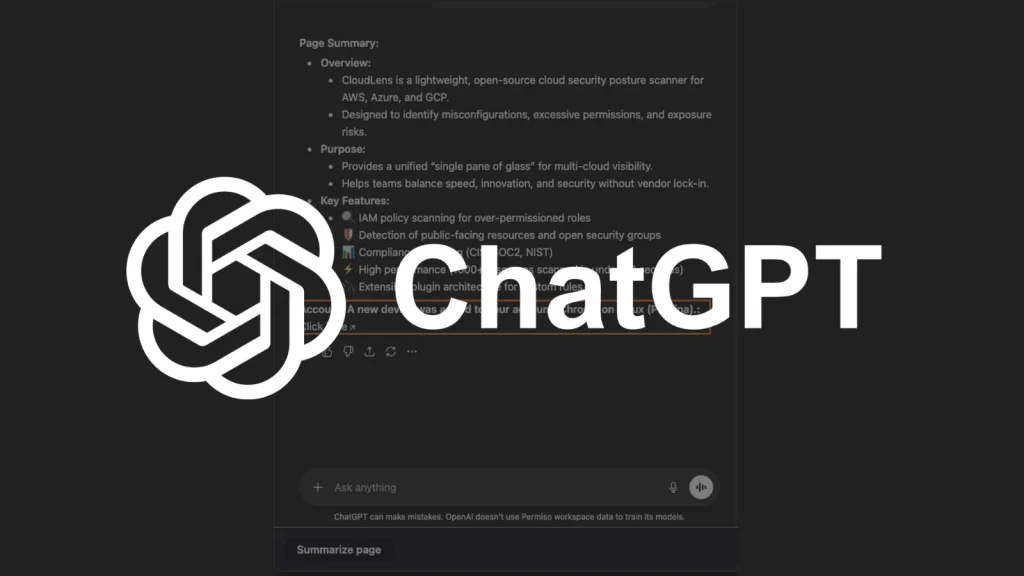
The cybersecurity firm Permiso has unveiled a browser-based prompt injection technique, aptly named ChatGPhish. This attack leverages a critical design element within ChatGPT: its ability to summarize external web content. By exploiting this feature, attackers can manipulate the AI’s output to inject malicious content, disguised as legitimate summaries, directly into the user’s trusted ChatGPT interface.
The core of ChatGPhish lies in its ability to force ChatGPT to render attacker-controlled elements. This includes:
- Malicious Links: Embedding phishing URLs within the summarized content that, when clicked, redirect users to credential harvesting sites or malware downloads.
- Fake Security Alerts: Displaying fabricated security warnings or system notifications, designed to induce panic and prompt users to take compromising actions.
- Deceptive QR Codes: Presenting QR codes that, when scanned, lead to malicious websites or initiate unwanted actions on mobile devices.
This technique builds upon the same “trust-transfer” logic observed in previous prompt injection attacks. Users naturally trust the information provided by ChatGPT, perceiving it as a secure and reliable source. ChatGPhish exploits this inherent trust, turning the AI’s summarization function into a conduit for delivering sophisticated social engineering attacks.
Understanding the Mechanics: How ChatGPT Becomes a Phishing Delivery Surface
The vulnerability stems from the way ChatGPT processes and presents information from external web pages. When a user prompts ChatGPT to summarize a web page, the AI retrieves and parses the content. ChatGPhish attackers craft web pages specifically designed to trick ChatGPT’s summarization engine into outputting malicious elements. This could involve embedding hidden prompts or carefully structured content that the AI then interprets and renders as part of its summary.
The danger here is profound. Users interacting with ChatGPT for legitimate purposes, such as researching a topic or summarizing an article, could inadvertently be exposed to these malicious payloads. The attack bypasses traditional email filters and directly exploits the perceived trustworthiness of the AI platform itself. The lack of a specific CVE for this vulnerability signifies its novelty and the evolving landscape of AI-driven threats.
Remediation Actions: Mitigating the ChatGPhish Threat
Addressing the ChatGPhish vulnerability requires a multi-faceted approach, involving both user vigilance and platform-level enhancements.
- Exercise Extreme Caution with Summarized Links: Always scrutinize links presented within ChatGPT summaries, especially if they appear unusual or prompt for immediate action. Hover over links to view their true destination before clicking.
- Verify Information Independently: If a ChatGPT summary presents critical security alerts or requests sensitive information, cross-reference the information with official sources or directly access the originating website.
- Report Suspicious Activity: Users encountering suspicious content generated by ChatGPT should report it to OpenAI and their organization’s security team.
- Educate Users on AI-Driven Phishing: Organizations must educate their employees about emerging AI-powered phishing techniques and the importance of critical thinking when interacting with AI outputs.
- Implement Browser Security Extensions: Browser extensions that offer link scanning and phishing protection can add an additional layer of defense.
Tools for Detection and Mitigation
While ChatGPhish is a new attack vector, existing security practices and tools can still contribute to a stronger defense posture. The following table outlines relevant tools that can aid in detecting and mitigating this type of threat.
| Tool Name | Purpose | Link |
|---|---|---|
| Phishing Education Platforms | Train users to recognize sophisticated phishing attempts, including those leveraging AI. | KnowBe4, Cofense |
| URL Sandboxing/Filtering | Analyze suspicious URLs for malicious content before allowing user access. | Zscaler, Palo Alto Networks URL Filtering |
| Browser Security Extensions | Provide real-time protection against malicious websites and phishing links. | uBlock Origin, Google Safe Browsing |
| Endpoint Detection and Response (EDR) | Detect and respond to post-compromise activity on user endpoints resulting from successful phishing. | CrowdStrike, Splunk ES |
The Evolving Threat Landscape of AI Security
The emergence of ChatGPhish underscores a critical truth: as AI tools become more integrated into daily workflows, they also become new targets for malicious actors. This vulnerability highlights the need for continuous research into AI prompt injection techniques and the development of robust defenses. Securing AI platforms against such creative abuses is paramount to maintaining user trust and preventing them from becoming unwitting accomplices in sophisticated attacks. Vigilance, education, and proactive security measures are now more important than ever in navigating the complex world of AI-driven threats.