GREYVIBE Hackers Leverage ChatGPT and Google Gemini to Fuel Cyberattacks
The AI Shadow War: How GREYVIBE Hackers Weaponize ChatGPT and Gemini
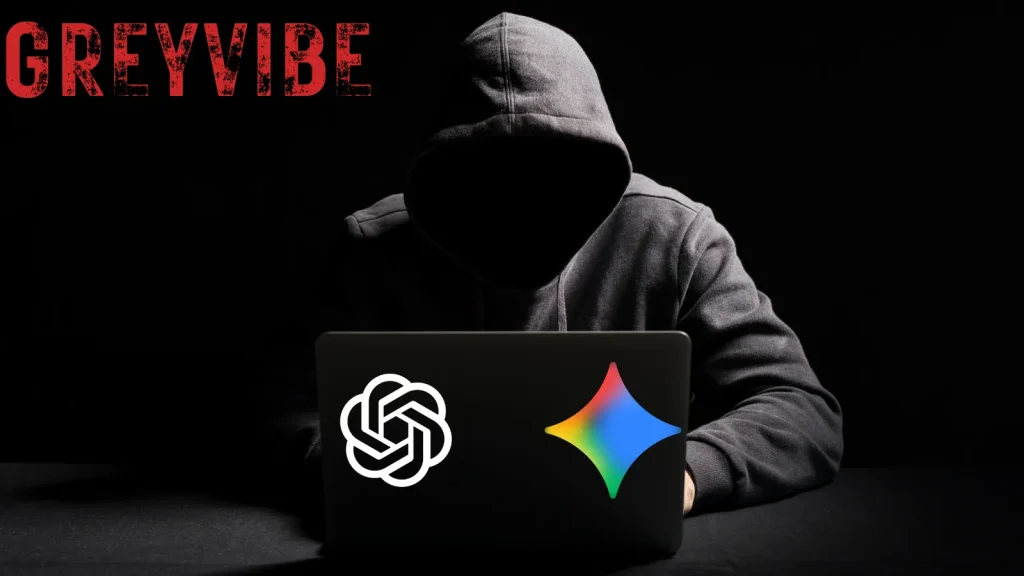
The landscape of cyber warfare is undergoing a profound transformation, with sophisticated threat actors increasingly harnessing the power of generative artificial intelligence. A stark example of this evolution is the GREYVIBE campaign, a persistent operation leveraging cutting-edge AI tools like ChatGPT and Google Gemini to supercharge its cyberattack capabilities. This convergence of AI and cyber warfare presents a formidable challenge, particularly for targeted entities.
GREYVIBE’s AI-Powered Campaign: A Closer Look
First identified by WithSecure researchers, the GREYVIBE campaign has been actively exploiting generative AI since at least August 2023. Its primary focus has been Ukraine and associated governmental, military, and civilian organizations. This strategic targeting highlights the campaign’s likely geopolitical motivations, positioning AI as a crucial enabler in modern state-sponsored (or state-aligned) cyber operations.
The integration of large language models (LLMs) such as ChatGPT and Google Gemini provides GREYVIBE with significant advantages:
- Enhanced Social Engineering: LLMs can generate highly convincing phishing emails, spear-phishing messages, and social engineering lures with unprecedented speed and linguistic accuracy, making them far more difficult to detect. This accelerates the initial compromise phase of attacks.
- Code Generation and Obfuscation: AI tools can assist in generating malicious code snippets, scripts, or even entire malware components. Furthermore, they can aid in obfuscating code, making it harder for security analysts to reverse engineer and detect.
- Information Gathering and Analysis: LLMs can quickly process vast amounts of open-source intelligence (OSINT), identifying potential vulnerabilities, key personnel, or organizational structures to inform attack planning.
- Automated Attack Development: The ability to quickly iterate and refine attack vectors based on AI-generated insights significantly reduces the time and effort required for sophisticated operations.
The Growing Nexus of AI and Cyber Warfare
GREYVIBE’s activity underscores a critical trend: generative AI is no longer a theoretical threat in cybersecurity. Adversaries are actively integrating these powerful tools into their operational playbooks. This shift has several profound implications:
- Lowering the Barrier to Entry: Even less technically proficient actors can leverage AI for complex tasks that previously required specialized skills.
- Increased Attack Volume and Velocity: AI automates many aspects of attack preparation, allowing for more frequent and rapid attacks.
- Improved Evasion Techniques: AI can help generate polymorphic malware or dynamically adapt attack strategies to bypass security controls.
- Sophisticated Disinformation Campaigns: Beyond technical attacks, AI can generate deepfakes and highly credible disinformation, blurring the lines of truth and potentially impacting national security.
Remediation Actions and Defensive Strategies
Countering AI-enhanced threats like GREYVIBE requires a multi-layered and adaptive defense strategy. Organizations must assume that adversaries are leveraging these advanced tools.
- Strengthen Social Engineering Defenses:
- Security Awareness Training: Regularly train employees to recognize sophisticated phishing and social engineering attempts. Emphasize vigilance against unusual language, urgent requests, and suspicious links.
- Multi-Factor Authentication (MFA): Implement MFA across all critical systems to significantly reduce the impact of compromised credentials.
- Email Filtering and DMARC/SPF/DKIM: Deploy robust email security solutions and ensure proper configuration of email authentication protocols to prevent spoofing and detect malicious emails.
- Enhance Endpoint Detection and Response (EDR)/Extended Detection and Response (XDR):
- Invest in advanced EDR/XDR solutions that leverage behavioral analytics and machine learning to detect anomalous activity indicative of AI-assisted attacks.
- Focus on detecting techniques, tactics, and procedures (TTPs) rather than just known signatures.
- Proactive Threat Intelligence:
- Stay informed about the latest attacker TTPs, especially those involving AI tools. Follow reports from reputable security researchers like WithSecure.
- Utilize threat intelligence platforms to contextualize incoming alerts and identify emerging threats.
- Network Segmentation and Least Privilege:
- Implement rigorous network segmentation to limit lateral movement in case of a breach.
- Enforce the principle of least privilege, ensuring users and systems only have access to resources absolutely necessary for their functions.
- AI-Powered Defenses:
- Leverage AI and machine learning in defensive tools for anomaly detection, malware analysis, and threat hunting. Fight AI with AI.
- Incident Response Planning:
- Develop and regularly test comprehensive incident response plans tailored to AI-enhanced attacks.
- Ensure clear communication channels and defined roles during a cyber incident.
Conclusion
The GREYVIBE campaign serves as a critical wake-up call for the cybersecurity community. The weaponization of ChatGPT and Google Gemini by sophisticated threat actors marks a new epoch in cyber warfare, demanding an equally sophisticated and proactive defense. Organizations must recognize the evolving threat landscape, invest in advanced security controls, and continuously educate their human firewall. Staying ahead requires a strategic approach that integrates human expertise with AI-powered defenses to counter the AI-enabled adversary.