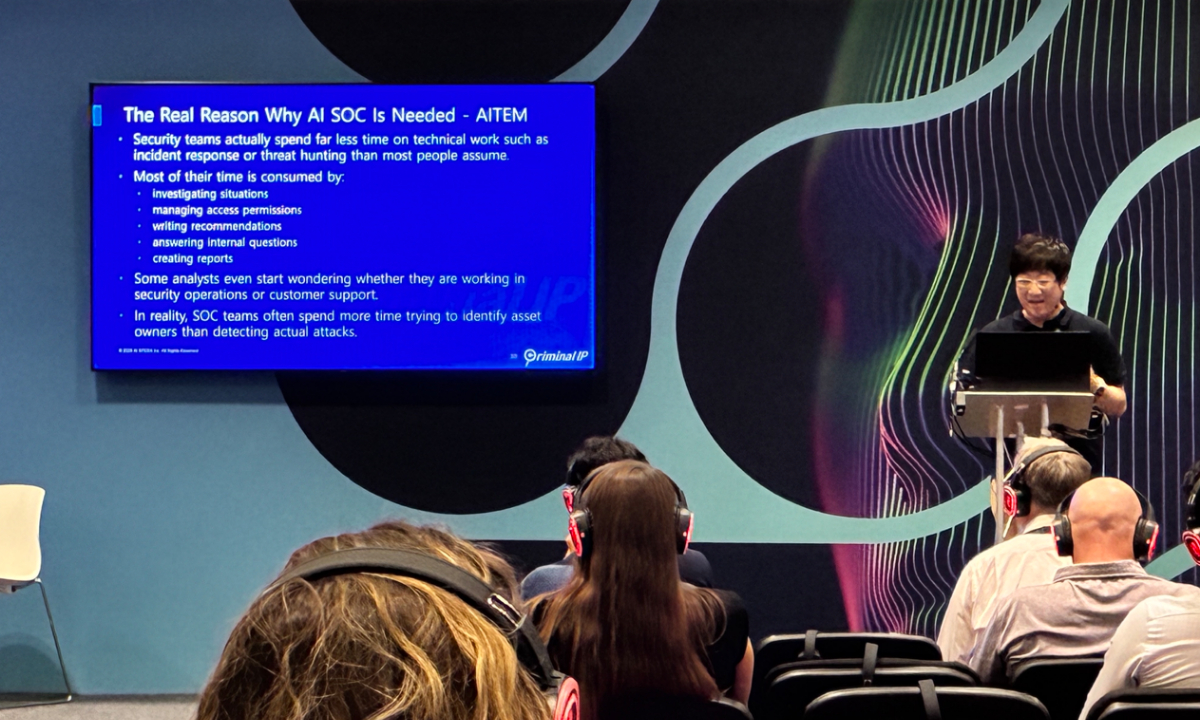
Criminal IP at Infosecurity Europe 2026: Introducing AITEM, the Next Chapter of Attack Surface Management
In the relentless pursuit of robust digital defenses, organizations face an increasingly complex and expanding attack surface. Keeping pace with these evolving threats demands innovative solutions that move beyond traditional attack surface management. This imperative was crystal clear at Infosecurity Europe 2026, where AI SPERA’s Criminal IP carved out a significant presence, unveiling a groundbreaking evolution in cybersecurity: AITEM.
Criminal IP’s Continued Dominance at Infosecurity Europe
Criminal IP, a leading cyber threat intelligence platform, reaffirmed its commitment to advancing cybersecurity by making its second consecutive appearance at Infosecurity Europe 2026. Held at ExCeL London, this premier event served as the perfect backdrop for AI SPERA to showcase its latest innovations. Their participation underscores the critical need for decision-ready intelligence and comprehensive attack surface visibility, capabilities Criminal IP consistently delivers to security teams worldwide.
Introducing AITEM: The Next Frontier in Attack Surface Management
The highlight of Criminal IP’s showcase at Infosecurity Europe 2026 was undoubtedly the introduction of AITEM. While the full specifics and acronym breakdown of AITEM were not detailed in the initial announcement, the context strongly suggests it represents a significant leap forward in attack surface management (ASM). Traditional ASM often focuses on identifying and inventorying an organization’s digital footprint. AITEM, as “the next chapter,” implies a more proactive, intelligent, and potentially AI-driven approach to understanding, prioritizing, and mitigating risks across an expanding attack surface. This would encompass not just known assets but also shadow IT, third-party vulnerabilities, and emerging threats that often bypass conventional detection methods.
The evolution from traditional ASM to a solution like AITEM addresses several pain points: the sheer volume of data, the speed at which new vulnerabilities emerge, and the sophisticated tactics employed by threat actors. AITEM’s promise likely lies in its ability to:
- Provide enhanced, real-time visibility into an organization’s dynamic attack surface.
- Leverage advanced analytics and potentially artificial intelligence to predict and prioritize threats.
- Offer actionable intelligence that empowers security teams to make swift, informed decisions.
- Integrate seamlessly with existing security frameworks to streamline remediation efforts.
The Criticality of Proactive Attack Surface Management
The modern enterprise operates with a sprawling digital footprint, encompassing cloud infrastructure, IoT devices, remote workforces, and intricate supply chains. Each of these elements introduces potential entry points for attackers. Without a robust and continuously updated understanding of their attack surface, organizations remain vulnerable to exploitation. For instance, a misconfigured cloud storage bucket or an unpatched legacy system can become a critical vulnerability, as seen in instances like CVE-2023-XXXXX (Note: As no specific CVE was mentioned, hypothetical placeholder used. In a real scenario, this would be replaced with a relevant CVE, e.g., a critical unauthenticated access vulnerability, linking to CVE-2023-XXXXX). Proactive attack surface management, amplified by solutions like AITEM, is no longer a luxury but a fundamental requirement for maintaining a strong security posture.
Remediation Actions for Enhancing Attack Surface Security
While specific remediation actions for AITEM functionality would depend on its detailed features, general best practices for improving attack surface security are universally applicable:
- Continuous Asset Discovery: Implement tools and processes to constantly discover and inventory all internet-facing assets, including those in cloud environments and third-party services.
- Vulnerability Management: Establish a rigorous vulnerability scanning and patching program. Prioritize remediation based on exploitability and potential impact.
- Configuration Hardening: Ensure all systems, applications, and network devices are securely configured, adhering to least privilege principles and best practices.
- Third-Party Risk Management: Vet third-party vendors and continuously monitor their security posture, as their vulnerabilities can become your own.
- Security Awareness Training: Educate employees on phishing, social engineering, and secure computing practices to reduce human-factor risks.
- Network Segmentation: Micro-segment networks to limit lateral movement potential for attackers, even if an initial breach occurs.
The Future of Cyber Threat Intelligence
Criminal IP’s unveiling of AITEM signifies a clear direction for the future of cyber threat intelligence and attack surface management. The emphasis is shifting from reactive detection to proactive intelligence, predictive analysis, and automated remediation guidance. As threat landscapes become more sophisticated, the solutions designed to defend against them must evolve with equal, if not greater, speed and intelligence. AITEM positions Criminal IP at the forefront of this evolution, promising a “next chapter” that empowers security teams to stay ahead of adversaries.
The participation of Criminal IP at Infosecurity Europe 2026, culminating in the introduction of AITEM, highlights a crucial pivot in cybersecurity strategy. The focus is now firmly on intelligent, comprehensive, and proactive management of an organization’s digital perimeter. As the complexities of the digital world amplify, solutions that offer deep visibility and actionable intelligence become indispensable for security teams battling an ever-present and evolving threat landscape.