
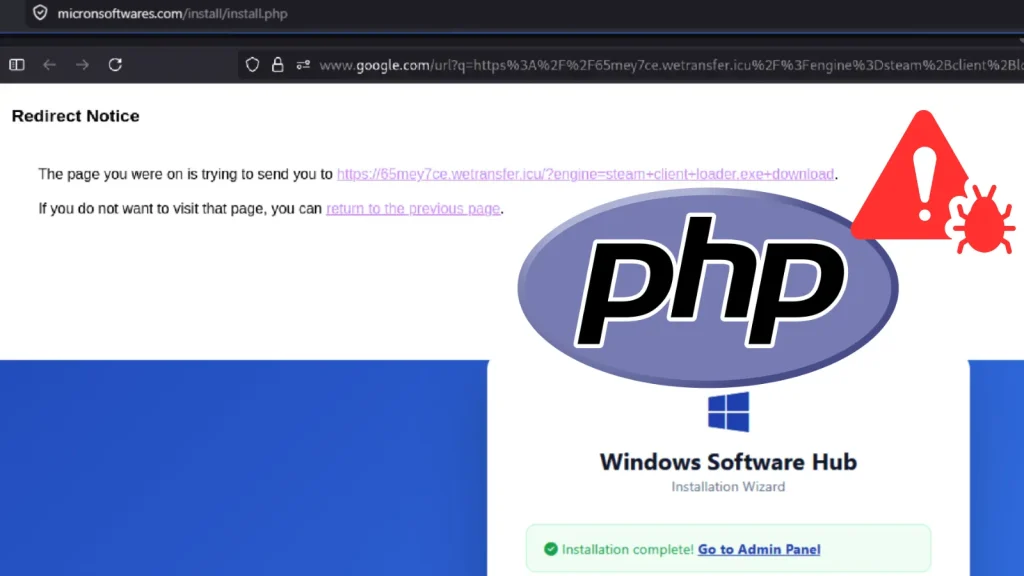
Threat Actor Malware Platform Exposed via Unlocked PHP Installation Page
In a concerning turn of events for the cybersecurity landscape, a threat actor’s internal malware distribution platform was unintentionally exposed due to a severely misconfigured PHP installation page. This oversight granted a security researcher administrative access to the threat actor’s operational dashboard, providing an unprecedented glimpse into the inner workings of a live malware ecosystem. What initially appeared to be a deceptive software download site quickly revealed itself as a sophisticated backend system actively engaged in delivering malicious payloads. This incident underscores the critical importance of secure server configurations, even for those operating on the fringes of the law.
The Discovery: From Fake Download to Real Threat
The exposure began during routine Indicator of Compromise (IOC) validation. A security researcher, investigating what seemed like a generic fake software download portal, stumbled upon an unlocked PHP installation page. This seemingly innocuous page proved to be the gateway to the threat actor’s entire operational control panel. The implications are significant: an administrative foothold on a platform distributing malware, offering an immediate and invaluable insight into the adversary’s methods, targets, and infrastructure.
This access provided a rare opportunity to observe the platform in action, revealing that the “fake” download site was, in fact, a facade for a highly active and organized malware distribution network. The ability to interact with the threat actor’s dashboard essentially offered a direct line into their daily operations, highlighting vulnerabilities that extend far beyond typical phishing or social engineering tactics.
The Weak Link: Misconfigured PHP Installation
The root cause of this exposure was a classic, yet critical, misconfiguration: an unlocked PHP installation page. In many web server environments, when PHP is installed, a temporary configuration page might be accessible. If this page is not properly secured or removed after installation, it can become a significant security flaw. In this specific scenario, the page allowed the researcher to bypass intended security measures and gain unauthorized administrative access.
Such misconfigurations are not uncommon and highlight a persistent challenge in web server management. While specific CVEs for generic misconfigured PHP installation pages are rare given their configuration-dependent nature, the underlying principle aligns with broader web server security best practices. The impact of such a seemingly minor oversight can be catastrophic, as demonstrated by this incident.
Implications for Cybersecurity Defense
This exposure offers several crucial takeaways for cybersecurity professionals:
- Threat Intelligence Goldmine: Gaining administrative access to a live malware platform provides unparalleled threat intelligence. Defenders can understand distribution methods, payload types, command and control (C2) infrastructure, and potentially even target profiles.
- The Adversary’s Vulnerabilities: Even sophisticated threat actors make operational security mistakes. This incident serves as a reminder that their infrastructure is also susceptible to common vulnerabilities and misconfigurations.
- Proactive Scanning and Hardening: Organizations must prioritize continuous scanning for misconfigurations on their own servers and applications. This includes ensuring default installation pages are removed and proper access controls are enforced.
- The Evolving Threat Landscape: Malware platforms are becoming increasingly sophisticated, operating with dedicated backends and dashboards. Understanding these operational structures is vital for effective defense.
Remediation Actions and Best Practices
While this particular misconfiguration exposed a threat actor, the principles of avoiding such vulnerabilities apply universally. Here are key remediation actions and best practices for preventing similar exposures on legitimate systems:
- Secure PHP Installation:
- Remove Installation Files: Immediately delete or restrict access to any PHP installation or setup files (e.g., install.php, setup.php) once the installation is complete.
- Strong File Permissions: Ensure strict file permissions are set for all PHP-related files and directories, limiting write access to only necessary users.
- Disable Directory Listing: Configure your web server (Apache, Nginx, etc.) to deny directory listing. This prevents attackers from browsing server contents and finding sensitive files.
- Regular Security Audits: Conduct frequent security audits of your web servers and applications. Use automated tools and manual review to identify misconfigurations and vulnerabilities.
- Configuration Management: Implement robust configuration management practices to ensure that all server and application configurations adhere to security best practices and are consistently applied across your infrastructure.
- Patch Management: Keep all software, including PHP, web servers, and operating systems, up to date with the latest security patches to address known vulnerabilities like CVE-2023-45592 (example of a recent PHP-related vulnerability) or CVE-2023-45593 (another example).
- Web Application Firewalls (WAF): Deploy a WAF to provide an additional layer of security, helping to detect and block malicious traffic targeting your web applications and their underlying infrastructure.
- Principle of Least Privilege: Apply the principle of least privilege to all user accounts and system processes, especially those related to web server and application management.
Tools for Detection and Mitigation
| Tool Name | Purpose | Link |
|---|---|---|
| Nessus | Vulnerability Scanning, including web server misconfigurations. | https://www.tenable.com/products/nessus |
| OWASP ZAP | Web Application Security Scanner (proxy-based, for finding configuration issues). | https://www.zaproxy.org/ |
| Nikto2 | Web server scanner that identifies common misconfigurations, unsafe files/programs. | https://cirt.net/Nikto2 |
| ModSecurity | Open-source Web Application Firewall (WAF) for real-time threat protection. | https://modsecurity.org/ |
Conclusion
The accidental exposure of a threat actor’s malware platform due to an unlocked PHP installation page serves as a stark reminder that even those operating outside conventional legal frameworks are susceptible to basic security blunders. This incident offers valuable, albeit unintended, threat intelligence, revealing the operational backbone of a malicious distribution network. For all organizations, it reiterates the fundamental importance of diligent server configuration, continuous security audits, and the immediate removal of development or installation artifacts. Neglecting these basic security hygiene practices, whether for legitimate purposes or illicit ones, can lead to severe and unforeseen consequences.


