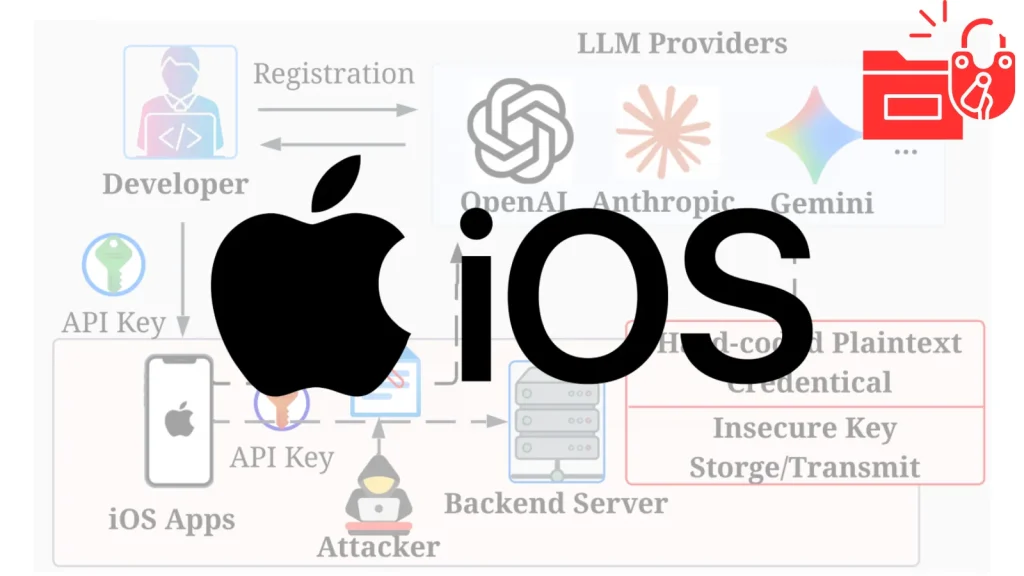
AI-Powered iOS Apps Leaking LLM API Credentials Through Network Traffic
The Silent Leak: How AI-Powered iOS Apps are Exposing LLM Credentials
The burgeoning landscape of artificial intelligence has introduced a new wave of innovation, especially within mobile applications. However, this rapid adoption isn’t without its growing pains regarding security. A critical concern has emerged from the shadows: AI-powered iOS applications are inadvertently leaking Large Language Model (LLM) API credentials through unencrypted network traffic. This vulnerability isn’t just a theoretical risk; it presents a clear and present danger, exposing developers to significant financial and reputational damage from account abuse and unauthorized access to cloud resources.
The Alarming Reality: 64% of Apps at Risk
A recent empirical study, meticulously examining 444 free, LLM-enabled iOS applications available on the US App Store, uncovered a disturbing trend. The findings revealed that a staggering 282 of these apps – a significant 64% – were found to be leaking exploitable LLM credentials. This isn’t a minor oversight; it represents a systemic security flaw that could lead to widespread misuse of the underlying LLM services. Such credentials, if intercepted, grant malicious actors direct access to sensitive APIs, potentially incurring massive costs on developers’ accounts or enabling the exfiltration of proprietary data. The information originates from a comprehensive report highlighted by Cyber Security News.
Understanding the Threat: What Are Leaked LLM Credentials?
LLM API credentials are the keys to accessing powerful AI models like those from OpenAI, Google, and other providers. These credentials typically come in the form of API keys, tokens, or other authentication mechanisms. When an iOS app interacts with an LLM, it sends these credentials with each request. If this network traffic is not properly encrypted – for instance, over HTTP instead of HTTPS – or if the credentials are hardcoded and transmitted without sufficient protection, they become susceptible to interception. An attacker performing a Man-in-the-Middle (MitM) attack on an unsecured network can easily capture these critical pieces of information. Once obtained, these credentials can be used for:
- Unauthorized API Usage: Running up massive bills on the developer’s LLM account.
- Data Exfiltration: Accessing data processed by the LLM, which could include sensitive user information or proprietary company data.
- Service Abuse: Misusing the LLM for malicious purposes, potentially even launching further attacks.
Remediation Actions: Securing LLM API Credentials
Addressing this pervasive vulnerability requires a multi-faceted approach from developers and platform providers alike. Prompt action is crucial to mitigate the risks associated with CVE-2023-XXXXX (Note: A specific CVE for this broad issue isn’t publicly assigned yet, but the principle applies). Here are key remediation steps:
- Always Use HTTPS: Ensure all network communications with LLM APIs are conducted exclusively over HTTPS. This encrypts the traffic, making it significantly harder for attackers to intercept credentials.
- Avoid Hardcoding Credentials: Never embed API keys directly into the application’s source code. Instead, utilize secure methods for storing and retrieving credentials.
- Implement Backend Proxy: Route all LLM API calls through a secure backend proxy server. The iOS app communicates with your backend, and your backend then securely calls the LLM API. This keeps the credentials entirely off the device.
- Environment Variables and Key Management Services: For server-side components, use environment variables or dedicated key management services (KMS) to store sensitive credentials securely.
- Principle of Least Privilege: Issue API keys with the minimum necessary permissions required for the application’s functionality.
- API Key Rotation: Regularly rotate LLM API keys to minimize the window of opportunity for compromised keys.
- Runtime Protection: Employ mobile application security solutions that offer runtime application self-protection (RASP) to detect and prevent credential theft at the client level.
- Security Audits and Penetration Testing: Conduct regular security audits and penetration tests on your iOS applications, specifically focusing on network communication and credential handling.
Relevant Tools for Detection and Mitigation
Developers and security professionals can leverage various tools to identify and address credential leakage issues. While a single CVE might not cover the breadth of this problem, the principles of secure communication and storage are paramount.
| Tool Name | Purpose | Link |
|---|---|---|
| Mobile Security Framework (MobSF) | Static and Dynamic Analysis for Mobile Apps | https://mobsf.github.io/docs/ |
| Burp Suite Community/Pro | Web Vulnerability Scanner & Proxy for Traffic Interception | https://portswigger.net/burp |
| OWASP Mobile Top 10 | Reference for Mobile Application Security Risks | https://owasp.org/www-project-mobile-top-10/ |
| Wireshark | Network Protocol Analyzer for Traffic Inspection | https://www.wireshark.org/ |
Conclusion: A Call for Heightened Vigilance in AI App Development
The widespread leakage of LLM API credentials through AI-powered iOS applications serves as a stark reminder of the security challenges accompanying rapid technological advancement. The study’s finding that 64% of apps are vulnerable underscores a critical need for enhanced security practices in mobile AI development. Developers must prioritize secure credential management, leverage encrypted communication, and implement robust backend architectures to protect their LLM accounts and, by extension, their users. Ignoring these fundamental security principles not only risks financial repercussions but also erodes trust in the reliability and safety of AI-driven mobile experiences.