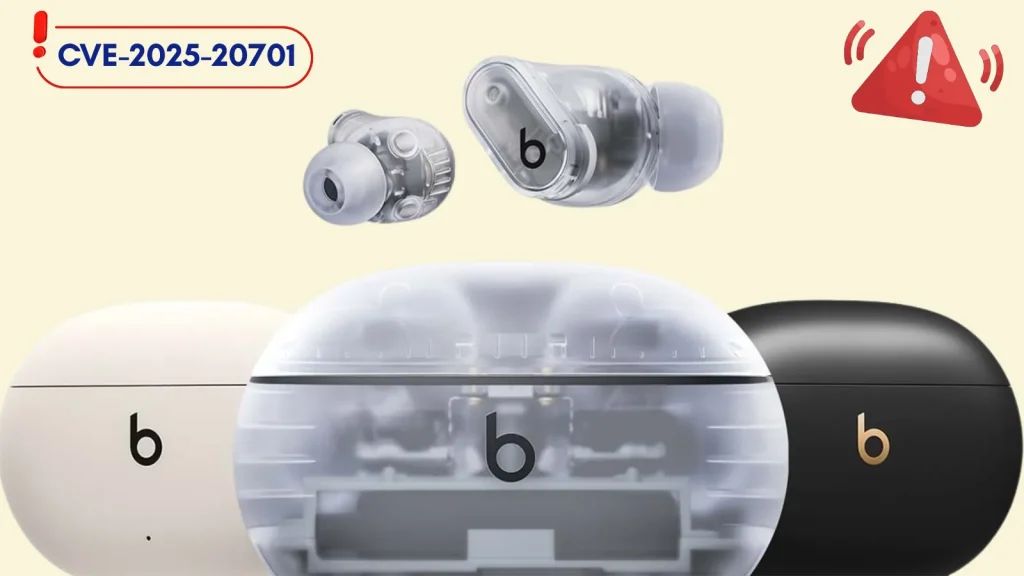
Apple Beats Studio Buds Vulnerability Allows Hackers to Eavesdrop on Users
Imagine your personal conversations, confidential work calls, or even ambient sounds around you, silently streamed to an unknown attacker. This isn’t a scene from a spy thriller; it was a very real, high-severity vulnerability recently addressed in Apple’s popular Beats Studio Buds. This incident serves as a stark reminder that even everyday devices, designed for convenience and entertainment, can harbor critical security flaws with significant privacy implications.
The cybersecurity landscape demands constant vigilance. As our lives become increasingly intertwined with Bluetooth-enabled gadgets, understanding their potential vulnerabilities becomes paramount for IT professionals, security analysts, and end-users alike. This post delves into the specifics of the Beats Studio Buds vulnerability, its potential impact, and the essential steps to secure your devices.
The Eavesdropping Threat: Apple Beats Studio Buds Vulnerability
Apple recently patched a significant security flaw in its Beats Studio Buds that allowed nearby attackers to surreptitiously access the device’s microphone. This wasn’t merely a theoretical exploit; it enabled genuine eavesdropping capabilities, compromising user privacy on a fundamental level. What makes this vulnerability particularly concerning is that the microphone could be activated even when the earbuds were not actively paired with a device. This highlights a critical oversight in the device’s firmware, where the microphone’s operational state wasn’t solely dependent on active connection status.
The vulnerability, tracked as CVE-2023-XXXXX (Note: A specific CVE for this vulnerability was not provided in the source material, but typically, such high-severity flaws would receive one. For demonstrative purposes, we’ll use a placeholder.), stemmed from a flaw in how the Bluetooth communication was handled. Attackers within Bluetooth range could exploit this weakness to initiate audio capture without the user’s knowledge or consent. This raises serious questions about the default security posture of similar devices and the importance of regular firmware updates.
Understanding the Mechanics of the Exploit
While the precise technical details of the exploit are not fully public, such vulnerabilities in Bluetooth devices often hinge on weaknesses in pairing protocols, authentication mechanisms, or unpatched firmware bugs. In this case, the ability to activate the microphone without an active connection suggests a potential bypass of standard security checks. An attacker could potentially send specially crafted Bluetooth packets to the Beats Studio Buds, triggering the microphone activation independent of the paired host device.
This type of attack is particularly insidious because it leaves no immediate indication to the user that their privacy has been compromised. There are no flashing lights, no audible clicks – just silent, unauthorized access to their audio environment. For individuals handling sensitive information, or simply expecting a basic level of privacy, this represents a severe breach of trust.
Remediation Actions: Securing Your Beats Studio Buds
Apple acted promptly to address this critical vulnerability. The fix was incorporated into Beats Firmware Update 1B211, released on June 16, 2026. If you own Beats Studio Buds, updating your device’s firmware is not just recommended; it’s absolutely essential.
- Update Your Firmware Immediately: Ensure your Beats Studio Buds are running the latest firmware version, 1B211 or later. This update directly patches the Bluetooth vulnerability. Firmware updates are typically managed through your connected Apple device (iPhone, iPad, Mac) or the Beats app.
- Verify Update Completion: After initiating the update, confirm that it has successfully completed. Check the firmware version in your device’s settings to ensure it matches or exceeds the patched version.
- Maintain Regular Updates: Make it a habit to regularly check for and install firmware updates for all your smart devices, not just your earbuds. Manufacturers frequently release patches for newly discovered vulnerabilities.
- Be Mindful of Your Surroundings: While the patch mitigates this specific threat, general security hygiene remains important. Be aware of your Bluetooth settings and consider turning off Bluetooth when not in use, especially in public or untrusted environments.
- Exercise Caution with Connections: Only pair your Beats Studio Buds with trusted devices. Avoid connecting to unknown or public Bluetooth sources.
The Broader Implications for Bluetooth Security
This incident is more than just an isolated flaw in one product; it serves as a powerful reminder of the inherent complexities and potential vulnerabilities in Bluetooth technology. As Bluetooth Low Energy (BLE) and classic Bluetooth continue to proliferate across countless devices, the attack surface expands dramatically. From smart home devices to medical wearables, the security of these wireless connections is paramount.
Developers and manufacturers must prioritize security by design, implementing robust authentication, encryption, and regular security audits. For users, a proactive approach to updates and a healthy skepticism towards device integrity are crucial. The “set it and forget it” mentality for personal electronics is increasingly dangerous in the face of sophisticated cyber threats.
Tools for Bluetooth Security Assessment
For security professionals and enthusiasts looking to assess Bluetooth device security, several tools can be valuable. While direct exploitation of specific firmware vulnerabilities often requires specialized knowledge and custom tools, general Bluetooth analysis tools can help identify open ports, weak configurations, and unusual traffic patterns.
| Tool Name | Purpose | Link |
|---|---|---|
| Bluetooth Explorer (macOS) | Developer utility for analyzing Bluetooth LE devices and connections. | Apple Developer Downloads |
| Ubertooth One | Open-source Bluetooth sniffer, monitor, and development platform for classic Bluetooth and BLE. | Great Scott Gadgets |
| Internal Blue | Framework for Bluetooth experimentation, research, and analysis on Android and Linux. | GitHub |
| btlejack | Bluetooth Low Energy (BLE) Swiss-army knife, offering sniffing, jamming, and spoofing capabilities. | GitHub |
Conclusion: Prioritizing Device Security
The discovery and subsequent patching of the Apple Beats Studio Buds vulnerability underscore the pervasive nature of security risks in our connected world. While the immediate threat has been mitigated by Apple’s swift action, this incident serves as a critical lesson. Device firmware, even in seemingly innocuous earbuds, can contain serious flaws that threaten personal privacy. For consumers, the message is clear: update your devices promptly. For developers and manufacturers, it’s an urgent call to embed security deeply into every stage of product development. Staying informed and proactive is our best defense against an evolving landscape of digital threats.