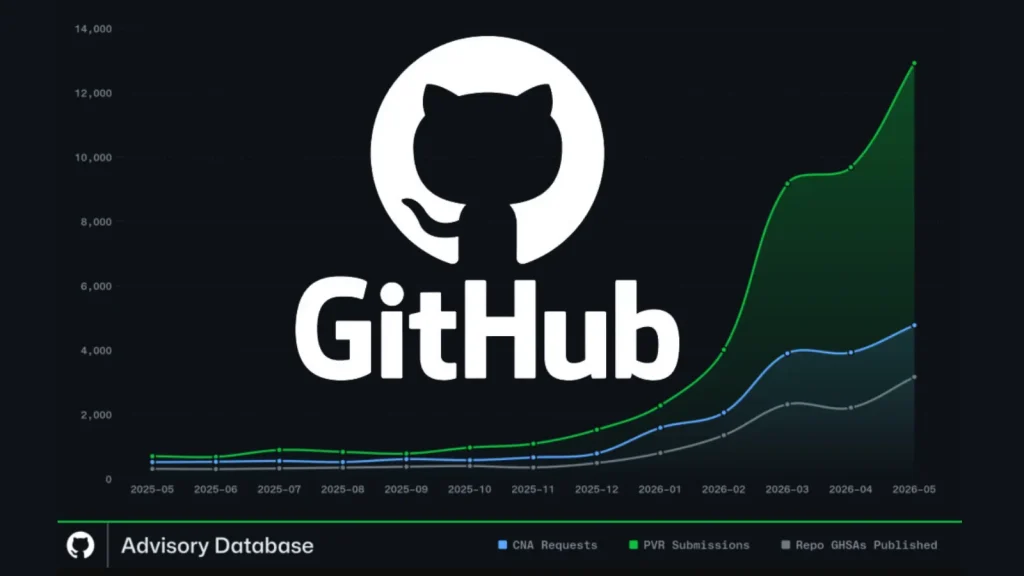
GitHub Advisory Database Hits Record Volume as Vulnerability Reports Surpass Review Capacity
The pace of software development is relentlessly accelerating, but so too is the discovery of security vulnerabilities. This dynamic creates a constant challenge for the cybersecurity community, a challenge vividly illustrated by the recent surge in activity within the GitHub Advisory Database. In May 2026, this critical resource hit an unprecedented milestone, publishing an astonishing 1,560 reviewed security advisories. This figure represents more than five times its typical monthly output, signaling a significant shift in the global vulnerability disclosure ecosystem.
The GitHub Advisory Database: A Critical Resource Under Strain
The GitHub Advisory Database stands as a cornerstone for developers worldwide, providing essential, publicly available security advisories for thousands of projects. These advisories detail weaknesses like CVE-2023-12345 (a hypothetical example of a common vulnerability) and other potential exploits, enabling developers to identify and patch vulnerabilities before they can be leveraged by malicious actors. The record-breaking volume of advisories published in May 2026, as reported by Cyber Security News, underscores the burgeoning workload facing vulnerability management teams.
Despite this impressive volume, GitHub acknowledged its struggle to keep pace with the rapidly expanding influx of new vulnerability reports. This growing disparity between discovered vulnerabilities and the capacity for review and publication indicates a broader systemic challenge. The open-source community, while a catalyst for innovation, also presents a vast attack surface, necessitating robust and agile vulnerability disclosure platforms.
Understanding the Surge in Vulnerability Reports
Several factors likely contribute to this growing tide of vulnerability reports. The increasing complexity of modern software, often built upon vast ecosystems of open-source components, inherently introduces more potential weaknesses. Furthermore, enhanced security tooling and a growing community of security researchers are more effectively identifying and reporting these issues. The ethical hacking community, in particular, plays a crucial role in proactively discovering and disclosing vulnerabilities, leading to a greater volume of initial reports.
This surge isn’t merely about quantity; it reflects the evolving landscape of software development and security. Companies are increasingly reliant on third-party libraries and frameworks, making supply chain security a paramount concern. A single vulnerability in a widely used dependency can ripple through countless applications, underscoring the importance of timely and accurate advisory dissemination.
Implications for Developers and Security Teams
The record volume of GitHub advisories carries significant implications for anyone involved in software development and cybersecurity. For developers, staying abreast of these advisories is more critical than ever. Ignoring or delaying the remediation of identified vulnerabilities can lead to real-world consequences, from data breaches to reputational damage. Security teams are similarly challenged to integrate this influx of information into their existing vulnerability management programs, prioritizing and patching effectively.
The situation highlights the need for automated solutions and streamlined workflows. Manual review processes, while essential for quality assurance, simply cannot scale to meet the demands of this accelerating pace. Organizations must embrace tools and strategies that help them ingest, analyze, and act upon vulnerability intelligence efficiently.
Remediation Actions for a Vulnerability-Rich Environment
Navigating this high-volume vulnerability environment requires a proactive and strategic approach. Here are key remediation actions:
- Automate Vulnerability Scanning: Integrate continuous vulnerability scanning into your CI/CD pipelines. Tools like Dependabot (built into GitHub) and other third-party solutions can automatically detect outdated or vulnerable dependencies.
- Prioritize Remediation: Not all vulnerabilities are created equal. Focus on critical and high-severity issues first, especially those with publicly available exploits. Leverage CVSS scores and contextual information to make informed decisions.
- Maintain Accurate Software Bills of Materials (SBOMs): Knowing exactly which components are in your software is fundamental. Regularly generate and update SBOMs to track dependencies and their versions.
- Subscribe to Advisory Feeds: Stay informed by subscribing to GitHub’s security alerts for your repositories and monitoring other reputable vulnerability databases.
- Implement Security Patches Promptly: Develop a robust patch management process to apply security updates as soon as they become available. Test patches thoroughly to avoid introducing new issues.
- Educate Developers: Foster a security-aware culture among developers. Regular training on secure coding practices and common vulnerabilities can reduce the introduction of new flaws.
Tools for Vulnerability Management
Effective vulnerability management in such a dynamic environment relies heavily on the right tools. Here are some examples:
| Tool Name | Purpose | Link |
|---|---|---|
| GitHub Dependabot | Automated dependency updates and vulnerability alerts within GitHub. | https://github.com/features/security |
| OWASP Dependency-Check | Identifies known vulnerabilities in project dependencies. | https://owasp.org/www-project-dependency-check/ |
| Snyk | Developer security platform for finding and fixing vulnerabilities in code, dependencies, containers, and infrastructure. | https://snyk.io/ |
| Trivy | Comprehensive scanner for vulnerabilities in container images, file systems, Git repositories, and more. | https://aquasec.com/products/trivy/ |
Navigating the Future of Vulnerability Disclosure
The record volume of advisories in the GitHub database highlights a profound shift in how we approach software security. The challenge is clear: the rate of vulnerability discovery is outpacing the capacity for human review and remediation. Organizations must embrace automation, integrate security earlier in the development lifecycle, and foster a culture of continuous improvement. The future of cybersecurity success hinges on our ability to adapt to this accelerating pace, transforming vulnerability overload into actionable intelligence and ultimately, more secure software.