Wi‑Fi 7 Multi‑Link Operation (MLO): Architecture Deep Dive
Wi-Fi 7 Multi-Link Operation (MLO) Architecture Deep Dive Explained
As the digital landscape evolves, the demand for faster, more reliable, and secure wireless connectivity intensifies. Wi-Fi 7 emerges as a transformative technology, addressing these growing needs with innovative features, chief among them being Multi-Link Operation (MLO). This article delves into the intricacies of Wi-Fi 7 MLO, exploring its architecture, benefits, and the profound impact it will have on next-generation wireless networks.
Understanding Multi-Link Operation (MLO)
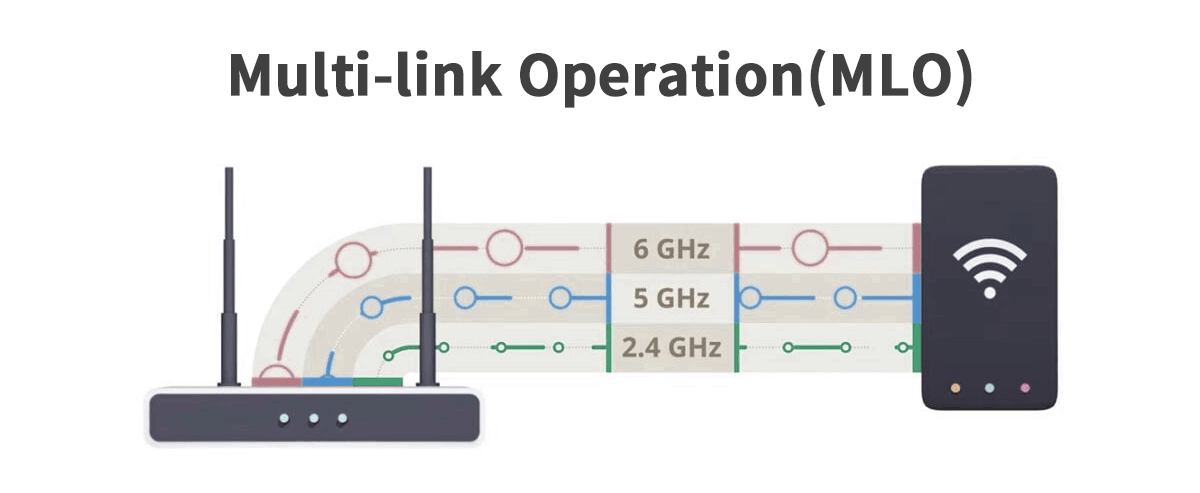
Multi-Link Operation represents a significant leap forward in wireless communication, fundamentally altering how client devices interact with access points to deliver unparalleled performance. This sophisticated mechanism is integral to the Wi-Fi 7 standard, promising to reshape our expectations of wireless connectivity by enabling the simultaneous utilization of multiple frequency bands. Our exploration will detail the technical nuances and operational advantages of this groundbreaking feature.
What is Multi-Link Operation?
Multi-Link Operation (MLO) is a groundbreaking feature of Wi-Fi 7 that allows Wi-Fi 7 devices, such as an access point (AP) and a station (STA), to transmit and receive data simultaneously over multiple frequency bands, including the 2.4 GHz, 5 GHz, and 6 GHz bands. This capability enables significant improvements in throughput, reliability, and latency. Unlike previous Wi-Fi standards, which typically operated on a single band, MLO provides a robust framework for aggregating bandwidth and enhancing connectivity.
How MLO Enhances Wi-Fi 7 Connectivity
Wi-Fi 7’s Multi-Link Operation dramatically enhances Wi-Fi 7 connectivity by enabling the aggregation of multiple links across different frequency bands. This allows Wi-Fi 7 client devices to communicate with a Wi-Fi 7 access point using two or more links concurrently, leading to higher throughput and lower latency. For applications like gaming or real-time streaming, the ability to reduce latency through MLO is paramount. It ensures a more stable and efficient connection, representing a substantial improvement over Wi-Fi 6 and Wi-Fi 6E.
Types of MLO in Wi-Fi 7
Wi-Fi 7 introduces two primary types of MLO to optimize performance and flexibility: Multi-Link Single Radio (MLSR) and Multi-Link Dual Radio (MLDR), also known as Simultaneous Transmit and Receive (STR) MLO. Each MLO mode offers distinct advantages for various scenarios. MLSR allows a single radio to switch between multiple links rapidly, while STR MLO enables true simultaneous transmission and reception across different frequency bands, offering the most powerful Wi-Fi 7 solution for demanding network environments.
Wi-Fi 7 and Its Features

Overview of Wi-Fi 7 Technology
Wi-Fi 7, formally known as 802.11be or Extremely High Throughput (EHT), represents the latest evolution in wireless connectivity, designed to meet the escalating demands of modern digital environments. This advanced standard introduces several groundbreaking features, including 4096-QAM modulation, wider 320 MHz channels, and a sophisticated approach to Multi-Link Operation (MLO), all contributing to unprecedented speeds and efficiency. It is engineered to provide a robust and high-performing wireless network capable of handling dense device populations and data-intensive applications.
Benefits of Wi-Fi 7 Routers
The deployment of Wi-Fi 7 routers offers a multitude of benefits, most notably the significantly enhanced throughput and reduced latency that elevate the user experience across various applications. With Wi-Fi 7, organizations and individuals can anticipate superior performance in streaming high-resolution content, engaging in real-time gaming, and managing large data transfers with unparalleled efficiency. The inherent reliability of Wi-Fi 7 connectivity ensures a consistently stable and responsive network environment, which is crucial for business continuity and personal productivity.
Comparison of Wi-Fi 7 with Previous Standards
When juxtaposed with its predecessors, Wi-Fi 7 presents a monumental leap in wireless technology, particularly through its refined Multi-Link Operation (MLO) capabilities. While Wi-Fi 6 and Wi-Fi 6E introduced advancements such as OFDMA and wider 6 GHz bands, Wi-Fi 7 takes a multi-radio approach, allowing client devices to communicate simultaneously across the 2.4 GHz, 5 GHz, and 6 GHz frequency bands. This simultaneous multi-link operation substantially boosts throughput and reduces latency, offering a powerful Wi-Fi 7 solution that significantly outperforms Wi-Fi 5 and previous standards.
Implementing Wi-Fi 7 MLO
How to Use MLO for Optimal Performance
To harness the full potential of Multi-Link Operation (MLO) and achieve optimal Wi-Fi 7 performance, it is essential to ensure that both the Wi-Fi 7 access point (AP) and client devices support the MLO feature of Wi-Fi 7. Proper network design should leverage the aggregation of bandwidth across multiple links and frequency bands, including the 2.4 GHz band, 5 GHz, and 6 GHz bands, to maximize throughput and reduce latency. Strategic placement of APs and careful consideration of network traffic patterns will ensure that the MLO mode operates with maximum efficiency.
Configuration of Wi-Fi 7 Multi-Link Operation
Configuring Wi-Fi 7 Multi-Link Operation requires a meticulous approach to ensure seamless connectivity and maximize performance. The access point (AP) must be provisioned to enable Multi-Link Single Radio (MLSR) or Simultaneous Transmit and Receive (STR) MLO, depending on the desired MLO mode and the capabilities of the client devices. Advanced settings allow for the dynamic aggregation of multiple links, optimizing bandwidth utilization across the 2.4 GHz, 5 GHz, and 6 GHz frequency bands to achieve higher throughput and lower latency for all connected devices.
Cisco Solutions for Wi-Fi 7 MLO
Cisco is at the forefront of providing robust solutions to support Wi-Fi 7 Multi-Link Operation, ensuring that enterprises can seamlessly integrate this transformative technology into their existing infrastructures. Cisco’s Wi-Fi 7 access points are engineered to fully support the MLO feature of Wi-Fi 7, enabling organizations to leverage higher throughput, reduced latency, and enhanced reliability. These solutions empower businesses to optimize their network performance by efficiently managing simultaneous transmissions across multiple links and frequency bands, including the 2.4 GHz, 5 GHz, and 6 GHz bands.
Applications of Wi-Fi 7 Multi-Link Operation

MLO in Gaming Environments
The integration of Wi-Fi 7’s Multi-Link Operation (MLO) within Wi-Fi 7 is set to revolutionize gaming environments by significantly addressing critical performance bottlenecks such as latency and packet loss. By enabling simultaneous communication across multiple frequency bands, including the 2.4 GHz, 5 GHz, and 6 GHz bands, Wi-Fi 7 MLO ensures a more stable and responsive connection. This capability to reduce latency through the MLO mode is paramount for competitive online gaming, offering a substantial improvement over Wi-Fi 6 and earlier standards.
Impact on Home and Office Connectivity
Wi-Fi 7’s Multi-Link Operation profoundly impacts home and office connectivity by elevating throughput and reliability to unprecedented levels. In busy environments with numerous client devices, the aggregation of bandwidth across multiple links and frequency bands prevents network congestion, ensuring consistent, high-speed internet access. This powerful Wi-Fi 7 solution, through its MLO feature, facilitates seamless video conferencing, large data transfers, and the smooth operation of multiple bandwidth-intensive applications simultaneously, bolstering productivity and enhancing user satisfaction.
Future of MLO in Smart Home Devices
The future of Multi-Link Operation in smart home devices promises a new era of enhanced connectivity and seamless integration. With Wi-Fi 7 MLO, smart home ecosystems will benefit from improved reliability and lower latency, crucial for the responsive operation of IoT devices. The ability of devices to utilize multiple links simultaneously across the 2.4 GHz, 5 GHz, and 6 GHz bands will ensure that even in congested environments, smart home devices maintain optimal performance, delivering a truly intelligent and efficient living experience.
Challenges and Considerations
Potential Limitations of Multi-Link Operation
While Wi-Fi 7’s Multi-Link Operation (MLO) offers significant advancements, it is important to acknowledge potential limitations. The full benefits of Wi-Fi 7 MLO depend on both the access point (AP) and client devices fully supporting the MLO feature of Wi-Fi 7 and its various MLO modes, such as Multi-Link Single Radio (MLSR) and Simultaneous Transmit and Receive (STR) MLO. Furthermore, ensuring optimal performance across multiple links and frequency bands, including the 2.4 GHz band, requires careful network planning and the availability of sufficient bandwidth across all utilized bands.
Best Practices for Cisco Networking and MLO
For organizations leveraging Cisco networking solutions, adhering to best practices is crucial for maximizing the benefits of Wi-Fi 7’s Multi-Link Operation. It is recommended to deploy Cisco Wi-Fi 7 access points that fully support the MLO feature, ensuring that the network can efficiently handle simultaneous transmissions across multiple links and frequency bands. Proper configuration of the MLO mode, combined with robust network security protocols, will help reduce latency, enhance throughput, and maintain the high reliability expected from a powerful Wi-Fi 7 solution.
Future Developments in Wi-Fi 7 and MLO
The trajectory of future developments in Wi-Fi 7 and Multi-Link Operation points towards even greater sophistication and efficiency. Ongoing research and development will likely focus on refining the MLO mode to further optimize link aggregation, increase throughput, and reduce latency across diverse network conditions. Innovations in multi-radio technology and enhanced support for all frequency bands, including the 2.4 GHz, 5 GHz, and 6 GHz bands, will solidify Wi-Fi 7’s position as a robust and future-proof standard for next-generation wireless connectivity, continuously delivering higher throughput.

How does str mode enable wi‑fi 7’s multi-link operation and what is the real-world benefit?
STR mode (simultaneous transmit and receive) in Wi‑Fi 7 enables multi-link operation (MLO) by allowing devices and access points (APs) to use multiple links and bands simultaneously—such as 2.4GHz, 5GHz and future 6GHz or 7’s multi-link operation across bands—so a single client can send and receive data on different radios at the same time. In the real-world this translates to higher aggregate throughput, lower latency for downlink and uplink, and improved reliability because lost packets on one mlo link can be retransmitted on another. STR also supports load balancing across links and multi-link multi-radio configurations, making Wi‑Fi 7 a game-changer in wireless for high-bandwidth applications like AR/VR and cloud gaming.
Can meraki APs and other devices that support mlo perform packet-level load balancing across multiple bands simultaneously?
Meraki APs that implement Wi‑Fi 7 MLO can distribute traffic at the packet-level across multiple links and bands simultaneously (for example sending packets over 5ghz and 2.4ghz or two 5 ghz band channels) when both the AP and client are MLD-capable. This packet-level strategy—sometimes implemented alongside eMLSR or other MLO scheduling algorithms—enables per-packet load balancing and fast recovery from interference. However, capabilities depend on the vendor firmware and whether the client device supports multi-link multi-radio; non MLO clients will fall back to single-link behavior, so end-to-end benefits require devices that support the full MLO feature set.
How do str and aps interact with legacy WLANs like wifi 6 or wi‑fi 5 in mixed deployments?
In mixed deployments where Wi‑Fi 7 APs (or APs running advanced firmware) coexist with Wi‑Fi 6 and Wi‑Fi 5 clients, STR-capable APs can still service legacy devices but cannot force MLO behavior on non‑MLO clients. The MLD coordination needed for multi-link is only available between endpoints that support the feature; otherwise APs use traditional single-band or single-link scheduling. Vendors such as Qualcomm are introducing chipsets that support both legacy modes and MLO so APs can manage a mix of devices, enabling advanced features for compatible clients while maintaining interoperability for older WLAN devices.
Will wireshark and packet-level troubleshooting reflect wi‑fi 7 multi link operation and eMLSR scheduling?
Wireshark can capture multi-link traffic but interpreting MLO traces requires updated dissection and sometimes synchronized captures across radios because wi‑fi 7 multi link operation splits traffic across links (2.4ghz, 5ghz, etc.). Packet-level traces will show separate link frames and MLO control messages (MLD association, eMLSR indications) when captured properly. For downlink and uplink analysis, synchronizing timestamps between captures or using AP-integrated diagnostics (some Meraki and enterprise APs offer this) helps correlate packets across links and reveal load balancing decisions, retransmissions, and per-link performance in real-world troubleshooting.
What are the differences between mlo’s multi-link multi-radio approach and one band or non mlo configurations?
MLO’s multi-link multi-radio approach aggregates multiple physical links—potentially across different bands simultaneously—so devices can send data and receive across the best available links. In contrast, one band or non MLO configurations restrict clients to a single radio or channel at a time, limiting throughput and resilience. MLO supports different modes (STR, non-STR behaviors), eMLSR for scheduling, and per-packet steering to optimize metrics like latency and throughput, while non MLO devices rely on traditional single-link load balancing and channel selection. In practice, throughput gains and improved downlink reliability are significant when both AP and client are MLD-capable, making Wi‑Fi 7 a substantial evolution beyond Wi‑Fi 6 and Wi‑Fi 5.