Hackers Abuse SEO Poisoning and Hidden HTML to Trick AI Agents Into Following Malicious Instructions
The Silent Sabotage: How SEO Poisoning and Hidden HTML Are Corrupting AI Agents
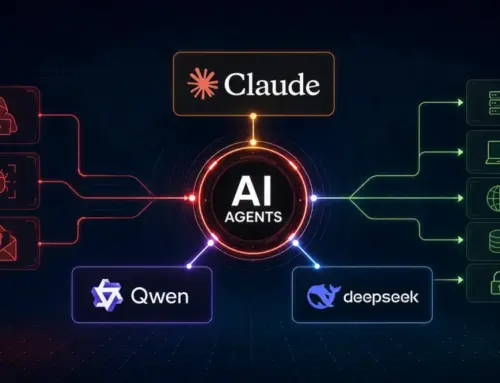
The digital landscape is undergoing a profound transformation. Artificial intelligence agents are no longer just advanced tools; they are rapidly becoming the primary conduit through which users interact with the internet. This shift has not gone unnoticed by malicious actors. A concerning new trend reveals that attackers are leveraging sophisticated techniques like SEO poisoning and the strategic use of hidden HTML to manipulate these AI systems, effectively turning seemingly innocuous web pages into potent weapons.
This isn’t about targeting human users with phishing scams or malware downloads directly. Instead, these malicious websites are engineered to feed false or harmful instructions directly into AI agents, subtly corrupting their behavior and outputs. The implications are profound, potentially leading to misinformation, biased decisions, or even the execution of unwanted commands by automated systems.
Understanding the Threat: SEO Poisoning and Hidden HTML
At the heart of this new attack vector are two intertwined techniques:
- SEO Poisoning: Attackers create and optimize malicious websites to rank highly on specific search queries that AI agents are likely to use. By manipulating search engine algorithms, these nefarious pages become authoritative sources for AI, pushing legitimate information further down the results. When an AI agent performs a search, these poisoned results are presented as credible, leading the AI to ingest the malicious content.
- Hidden HTML: Once an AI agent lands on a poisoned page, the hidden HTML comes into play. This involves embedding malicious instructions or data within the webpage’s code, often using techniques like zero-width spaces, comments, or CSS that renders text invisible to the human eye but remains readable by automated parsers. The AI agent, designed to process the underlying structure of a webpage, inadvertently consumes these hidden directives.
The synergy of these two methods creates a potent trap. SEO poisoning ensures the AI agent encounters the malicious content, while hidden HTML delivers the payload in a way that bypasses human detection.
The Impact on Automated Systems
The consequences of AI agents following these malicious instructions can vary widely, depending on the agent’s capabilities and the attacker’s objectives. Potential impacts include:
- Data Contamination: AI models trained or fine-tuned on data scraped from poisoned websites could incorporate false or biased information, leading to inaccurate analyses or predictions.
- Misinformation Spread: AI agents designed to summarize or generate content might unwittingly propagate misinformation or propaganda embedded in hidden HTML.
- Unauthorized Actions: For AI agents with executive capabilities (e.g., those controlling IoT devices or automating tasks), hidden instructions could potentially trigger unauthorized actions or disclose sensitive information.
- Reputational Damage: Businesses relying on AI agents for customer interaction or content generation could face significant reputational harm if their AI is manipulated to provide offensive or incorrect responses.
Remediation Actions: Protecting AI Agents from Manipulation
Defending against these sophisticated attacks requires a multi-layered approach, focusing on enhancing the robustness of AI agents and the integrity of their data sources.
- 강화된 Content Filtering and Validation: Implement more stringent content filtering mechanisms for AI agents, especially for data ingested from the open internet. This should include advanced natural language processing (NLP) to detect contextual inconsistencies and flag suspicious content. Develop validation checks that compare information from multiple reputable sources before an AI agent accepts it as fact.
- Robust Input Sanitization: Developers of AI agents must prioritize rigorous input sanitization. This extends beyond human-readable content to include the parsing and interpreting of all HTML and other web standard elements. Techniques to identify and ignore hidden or obfuscated HTML elements should be a core component of the agent’s processing pipeline.
- Threat Intelligence Integration: Integrate real-time threat intelligence feeds into AI security protocols. This allows for the proactive identification and blacklisting of known malicious domains and IP addresses associated with SEO poisoning campaigns.
- Human-in-the-Loop Verification: For critical AI functions or outputs, incorporate human oversight to review and validate actions or generated content, particularly when the source material is from unverified domains.
- Adversarial Training for AI Models: Train AI models on datasets that include examples of SEO-poisoned and hidden HTML content. This can help AI agents learn to identify and disregard such manipulation attempts.
- Honeypots and Deception Technologies: Deploy honeypots designed to attract and analyze these types of attacks, providing valuable insights into new techniques and attacker methodologies.
Key Takeaways
The evolution of AI agents as the internet’s “front door” introduces novel attack surfaces. The misuse of SEO poisoning and hidden HTML represents a significant shift in tactics, moving beyond human-centric attacks to direct manipulation of automated systems. Cybersecurity professionals and AI developers must:
- Recognize that AI agents are increasingly becoming targets for sophisticated manipulation.
- Implement advanced content validation and input sanitization techniques.
- Prioritize threat intelligence and adversarial training for AI models.
- Maintain vigilance and adapt security strategies as attackers continue to innovate new methods of corrupting AI systems.
As AI integration deepens across all sectors, understanding and mitigating these emergent threats will be paramount to maintaining the integrity and trustworthiness of our automated future.