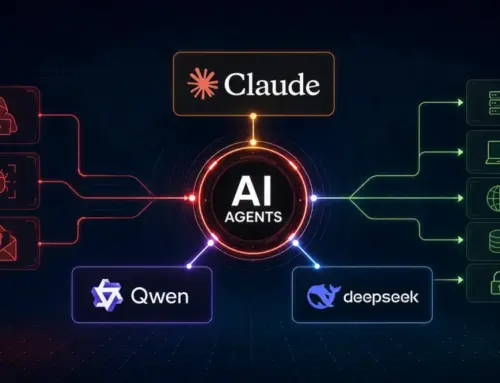
4,982 Security Issues Identified Across 2,259 Affected in Public MCP Servers
A Troubling Nexus: Unpacking the Security Crisis in Public MCP Servers
The burgeoning landscape of agentic AI is rapidly transforming how applications interact with data. At its core lies the Model Context Protocol (MCP), a critical standard enabling Large Language Models (LLMs) to seamlessly connect with diverse data sources. However, a recent, sweeping analysis has unveiled a deeply concerning security crisis within this vital ecosystem: 4,982 security issues identified across 2,259 affected public MCP servers. This represents a significant exposure, directly threatening the integrity and reliability of next-generation AI applications.
This alarming discovery, originally highlighted by Cyber Security News, points to profound gaps in current security practices surrounding MCP deployments. For IT professionals, security analysts, and developers working with AI, understanding the nature and implications of these vulnerabilities is paramount. The stability and trustworthiness of agentic AI hinge on the secure foundation of its underlying protocols and infrastructure.
The Pervasive Reach of MCP and Its Criticality
Model Context Protocol has rapidly ascended to become the dominant standard for integrating LLMs with both local and remote data. Its design facilitates the dynamic real-time querying and incorporation of context, enabling AI applications to move beyond static training data and interact with evolving information environments. This capability is pivotal for advanced AI applications, from intelligent assistants to complex data analysis tools and autonomous agents.
Given its central role, the security posture of public MCP servers directly impacts the entire agentic AI ecosystem. Any compromise or vulnerability within these servers can lead to a cascade of issues, including data breaches, unauthorized access to sensitive information, manipulation of AI decision-making, and disruption of critical AI services. The sheer volume of identified issues underscores a systemic problem that demands immediate attention.
Understanding the Threat Landscape: Types of Security Issues Observed
While the original source doesn’t detail every specific vulnerability or CVE, the broad categorization of “security issues” across thousands of servers suggests a multifaceted threat landscape. Common vulnerabilities seen in similar protocol and API-driven systems often include:
- Improper Authentication and Authorization: Weak or missing access controls, allowing unauthorized users or AI agents to interact with or modify data and configurations.
- Data Exposure and Leakage: Inadequate encryption or misconfigurations leading to the inadvertent exposure of sensitive data processed or stored by MCP servers. This could involve context data fed to LLMs, user queries, or even proprietary model information.
- Injection Flaws: Vulnerabilities (e.g., command injection, SQL injection if a backend database is involved) that allow attackers to execute arbitrary code or manipulate data by injecting malicious input into queries or context data. For example, a vulnerability similar to CVE-2023-35639 (though unrelated to MCP, it exemplifies injection concerns) involves unauthenticated remote code execution.
- Configuration Management Errors: Default configurations left unsecured, open ports, or unnecessary services running, providing attackers with easy entry points.
- Denial-of-Service (DoS) Vulnerabilities: Flaws that can be exploited to overload or crash MCP servers, rendering essential AI services unavailable.
- Supply Chain Risks: Dependencies on vulnerable third-party libraries or components within the MCP server stack.
The scale of compromised servers indicates that these aren’t isolated incidents but rather widespread misconfigurations or fundamental security oversight in deployment strategies.
Remediation Actions for Securing MCP Deployments
Addressing the 4,982 identified security issues requires a comprehensive and proactive approach. Organizations deploying and utilizing public MCP servers must prioritize security at every stage:
- Conduct Regular Security Audits and Penetration Testing: Proactively identify vulnerabilities in MCP server configurations, underlying infrastructure, and associated APIs. Specialized tools and manual assessments are crucial.
- Implement Strong Authentication and Authorization: Enforce multi-factor authentication (MFA) where possible. Implement granular role-based access control (RBAC) to ensure only authorized entities (users or other AI agents) have the necessary permissions. All API endpoints should be secured.
- Encrypt Data in Transit and At Rest: Ensure all data exchanged with and stored by MCP servers is encrypted using industry-standard protocols (e.g., TLS 1.2+ for in-transit, strong symmetric encryption for at-rest storage).
- Secure Configuration Management: Adopt a “secure by default” posture. Regularly review and harden server configurations, disable unnecessary services, and follow least privilege principles for both network access and server permissions.
- Input Validation and Sanitization: Rigorously validate and sanitize all inputs received by MCP servers to prevent injection attacks and other forms of data manipulation.
- Regular Patching and Updates: Keep all software components—operating systems, MCP server software, libraries, and frameworks—up-to-date with the latest security patches to address known vulnerabilities like CVE-2023-2825 (an example of a critical vulnerability in a different context requiring diligent patching).
- Network Segmentation and Firewalls: Isolate MCP servers within secure network segments. Implement robust firewall rules to restrict network access to only essential ports and trusted IP ranges.
- Logging and Monitoring: Implement comprehensive logging for all MCP server activities. Centralize logs and integrate them with security information and event management (SIEM) systems for real-time monitoring, anomaly detection, and incident response.
- Developer Training and Awareness: Educate developers on secure coding practices, understanding the unique security challenges of AI architectures, and following established security guidelines for MCP implementations.
Tools for Detection and Mitigation
Leveraging appropriate security tools is critical for identifying and mitigating issues within MCP server deployments.
| Tool Name | Purpose | Link |
|---|---|---|
| OWASP ZAP | Web application security scanner to find vulnerabilities (e.g., injection flaws) in APIs and web interfaces, which may front MCP servers. | https://www.zaproxy.org/ |
| Nessus | Vulnerability scanner for identifying misconfigurations, missing patches, and other security weaknesses on hosts running MCP servers. | https://www.tenable.com/products/nessus |
| OpenVAS | Open-source vulnerability scanner, a fork of Nessus, capable of network and web application scanning. | https://www.openvas.org/ |
| Snort/Suricata | Intrusion Detection/Prevention Systems (IDS/IPS) for monitoring network traffic for suspicious activity and known attack patterns targeting MCP servers. | https://www.snort.org/ / https://suricata.io/ |
| SIEM Solutions (e.g., Splunk, Elastic Stack) | Centralized logging, monitoring, and analysis of security events from MCP servers and infrastructure. | https://www.splunk.com/ / https://www.elastic.co/elastic-stack/ |
The Path Forward for Agentic AI Security
The discovery of nearly 5,000 security issues across over 2,000 public MCP servers is a stark reminder of the security challenges inherent in rapidly evolving technological landscapes, particularly those as transformative as agentic AI. The integrity of AI applications, their ability to deliver reliable insights, and the trustworthiness of their interactions fundamentally depend on the security of foundational protocols like MCP.
Addressing these vulnerabilities is not merely a technical task; it’s a strategic imperative. Organizations must invest in robust security practices, continuous monitoring, and a culture of security awareness to safeguard their AI investments and the data they process. Failure to do so risks not only data breaches and operational disruptions but also a significant erosion of trust in the promising future of agentic AI.