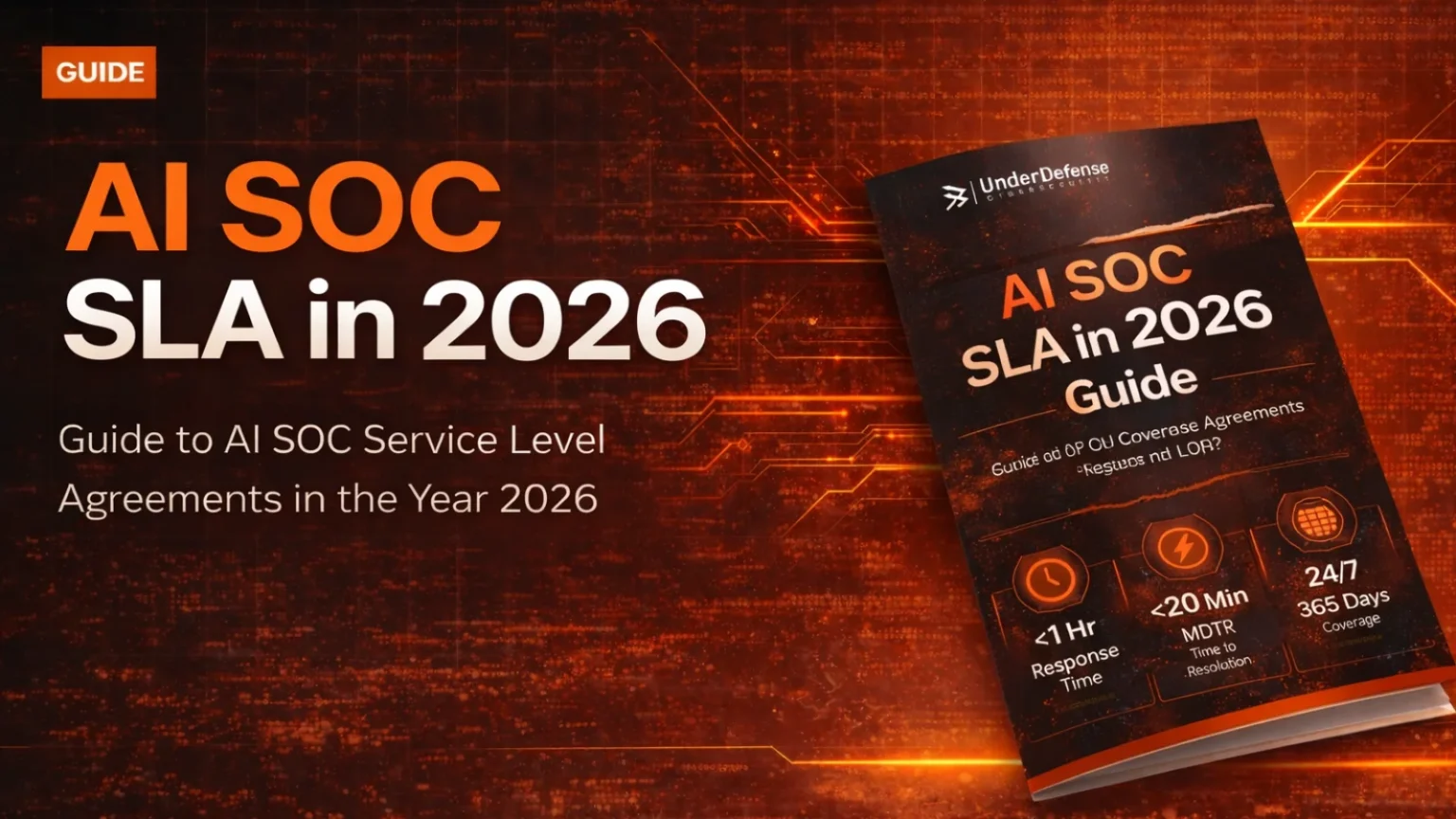
The $50K-to-$5M Gap: Why Your SOC SLA Is Stuck in 2019 — Here’s the 2026 AI SLA Vendor Guide
The $50K-to-$5M Gap: Why Your SOC SLA Is Stuck in 2019 — Here’s the 2026 AI SLA Vendor Guide
The cybersecurity landscape has undergone a seismic shift, yet many organizations still operate under Managed Detection and Response (MDR) Service Level Agreements (SLAs) drafted for a bygone era. If your Security Operations Center (SOC) SLA feels like it’s stuck in 2019, you’re not alone. The advent of AI in security operations has fundamentally altered how threats are detected, analyzed, and responded to, creating a significant “gap” between traditional contract language and modern operational realities. This guide explores why legacy MDR contracts fall short in an AI-driven world and outlines the measurable standards that define a 2026 AI SLA.
The Problem: Contracts Written for Human Queues
Pull out your current MDR contract and scrutinize its SLA section. The vast majority of SOC SLAs still in production were designed with human-centric operations in mind. They stipulate response times and escalation paths based on the processing capacity of human analysts. This model, while effective for its time, struggles to keep pace with the sheer volume and velocity of threats that AI-powered adversaries and tools can generate. These legacy contracts inherently assume:
- Linear Human Processing: That incidents are triaged sequentially by human analysts.
- Manual Investigation: That investigations are primarily manual, relying on an analyst’s experience and manual tool usage.
- Fixed Response Times: That threats adhere to predictable patterns, allowing for general, fixed response windows.
This outdated framework leaves organizations vulnerable, leading to missed threats, delayed responses, and a significant disconnect between perceived protection and actual security posture. The rapid evolution of attack techniques and threat intelligence necessitates a more dynamic and technologically aligned SLA.
The AI Revolution in SOC Operations
AI is no longer a futuristic concept in cybersecurity; it’s a present-day reality transforming the SOC. Machine learning algorithms, behavioral analytics, and automated response play a critical role in modern security operations. AI empowers SOCs to:
- Process Vast Data: Ingest and correlate billions of security events in real-time, far surpassing human capabilities.
- Identify Anomalies: Detect subtle deviations from baseline behavior that indicate novel or complex threats.
- Automate Triage and Response: Prioritize alerts with precision and even initiate automated containment actions.
- Reduce Alert Fatigue: Distill high-fidelity alerts from noise, allowing human analysts to focus on complex investigations.
This fundamental shift demands equally fundamental changes in how MDR services are contracted and evaluated. An AI-powered SOC operates on different metrics, speeds, and efficiencies than its human-only predecessor.
Bridging the Gap: The 2026 AI SLA Framework
To truly leverage the power of AI in your security operations, your MDR SLA needs a significant overhaul. The 2026 AI SLA framework moves beyond simple “time to respond” and focuses on outcome-based metrics, powered by AI’s capabilities. Here are the key components and measurable standards that should replace legacy language:
Automated Triage and Prioritization Metrics
Instead of vague “initial response times,” future SLAs should measure the efficacy and speed of AI-driven triage:
- Mean Time to Detect (MTTD) Malicious Activity: This metric quantifies the average elapsed time from when a malicious event occurs until it is identified by the AI system. This should be measured in seconds or minutes, not hours.
- Alert Fidelity/True Positive Rate (TPR): The percentage of alerts that genuinely represent a security incident, directly linked to AI’s ability to filter noise. Aim for TPRs north of 90% for high-priority alerts.
- Mean Time to Prioritize (MTTP): The time taken for the AI system to assign a severity level and recommended action to a detected incident. This reflects the AI’s ability to contextualize and risk-score threats.
AI-Driven Response and Containment Standards
Human escalation is still vital, but AI accelerates initial containment. SLAs should reflect this:
- Mean Time to Contain (MTC) via Automation: The average time from detection until an automated response action (e.g., blocking an IP, isolating a host, revoking a token) is successfully deployed. This demonstrates the “reach” of your AI.
- Automated Remediation Success Rate: The percentage of incidents where automated responses successfully mitigated the threat without human intervention.
- Human Handoff Efficiency: For incidents requiring human intervention, metrics around the quality and completeness of AI-generated context provided to analysts, leading to faster human response.
Continuous Improvement and Adaptive Security
AI-driven security is not static; it continuously learns and adapts. Your SLA should reflect this:
- Model Retraining Frequency: How often the AI models are updated and retrained based on new threat intelligence and environmental changes.
- Drift Detection/Correction Time: Metrics around how quickly the AI system identifies and corrects for “concept drift” – when attack patterns change, making older models less effective.
- Proactive Threat Hunting Success Rate (AI-Assisted): The percentage of successful threat hunts initiated by AI-driven anomaly detection, leading to the discovery of previously unknown threats.
For example, if your current contract states a “4-hour response time for critical alerts,” a 2026 AI SLA might instead specify: “MTTD Malicious Activity <60 seconds for critical indicators; MTC via Automation <5 minutes for known attack patterns; Human Handoff <10 minutes with AI-generated investigative playbook.”
Financial Implications and the $50K-to-$5M Gap
The “50K-to-5M Gap” refers to the stark difference in risk exposure and actual protection received when relying on outdated SLAs. A $50,000 annual MDR contract with a 2019 SLA might provide coverage that, in reality, leaves you vulnerable to a $5 million (or more) data breach due to slow detection and response. This isn’t just about cost; it’s about the tangible financial impact of inadequate security. Investing in a modern, AI-centric SLA is an investment in reducing your organization’s overall cyber risk and potentially preventing catastrophic financial losses.
The reference article from Cyber Security News further elaborates on this crucial shift, emphasizing the need for measurable standards that hold vendors accountable for AI’s performance, not just human effort.
Remediation Actions: Evolve Your MDR SLA
It’s time to proactively address the shortcomings of your current MDR SLA. Here’s a roadmap for evolving your contract to meet the demands of AI-driven security:
- Audit Existing SLAs: Catalog all current MDR contracts and identify clauses related to detection, response, and reporting. Highlight language that assumes human-only processes.
- Define AI-Specific Metrics: Work with your security team and potential MDR vendors to define measurable objectives for AI-powered aspects like automated triage, response, and continuous learning.
- Prioritize Outcome-Based Language: Shift focus from process-oriented metrics (e.g., “analyst assigned in X minutes”) to outcome-based metrics (e.g., “Mean Time to Contain for X type of attack”).
- Demand Transparency on AI Models: Request information on the AI models used, their training data, and how biases are mitigated. While not typically in an SLA, this informs your vendor selection.
- Include Performance Review Triggers: Establish clear performance review cycles tied to the new AI metrics, with penalties or remedial actions for consistent underperformance.
- Integrate with Incident Response Plans: Ensure your updated SLA aligns seamlessly with your internal incident response (IR) plans, especially regarding automated actions and human escalation points.
- Consult Legal Expertise: Engage legal counsel experienced in technology contracts to ensure the new SLA language is enforceable and protects your interests.
Conclusion
The cybersecurity threat landscape has outpaced the traditional SOC SLA. Operating with contracts designed for human-only processes in an AI-driven world is a significant risk. By adopting the principles of a 2026 AI SLA framework, organizations can hold their MDR vendors accountable for true AI-powered protection, measure real security outcomes, and ultimately bridge the critical $50K-to-$5M gap in their security posture. It’s time to demand more from your security partners and ensure your contracts reflect the cutting edge of cybersecurity defense.