AsyncAPI npm Packages With 2M Weekly Downloads Compromised via GitHub Actions
Supply Chain Nightmare: AsyncAPI npm Packages Compromised via GitHub Actions
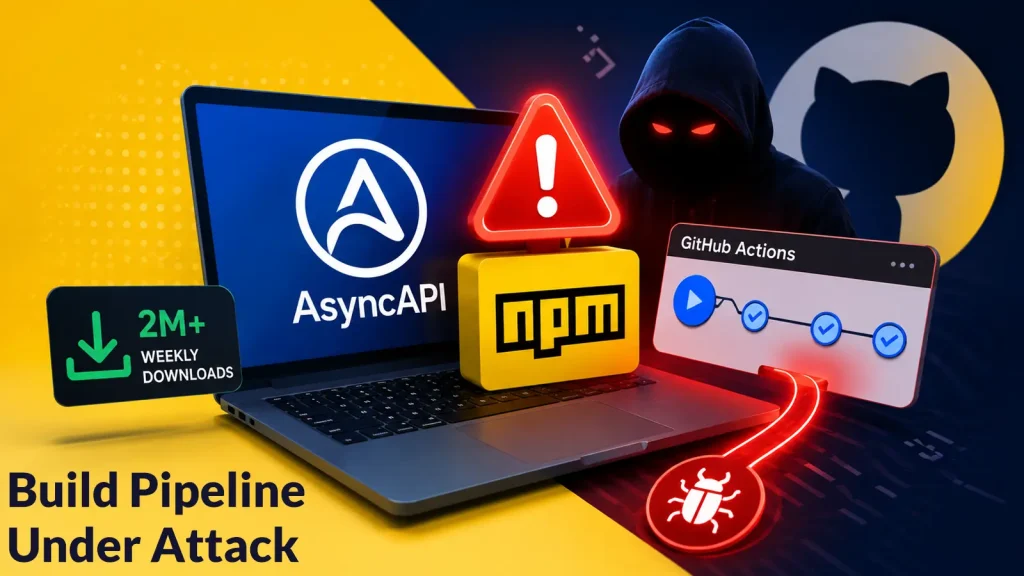
In a stark reminder of the persistent threats lurking within the software supply chain, a critical security incident has impacted AsyncAPI npm packages, leading to the compromise of widely used development modules. Attackers leveraged GitHub Actions to gain unauthorized access, resulting in the publication of five trojanized releases. This breach, affecting packages with a combined total of approximately 2.9 million weekly downloads, poses a significant risk to developer workstations, build servers, and any environment loading these compromised modules.
The Anatomy of the AsyncAPI Compromise
The core of this supply chain attack centered on gaining control over an npm publishing token associated with the AsyncAPI project. By compromising this token, attackers were able to push malicious versions of the legitimate packages to the npm registry. The illicit access was facilitated through vulnerabilities or misconfigurations within AsyncAPI’s GitHub Actions workflows. GitHub Actions, while powerful for continuous integration and deployment (CI/CD), can become a critical attack vector if not properly secured, as demonstrated in this incident.
The immediate consequence is that any developer or automated system pulling these now-tainted packages from npm would inadvertently integrate malicious code into their projects. This type of compromise can lead to a variety of severe outcomes, including credential theft, backdoor installation, data exfiltration, or even complete system takeover. The AsyncAPI security incident underscores the sophisticated nature of modern supply chain attacks, which increasingly target automated build and deployment pipelines.
Impact and Affected Components
The scope of this compromise is substantial given the popularity of the AsyncAPI ecosystem. With nearly 3 million weekly downloads for the affected packages, the potential for widespread infection is high. Development workstations are particularly vulnerable, as developers often install packages directly, granting them access to local files and network resources. Build servers, which execute CI/CD pipelines, could propagate the malicious code further into production environments or other downstream dependencies.
Any system or application that has, at any point, loaded one of the five trojanized AsyncAPI npm releases is considered at risk. The exact nature of the malicious payload within these packages has not been fully detailed, but typical objectives in such attacks include:
- Credential Harvesting: Stealing API keys, access tokens, SSH keys, or other sensitive authentication materials from the development environment.
- Backdoors: Establishing persistent access to compromised systems for future exploitation.
- Data Exfiltration: Copying sensitive source code, configuration files, or proprietary data to attacker-controlled servers.
- Malware Distribution: Injecting further malware into the build process or deployed applications.
Remediation Actions and Best Practices
Immediate action is crucial for any organization or individual leveraging AsyncAPI npm packages. The following remediation steps are strongly recommended:
- Identify and Isolate: Immediately identify all projects and environments that have installed or used the compromised AsyncAPI npm packages. Isolate these systems from production networks until they can be thoroughly inspected and cleaned.
- Update or Rollback: If official, clean versions of the packages have been released, update all affected dependencies to the latest secure versions. If clean versions are not yet available, roll back to known-good, uncompromised versions and carefully manage the risks of doing so.
- Token Rotation: Revoke and rotate all npm publishing tokens, GitHub Personal Access Tokens (PATs), and any other credentials that were accessible by the compromised GitHub Actions workflow.
- GitHub Actions Review: Conduct a comprehensive security review of all GitHub Actions workflows for weaknesses. Ensure that permissions are least-privilege, secrets are properly managed, and inputs are validated. Consider using OIDC for credential management instead of long-lived PATs.
- Dependency Scanning: Implement continuous dependency scanning tools in your CI/CD pipeline to detect known vulnerabilities and compromised packages. Regularly audit your
package-lock.jsonoryarn.lockfiles. - System Forensics: Perform a forensic analysis on any development workstations or build servers that may have executed the malicious packages to identify potential indicators of compromise (IOCs) and assess the full extent of the breach.
- Educate Developers: Reiterate the importance of verifying package sources, reviewing new dependencies, and understanding the security implications of third-party code.
Tools for Detection and Mitigation
Implementing a robust security posture for your software supply chain requires specialized tools. Here are some categories and examples:
| Tool Category | Purpose | Examples / Link |
|---|---|---|
| Software Composition Analysis (SCA) | Identifies open-source components and their known vulnerabilities. | Synopsys Black Duck, OWASP Dependency-Check |
| Supply Chain Security Platforms | Comprehensive solutions for securing the entire software supply chain. | Snyk, JFrog Artifactory |
| Container Security Scanners | Scans container images for vulnerabilities, including those from compromised dependencies. | Docker Scan (Snyk), Aqua Security |
| Static Application Security Testing (SAST) | Analyzes source code for security vulnerabilities before runtime. | SonarQube, Checkmarx |
| npm Audit | Built-in npm feature to check for known vulnerabilities in dependencies. | npm audit fix (CLI) |
Looking Forward: Securing the Software Supply Chain
This incident serves as a critical underscore: the security of our applications is only as strong as the weakest link in their supply chain. Organizations must shift from reactive patching to proactive supply chain security measures. This includes rigorous access control for CI/CD systems, secure coding practices for workflows, thorough vetting of third-party dependencies, and continuous monitoring for anomalies. The AsyncAPI npm compromise is a salient reminder that attackers will continue to target the most efficient ways to achieve broad impact, and for many, that path leads directly through the software supply chain.