
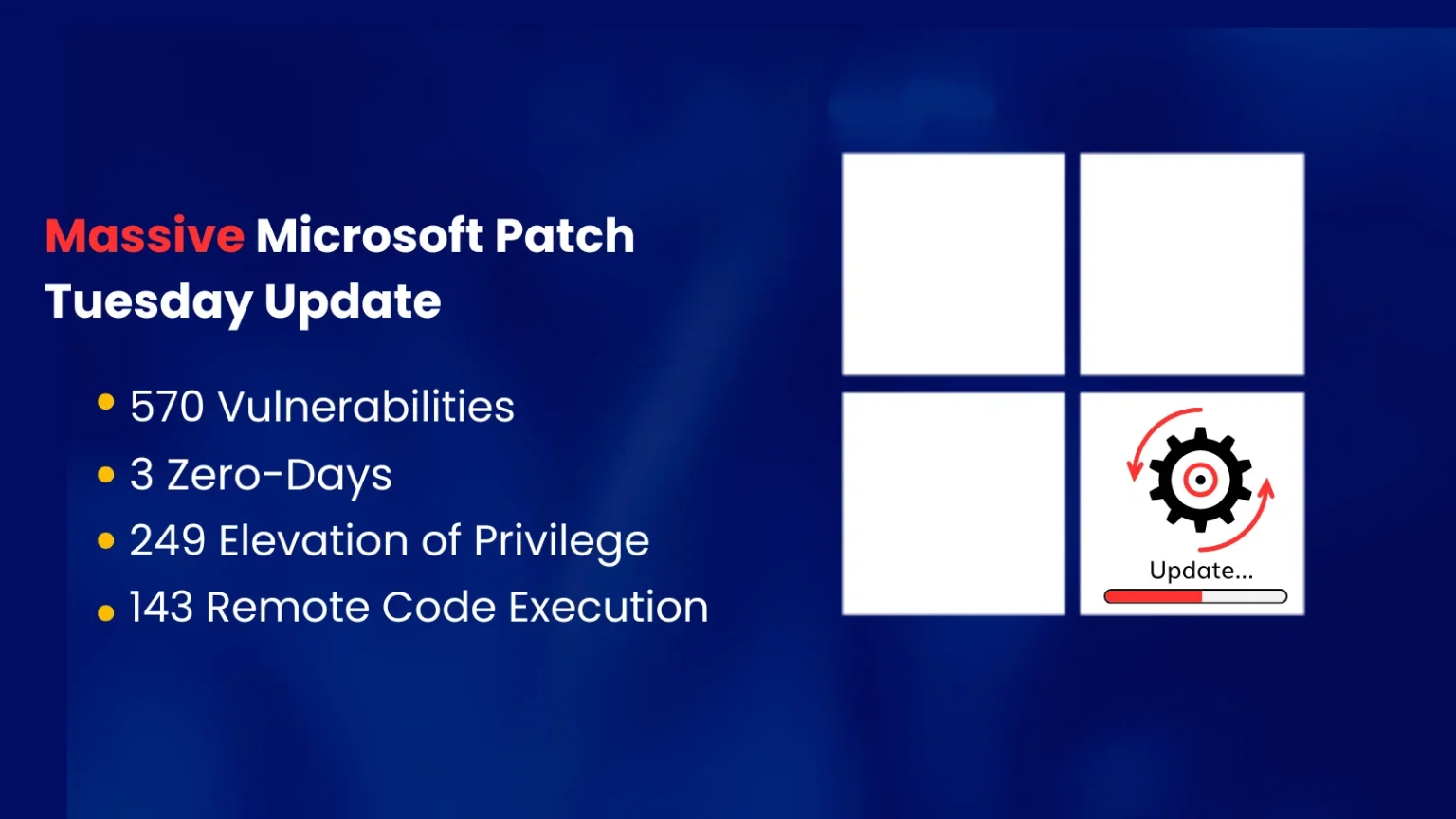
Massive Microsoft Patch Tuesday Update: 570 Vulnerabilities Fixed, Including 3 Zero-Days
Microsoft Patch Tuesday July 2026: A Deep Dive into 570 Vulnerability Fixes
Microsoft’s July 2026 Patch Tuesday has landed, delivering a monumental update that addresses approximately 570 vulnerabilities across its extensive product ecosystem. This massive release serves as a critical follow-up to June’s record-breaking 206 flaw fixes, which notably included three publicly disclosed zero-days. For cybersecurity professionals, IT administrators, and developers, understanding the scope and implications of this update is paramount for maintaining robust digital defenses.
The Immense Scope of the July 2026 Patch Tuesday
The sheer volume of fixes in this month’s Patch Tuesday highlights Microsoft’s ongoing commitment to security, as well as the pervasive nature of threats in the current landscape. With 570 vulnerabilities patched, organizations are faced with a significant task in prioritizing and deploying these updates. This release covers a broad spectrum of Microsoft products, from Windows operating systems and Office suites to Azure services and developer tools. The continuous cycle of discovering and patching vulnerabilities underscores the dynamic challenges in software security.
Three Zero-Days Under Spotlight
Among the hundreds of vulnerabilities addressed, three are particularly concerning: zero-day exploits. These are flaws that were actively being exploited in the wild before a patch was made available. Zero-day vulnerabilities represent an immediate and severe risk, as attackers have a demonstrable advantage. While specific CVEs for these zero-days were not immediately detailed in the source, their presence mandates urgent attention from security teams. The proactive discovery of such critical flaws points to the advanced capabilities being deployed by Microsoft.
AI’s Role in Vulnerability Discovery
A recent development highlighted by Microsoft is the deployment of a proprietary multi-model agentic scanning system for vulnerability discovery. This advanced artificial intelligence (AI) system is actively scrutinizing the Windows codebase for CVEs. The integration of AI in this context marks a significant leap in defensive cybersecurity, potentially allowing for the identification of complex or subtle flaws that traditional methods might miss. This innovative approach likely contributes to the high volume of vulnerabilities being identified and subsequently patched, demonstrating a proactive stance against emerging threats.
Understanding Common Vulnerability Types Addressed
While the precise breakdown of all 570 vulnerabilities requires in-depth analysis of the official Microsoft Security Update Guide, typical Patch Tuesday releases often include fixes for:
- Remote Code Execution (RCE) flaws: These vulnerabilities allow attackers to execute arbitrary code on a target system, often leading to full system compromise.
- Elevation of Privilege (EoP) vulnerabilities: These allow a lower-privileged user to gain higher privileges on a system, potentially granting administrative access.
- Information Disclosure bugs: These can expose sensitive data to unauthorized parties.
- Denial of Service (DoS) vulnerabilities: These can render a system or service unavailable to legitimate users.
- Spoofing vulnerabilities: These allow an attacker to impersonate a legitimate user or system.
Given the scale of this update, it is highly probable that all these categories are represented, with some critical RCE and EoP flaws being of particular concern.
Remediation Actions for the July 2026 Patch Tuesday
For IT professionals and security analysts, the primary remediation action is clear and urgent:
- Prioritize Patch Deployment: Immediately review the official Microsoft Security Update Guide for July 2026. Prioritize critical and high-severity patches, especially those addressing the disclosed zero-days or vulnerabilities that could lead to remote code execution or privilege escalation.
- Automate Patch Management: Leverage automated patch management systems to ensure timely and consistent deployment across all managed endpoints and servers. This minimizes the window of exposure to known vulnerabilities.
- Test Patches Thoroughly: Before wide deployment, test patches in a controlled environment to ensure compatibility and prevent business disruption.
- Network Segmentation: Implement and enforce network segmentation to limit the lateral movement of attackers should a system become compromised before patching.
- Implement Least Privilege: Ensure all users and services operate with the minimum necessary permissions to perform their functions, reducing the impact of successful exploits.
- Monitor Security Logs: Continuously monitor security event logs for any indicators of compromise (IoCs) that might suggest active exploitation of patched vulnerabilities.
- Educate Users: While patches address technical flaws, sustained user education on phishing and social engineering tactics remains a crucial layer of defense.
Security Tools for Vulnerability Management
Effective management of vulnerabilities requires robust tools. Here are some essential categories and examples:
| Tool Name | Purpose | Link |
|---|---|---|
| Windows Server Update Services (WSUS) | Manages and deploys Microsoft product updates within an organization. | Learn more about WSUS |
| Microsoft Endpoint Configuration Manager (MECM) | Comprehensive solution for deploying operating systems, applications, and managing software updates. | Learn more about MECM |
| Vulnerability Management Platforms (e.g., Tenable.io, Qualys) | Scans for, identifies, and prioritizes vulnerabilities across IT assets. | Tenable.io / Qualys VMDR |
| Security Information and Event Management (SIEM) systems | Aggregates and analyzes security logs for threat detection and response (e.g., Microsoft Sentinel). | Microsoft Sentinel |
| Endpoint Detection and Response (EDR) solutions | Monitors endpoints for malicious activity and facilitates rapid response (e.g., Microsoft Defender for Endpoint). | Microsoft Defender for Endpoint |
Looking Ahead: The Evolving Threat Landscape
The July 2026 Patch Tuesday, with its staggering 570 fixes and the inclusion of zero-days, serves as a stark reminder of the continuous and aggressive nature of cyber threats. Microsoft’s investment in AI-driven vulnerability discovery indicates a sophisticated and proactive approach to security. However, the responsibility ultimately rests with organizations to implement these crucial updates efficiently and effectively. Staying vigilant, employing robust patch management strategies, and continuously monitoring for threats are non-negotiable practices in today’s digital environment.




