Two Australians Charged Over TeamPCP Supply-Chain Attacks That Hit 1,000+ Organizations
The digital supply chain, an often-overlooked yet critical component of modern software development, has once again been thrust into the spotlight following recent arrests in Australia. The integrity of open-source projects, upon which countless applications and services rely, faces persistent threats. This incident serves as a stark reminder of how malicious actors can exploit trust and inject backdoors into the very foundations of our digital infrastructure.
TeamPCP Attacks: A Supply-Chain Compromise Unveiled
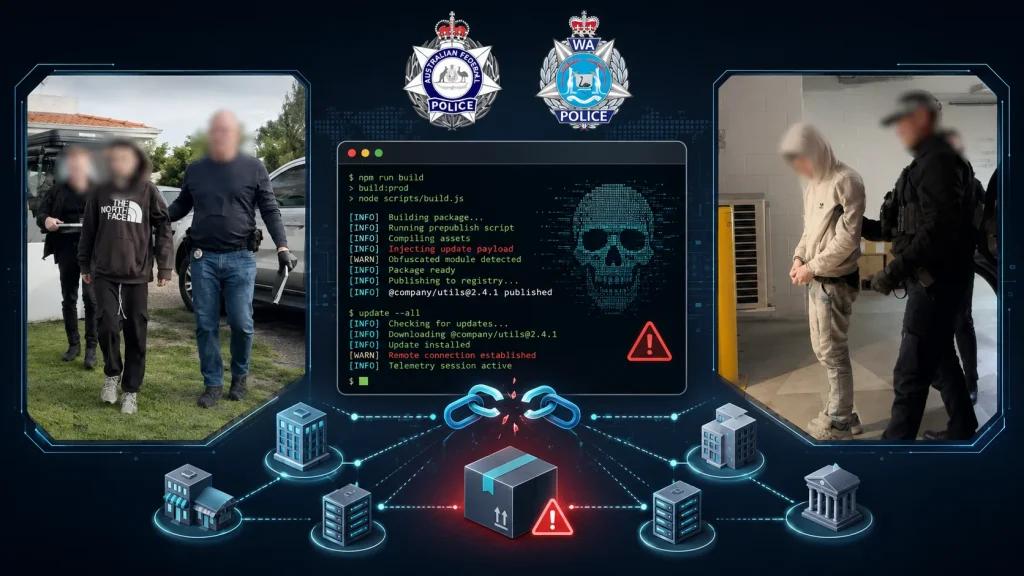
Australian authorities have brought charges against two Western Australian men in connection with the alleged TeamPCP supply-chain attacks. These sophisticated operations reportedly involved the deliberate insertion of malicious open-source code into projects, subsequently impacting over 1,000 organizations globally. The Australian Federal Police (AFP), in collaboration with the Western Australia Police Force, executed search warrants in Perth on August 26, 2026, leading to the apprehension and charging of the individuals with a combined 14 offenses.
The core of these attacks lies in compromising the supply chain – specifically, by poisoning open-source software components. When developers incorporate these compromised libraries or modules into their projects, they inadvertently introduce the malicious code into their own applications and, by extension, into their clients’ systems. This method allows threat actors to bypass traditional perimeter defenses and achieve deep penetration into target networks.
Understanding the Threat of Supply-Chain Attacks
Supply-chain attacks are particularly insidious because they leverage the trust relationships inherent in software development and deployment. Instead of directly attacking a target organization, attackers compromise a third-party vendor or an upstream component that the target uses. In the context of open-source, this means infecting widely used libraries or packages that are then distributed across a vast ecosystem of users. The implications are far-reaching:
- Widespread Impact: A single compromise can affect thousands of downstream users, as seen with the TeamPCP attacks.
- Stealth and Persistence: Malicious code embedded within legitimate software can remain undetected for extended periods, providing persistent access.
- Erosion of Trust: Such incidents undermine confidence in open-source software, which is a cornerstone of innovation.
- Complex Remediation: Identifying and removing compromised components across an entire organization’s software stack can be a monumental task.
Remediation Actions and Best Practices
Defending against supply-chain attacks like those attributed to TeamPCP requires a multi-layered approach focusing on vigilance, verification, and proactive security measures. Organizations must assume that any component they integrate, even from trusted sources, could potentially be compromised.
- Software Bill of Materials (SBOM): Generate and maintain comprehensive SBOMs for all applications. This provides a detailed inventory of all open-source and commercial components used, making it easier to identify compromised elements.
- Dependency Scanning: Implement automated tools to scan all third-party dependencies for known vulnerabilities and malicious code. Integrate these scans into your CI/CD pipeline. Regularly check official vulnerability databases like CVE-2023-XXXXX (replace with relevant CVEs if available for TeamPCP).
- Code Signing and Verification: Enforce the use of code signing for all internal and external software components. Verify digital signatures to ensure the integrity and authenticity of software before deployment.
- Supply Chain Risk Management: Establish robust processes for evaluating the security posture of all third-party vendors and open-source projects. Prioritize components with strong security practices, active maintenance, and transparent vulnerability disclosure policies.
- Least Privilege Principle: Apply the principle of least privilege to development environments and build systems to minimize the impact of a potential compromise.
- Runtime Application Self-Protection (RASP): Deploy RASP solutions that can detect and prevent attacks originating from compromised application components during runtime.
- Security Audits and Penetration Testing: Conduct regular security audits and penetration tests that specifically target supply chain vulnerabilities.
Tools for Supply Chain Security
To effectively combat supply-chain attacks, organizations can leverage a variety of specialized tools. These tools assist in scanning dependencies, managing SBOMs, and identifying potential risks.
| Tool Name | Purpose | Link |
|---|---|---|
| OWASP Dependency-Check | Identifies known vulnerabilities in project dependencies. | https://owasp.org/www-project-dependency-check/ |
| Snyk | Automated security scanning for vulnerabilities in code, dependencies, containers, and infrastructure as code. | https://snyk.io/ |
| Sonatype Nexus Lifecycle | Manages open-source component risk and automates policy enforcement. | https://www.sonatype.com/products/nexus-lifecycle |
| Trivy | Comprehensive scanner for vulnerabilities and misconfigurations in containers, file systems, and Git repositories. | https://aquasec.com/cloud-native-security-resources/trivy/ |
The Ongoing Battle for Digital Trust
The arrests related to the TeamPCP attacks underscore the persistent and evolving nature of cyber threats. As our reliance on interconnected systems and open-source components grows, so too does the attack surface. This incident serves as a critical reminder for every organization: securing the supply chain is no longer an optional add-on but a fundamental requirement for maintaining digital trust and operational integrity. Proactive measures, continuous monitoring, and a commitment to robust security practices are essential to navigating this complex landscape.