Ransomware Gang Claims AI Can Analyze 700GB of Stolen Data Every Hour
The AI Game Changer: TITAN Ransomware’s Data Exfiltration Evolution
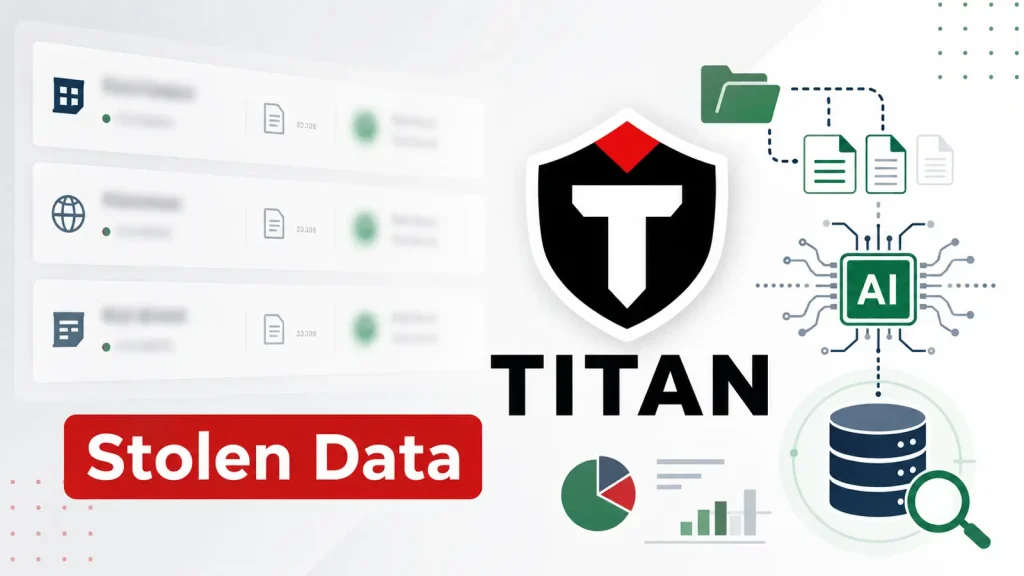
The landscape of cyber threats is in perpetual motion, and a recent development from the TITAN ransomware group signals a significant and alarming evolution. This emerging threat actor isn’t just encrypting data; they’re claiming to leverage artificial intelligence to swiftly analyze colossal volumes of stolen corporate information. Specifically, TITAN boasts an AI system capable of sifting through an astonishing 700GB of exfiltrated data every single hour, pinpointing sensitive records, intellectual property, and other high-value assets that can intensify pressure on victim organizations. This audacious claim, surfacing in April 2026, fundamentally reshapes the calculus for data breach response and underscores the urgent need for enhanced data security strategies.
TITAN Ransomware: Beyond Simple Encryption
Traditionally, ransomware operations relied primarily on the encryption of victim data, followed by a demand for payment for decryption keys. However, the double extortion model, where threat actors also steal data and threaten its public release, has become increasingly prevalent. TITAN ransomware’s alleged integration of AI elevates this threat significantly. The ability to rapidly parse 700GB of data hourly transforms a manual, time-consuming process into an automated, highly efficient weapon. This means that within a relatively short period, TITAN operators could identify critical financial documents, personal identifiable information (PII), proprietary source code, or competitive intelligence, all of which substantially increase the leverage they hold over a victim during ransom negotiations.
The AI Advantage: Accelerating Extortion and Impact
The primary advantage of an AI-driven analysis system for a ransomware group like TITAN is speed and precision. Manual review of terabytes of stolen data is impractical and resource-intensive. An AI, however, can be trained to recognize patterns, keywords, and document types associated with high-value information. This could include:
- Financial Records: Bank statements, invoices, M&A documents.
- Personal Identifiable Information (PII): Employee records, customer databases, healthcare information.
- Intellectual Property: Trade secrets, product designs, research and development data.
- Strategic Communications: Emails, internal memos revealing company weaknesses or sensitive negotiations.
By quickly identifying such critical data, TITAN can tailor their extortion demands, threaten specific stakeholders, and maximize the reputational and financial damage to the victim. This shifts the focus from merely restoring encrypted data to preventing the catastrophic exposure of sensitive business intelligence.
Remediation Actions: Countering the AI-Enhanced Threat
The emergence of AI-powered data analysis in ransomware operations necessitates a robust and multi-layered defense strategy. Organizations must assume that exfiltrated data can be rapidly weaponized and act accordingly. Here are critical remediation actions:
- Implement Strong Data Loss Prevention (DLP) Solutions: Advanced DLP systems are crucial for monitoring, detecting, and blocking sensitive data from leaving the network. Regularly review and update DLP policies to reflect evolving data classifications and compliance requirements.
- Prioritize Data Classification and Labeling: Understand where your critical data resides. Implement a comprehensive data classification scheme that tags sensitive information, making it easier for DLP tools and security teams to protect.
- Enhance Endpoint Detection and Response (EDR) and Extended Detection and Response (XDR): These solutions are vital for detecting early indicators of compromise, unauthorized data access, and exfiltration attempts. Rapid response is key to preventing large-scale data theft.
- Strengthen Access Controls and Least Privilege: Implement strict access controls, ensuring that users and systems only have access to the data necessary for their roles. Regularly audit and review these permissions.
- Regularly Back Up Data (and Test Backups): While backups won’t prevent data exfiltration, they are critical for recovery after an encryption attack. Ensure backups are immutable, isolated, and regularly tested for integrity and restorability.
- Conduct Regular Security Audits and Penetration Testing: Proactively identify vulnerabilities in your network, applications, and data storage systems that could be exploited for data theft.
- Employee Training and Awareness: Educate employees on phishing, social engineering, and safe data handling practices to reduce the risk of initial compromise.
- Incident Response Planning: Develop and regularly rehearse a comprehensive incident response plan that includes specific steps for data breach notification, forensic analysis, and communication strategies in the event of data exfiltration.
The Future of Cyber Extortion: An Arms Race
The TITAN ransomware group’s claim, whether fully realized or partially aspirational, highlights the escalating arms race in cybersecurity. As threat actors increasingly leverage sophisticated technologies like AI, defenders must respond with equally advanced countermeasures. Organizations can no longer rely on perimeter defenses alone; a data-centric security approach, focused on protecting the data itself throughout its lifecycle, is paramount. The ability to quickly analyze and weaponize stolen information significantly raises the stakes, making proactive data protection and rapid incident response more critical than ever before.