Dark Caracal Hackers Use Ethereum Blockchain to Keep New Malware Connected After C2 Disruption
The landscape of cyber warfare is perpetually shifting, with adversaries constantly innovating to maintain persistence and evade detection. A recent and concerning development highlights this evolution: the Dark Caracal cyberespionage group has unveiled a novel technique leveraging the Ethereum blockchain to ensure their malware remains connected, even after traditional Command and Control (C2) servers are neutralized. This strategic pivot underscores a growing trend in sophisticated threat actor methodologies and demands immediate attention from the cybersecurity community.
Dark Caracal’s Resurgence and Blockchain C2
Known for its advanced cyberespionage capabilities, Dark Caracal has re-emerged with a new toolset designed to defy conventional C2 disruption. Researchers have linked the group to a significant intrusion within a Venezuelan communications organization. During this campaign, Dark Caracal deployed an unfamiliar Go-based malware framework dubbed GoCaracal, alongside their long-standing and notoriously effective Bandook backdoor.
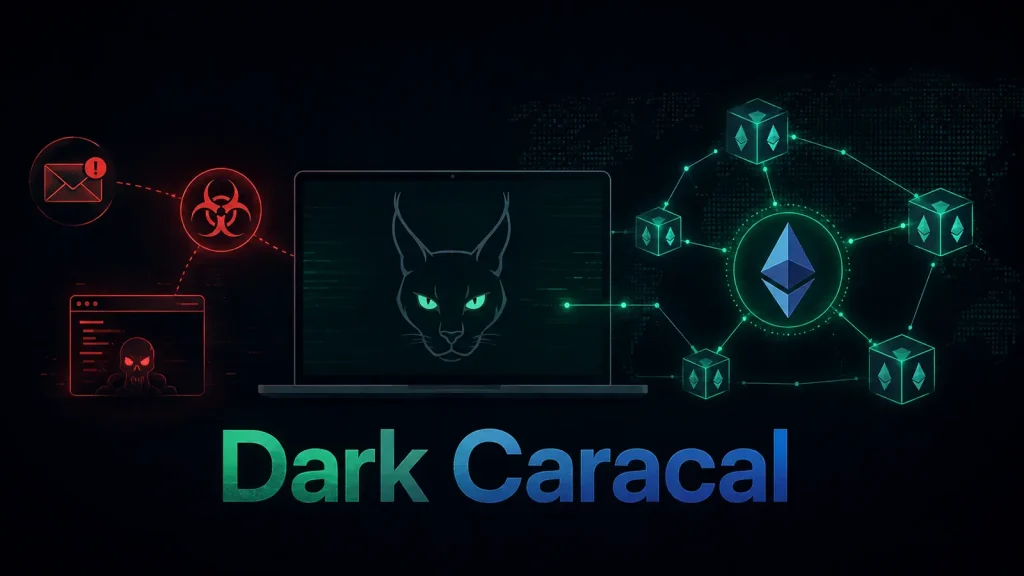
The most striking innovation, however, lies in their approach to C2 resilience. By integrating the Ethereum blockchain into their operational framework, Dark Caracal effectively decentralizes a critical component of their attack infrastructure. When security teams move to shut down a traditional C2 server, it often cripples the malware’s ability to receive commands or exfiltrate data. By embedding communication channels or instructions within a distributed ledger like Ethereum, attackers can create a much more robust and difficult-to-disrupt C2 mechanism. This technique can serve as a fallback communication channel, a dynamic configuration source, or even a dead-drop resolver for new C2 infrastructure, significantly extending the operational lifespan of their malware.
GoCaracal and Bandook Backdoor: A Potent Combination
The deployment of GoCaracal signals Dark Caracal’s continued investment in developing new, sophisticated tooling. Go-based malware has become increasingly popular among threat actors due to its cross-platform compatibility, ease of compilation into a single binary, and difficulty for traditional signature-based detection. The specifics of GoCaracal’s functionalities are still being analyzed, but its pairing with the established Bandook backdoor suggests a multi-layered approach to compromise and persistence. Bandook, with its extensive history of use in targeted attacks, provides a proven suite of capabilities for data exfiltration, remote access, and system manipulation.
The initial phase of these campaigns often begins with spear-phishing attempts, frequently using Spanish-language lures, indicating a regional focus or a broad, indiscriminate targeting strategy that includes Spanish-speaking populations.
Implications for Cybersecurity Defense
This development poses significant challenges for traditional incident response and threat intelligence. Disrupting C2 infrastructure has long been a cornerstone of defensive strategies. The adoption of blockchain for C2 communications forces defenders to rethink their approaches:
- Decentralization Challenge: Shutting down a specific IP address or domain associated with a C2 becomes far less effective if the malware can dynamically resolve new instructions from an immutable and globally distributed blockchain.
- Increased Persistence: The ability to maintain connectivity despite defensive actions grants attackers a longer window for data exfiltration, further compromise, and lateral movement within compromised networks.
- Detection Complexity: Monitoring blockchain transactions for malicious C2 activity requires specialized tools and expertise, as the sheer volume of legitimate transactions can obscure malicious ones.
- Attribution Difficulties: While the blockchain is transparent, linking specific wallet addresses or transactions back to a threat actor can be exceptionally challenging, further complicating attribution efforts.
Remediation Actions and Proactive Defense
Countering this evolving threat requires a multi-faceted approach, moving beyond traditional network-centric defenses to embrace more advanced detection and prevention strategies.
- Enhanced Endpoint Detection and Response (EDR): Focus on behavioral analysis to detect anomalous process execution, unusual network connections (even to seemingly benign blockchain nodes), and file system modifications that indicate malware activity, regardless of C2 source.
- Network Traffic Analysis (NTA) with Blockchain Awareness: Implement NTA solutions capable of identifying and analyzing traffic patterns associated with known blockchain networks, looking for unusual volumes or patterns emanating from internal systems.
- Threat Intelligence Integration: Stay abreast of the latest threat intelligence on Dark Caracal and other advanced persistent threats (APTs) that might adopt similar techniques. Understand their TTPs (Tactics, Techniques, and Procedures).
- Proactive Threat Hunting: Regularly hunt for indicators of compromise (IOCs) related to GoCaracal and Bandook. Look for unusual Go binaries, suspicious network connections, and signs of the Bandook backdoor.
- Zero Trust Architecture: Implement a Zero Trust model where no user or device is inherently trusted, requiring continuous verification and strict access controls. This limits the blast radius of a successful compromise.
- User Education and Phishing Awareness: Strengthen security awareness training, particularly concerning sophisticated spear-phishing campaigns, which remain a primary initial access vector for groups like Dark Caracal.
While no specific CVEs are directly associated with the GoCaracal malware or the blockchain C2 mechanism at this time, organizations should remain vigilant regarding general vulnerabilities that facilitate initial compromise.
Conclusion
Dark Caracal’s adoption of the Ethereum blockchain for C2 resilience marks a significant escalation in cyberespionage tactics. This innovation highlights the constant arms race in cybersecurity, where attackers continuously seek new ways to maintain persistence and evade detection. For organizations, it reinforces the critical need for adaptive defense strategies, robust EDR solutions, and a proactive approach to threat intelligence and hunting. The era of decentralized C2 is here, and our defenses must evolve to meet it.