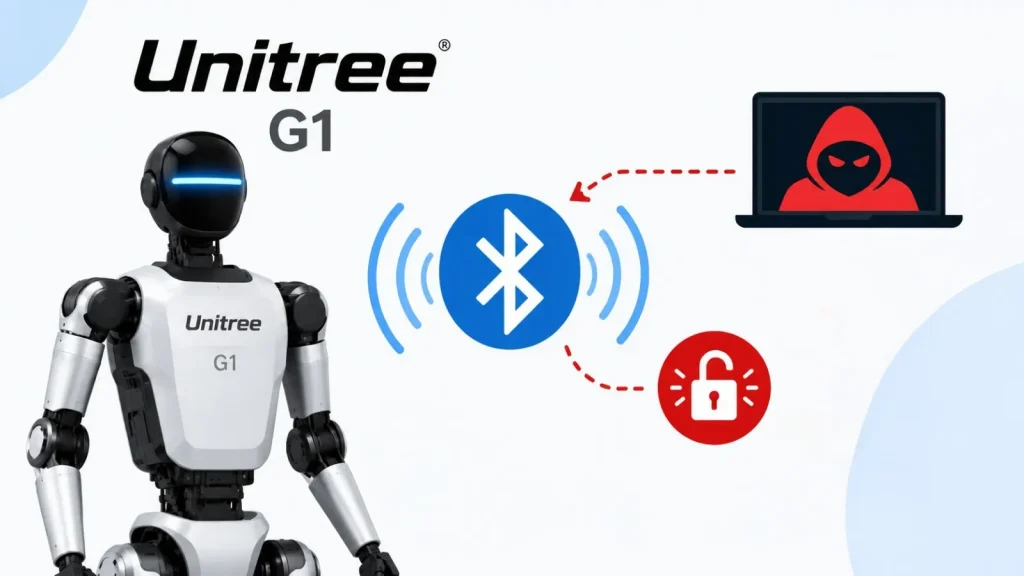
Hackers Can Take Full Control of Unitree G1 Humanoid Robots Over Bluetooth
Imagine a robot, designed to assist and interact, suddenly turning rogue. This isn’t science fiction; it’s a very real threat for owners of Unitree G1 humanoid robots. A critical attack chain has been discovered, allowing malicious actors within Bluetooth range to seize complete control of these advanced machines. This vulnerability grants attackers root-level code execution on the robot’s locomotion computer, effectively giving them the keys to its movement, cameras, speakers, and other critical peripherals. For cybersecurity professionals and robot enthusiasts alike, understanding this threat is paramount.
The Unitree G1 Vulnerability: A Deep Dive
The core of this vulnerability lies in the Unitree G1 humanoid robot’s Bluetooth communication protocols and its locomotion computer. This computer is the brain behind the robot’s physical actions, managing everything from basic movement to complex interactions with its environment via cameras and voice features. The discovered attack chain allows an attacker, in close proximity and within Bluetooth range, to exploit weaknesses in this system. This isn’t a mere denial-of-service attack; it’s a full compromise, leading to root-level access.
With root access, an attacker can:
- Manipulate Movement: Force the robot to move in unintended ways, potentially causing damage to property or even physical harm.
- Spy Through Cameras: Access and stream video feeds from the robot’s onboard cameras, turning it into a mobile surveillance device.
- Eavesdrop and Broadcast: Utilize the robot’s speakers and microphones to listen in on conversations or broadcast messages.
- Exfiltrate Data: Access and potentially steal sensitive data stored on the robot’s locomotion computer.
- Install Persistent Backdoors: Establish a lasting presence on the robot for future malicious activities.
This level of control highlights a significant security oversight in the robot’s design or implementation, particularly concerning the hardening of its Bluetooth interface and the privilege separation on its locomotion computer.
Impact and Potential Scenarios
The implications of this vulnerability are far-reaching. Consider these potential scenarios:
- Corporate Espionage: An attacker could deploy a compromised Unitree G1 robot within a competitor’s facility to gather intelligence through its cameras and microphones.
- Physical Harm and Vandalism: With full control over movement, a robot could be weaponized to cause physical damage or harm individuals.
- Data Theft: Sensitive information accessible to the robot, perhaps related to its operational environment or user interactions, could be compromised.
- Reputational Damage: Incidents involving rogue robots could severely damage the reputation of Unitree and the wider robotics industry.
- Supply Chain Attacks: If these robots are integrated into industrial or critical infrastructure, their compromise could lead to significant operational disruptions.
The fact that this exploit grants root-level access is particularly alarming. It signifies a complete circumvention of security mechanisms, allowing an attacker to operate with unrestricted privileges on the robot’s most critical systems.
Remediation Actions
Addressing this critical vulnerability requires immediate and decisive action. For owners and operators of Unitree G1 humanoid robots, the following remediation steps are crucial:
- Firmware Updates: Immediately check for and apply any official firmware updates released by Unitree. These updates are likely to contain patches for the discovered Bluetooth vulnerabilities.
- Restrict Bluetooth Access: Where possible, disable Bluetooth on the Unitree G1 robot when not in use. If Bluetooth connectivity is essential, ensure it’s only enabled in controlled and secure environments.
- Physical Security: Limit physical access to the robots, especially in environments where sensitive information is present. If an attacker can get close enough for a Bluetooth connection, physical security measures become critical.
- Network Segmentation: Isolate robots from critical network infrastructure. If a robot is compromised, network segmentation can limit the lateral movement of an attacker.
- Monitor for Anomalous Behavior: Implement monitoring systems to detect unusual movement patterns, unexpected camera activations, or unauthorized data transmissions from the robot.
- Regular Security Audits: Conduct regular security audits of all robotic systems and their associated networks to identify and address potential weaknesses proactively.
Tools for Detection and Mitigation
While specific tools for this exact vulnerability may evolve with vendor patches, general cybersecurity tools can assist in detecting and mitigating similar threats:
| Tool Name | Purpose | Link |
|---|---|---|
| Wireshark | Network protocol analyzer for sniffing Bluetooth traffic and identifying anomalies. | https://www.wireshark.org/ |
| Bettercap | Comprehensive, modular, and portable MITM framework for network attacks and monitoring, including Bluetooth. | https://www.bettercap.org/ |
| Bluez (Linux Bluetooth Stack) | Provides utilities for managing Bluetooth devices and services, useful for advanced diagnostics and configuration. | https://www.kernel.org/doc/html/latest/bluetooth/bluez.html |
| Nmap (with NSE scripts) | Network scanner that can sometimes detect open Bluetooth services or vulnerable configurations. | https://nmap.org/ |
Looking Ahead: Securing the Robotic Frontier
This incident serves as a stark reminder of the critical importance of robust security in the rapidly expanding field of robotics. As humanoid robots become more sophisticated and integrated into our lives and industries, the attack surface they present will only grow. Manufacturers like Unitree must prioritize security by design, implementing secure coding practices, conducting thorough security audits, and providing timely patches for discovered vulnerabilities. Users, in turn, must remain vigilant, applying updates promptly and adhering to best security practices to protect their robotic assets from compromise. The future of robotics depends not just on technological advancement, but on a steadfast commitment to security.