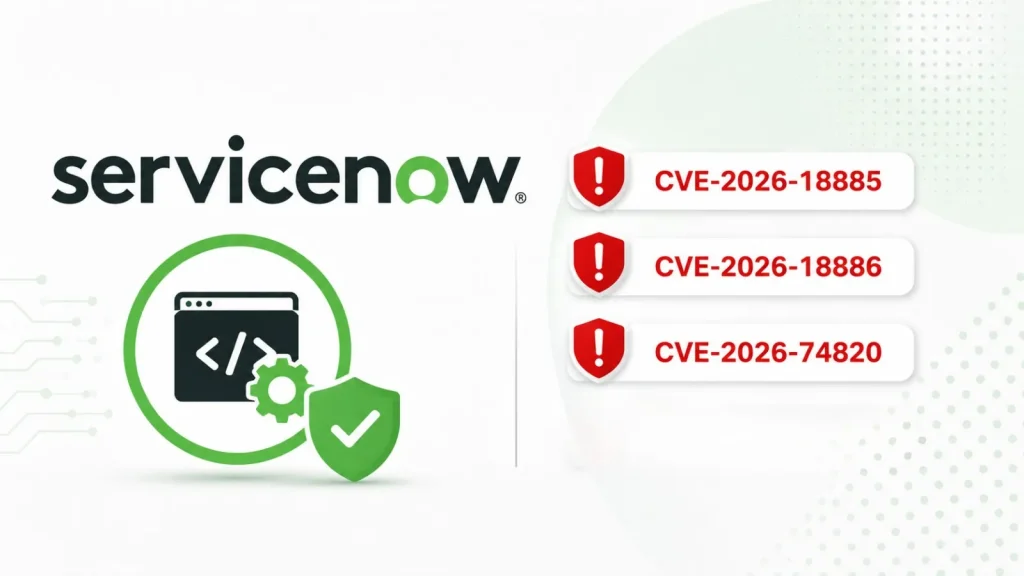
Critical ServiceNow Flaws Let Attackers Execute Code and Access Data
In the intricate landscape of enterprise IT, platforms like ServiceNow are indispensable, serving as the backbone for critical business operations. Their extensive capabilities, from IT Service Management (ITSM) to workflow automation, inherently mean they process and store a vast amount of sensitive data. This central role also makes them a prime target for malicious actors. Recently, ServiceNow issued urgent security updates addressing several significant vulnerabilities, including three critical flaws that could enable unauthenticated attackers to execute arbitrary code, pilfer sensitive data, or even seize control of accounts. This development underscores the paramount importance of vigilant security practices for any organization leveraging the ServiceNow platform.
Understanding the Critical ServiceNow Vulnerabilities
ServiceNow’s August 2026 CVE advisory (published on August 27th, 2026) detailed four distinct security vulnerabilities, three of which are rated as critical. These flaws were identified through proactive security research, highlighting the continuous need for robust security auditing in complex software ecosystems. The vulnerabilities primarily affect ServiceNow’s core Now Platform and its AI capabilities, posing a substantial risk to organizations if left unpatched.
Key Vulnerabilities Identified:
- Unauthenticated Remote Code Execution (RCE): This class of vulnerability is particularly dangerous as it allows attackers to run arbitrary commands on the affected server without needing any authentication. The implications are severe, ranging from data exfiltration to complete system compromise.
- Sensitive Data Access: Exploitable flaws could grant unauthorized individuals access to highly confidential information stored within the ServiceNow instance. This could include customer data, financial records, intellectual property, or employee details, leading to significant privacy breaches and compliance violations.
- Record Modification and Privilege Escalation: Attackers might be able to alter existing records within the ServiceNow platform or elevate their privileges to gain administrative control. Such capabilities could disrupt business operations, introduce fraudulent data, or create backdoors for persistent access.
Impact and Potential Exploitation Scenarios
The potential impact of these ServiceNow vulnerabilities cannot be overstated. An unauthenticated remote code execution flaw, for example, could be leveraged to establish persistence within an organization’s network, launch further attacks against interconnected systems, or deploy ransomware. For organizations heavily reliant on ServiceNow for critical workflows, a successful exploit could lead to:
- Significant operational disruption and downtime.
- Compromise of highly sensitive corporate and customer data.
- Reputational damage and loss of trust.
- Regulatory fines and legal repercussions due to data breaches.
- Financial losses associated with incident response, recovery, and potential extortion.
The fact that these vulnerabilities can be exploited without prior authentication dramatically lowers the bar for attackers, making them highly attractive targets for various threat actors, including sophisticated state-sponsored groups and financially motivated cybercriminals.
Remediation Actions and Best Practices
ServiceNow has already released security updates to address these critical flaws. Timely patching is the most crucial step organizations can take to protect their instances. Here’s a comprehensive guide to remediation and ongoing security best practices:
Immediate Remediation Steps:
- Apply Patches Immediately: Organizations must prioritize applying the security updates released by ServiceNow as detailed in their August 2026 CVE advisory. Follow ServiceNow’s official documentation for patching procedures specific to your version and deployment model.
- Verify Patch Application: After applying patches, conduct thorough verification to ensure the updates have been successfully installed and the vulnerabilities are mitigated.
- Review Logs for Suspicious Activity: Proactively review ServiceNow instance logs and associated infrastructure logs for any indicators of compromise (IoCs) that may suggest an attempted or successful exploitation prior to patching.
- Isolate and Segment Critical Instances: Ensure that critical ServiceNow instances are appropriately segmented from other parts of your network to limit lateral movement potential in case of a breach.
Long-Term Security Best Practices for ServiceNow:
- Regular Patch Management: Establish a robust patch management program to ensure all ServiceNow instances and associated components are always up-to-date with the latest security fixes.
- Principle of Least Privilege: Implement the principle of least privilege for all users and service accounts accessing ServiceNow. Grant only the necessary permissions required for their roles.
- Strong Authentication Mechanisms: Enforce multi-factor authentication (MFA) for all ServiceNow users, especially for administrators and users with access to sensitive data.
- Security Monitoring and Alerting: Deploy continuous security monitoring solutions to detect unusual activity, anomalous logins, or unauthorized data access patterns within your ServiceNow environment. Configure alerts for critical security events.
- Regular Security Audits and Penetration Testing: Conduct periodic security audits and penetration tests on your ServiceNow instances to identify and address potential weaknesses before attackers can exploit them.
- Employee Security Awareness Training: Educate employees on common social engineering tactics and the importance of reporting suspicious activities.
- Backup and Recovery Strategy: Maintain regular backups of your ServiceNow data and configurations, and have a well-tested incident response and disaster recovery plan in place.
Relevant Tools for Detection, Scanning, and Mitigation
Leveraging appropriate security tools can significantly enhance your ability to detect, prevent, and respond to potential threats against your ServiceNow environment.
| Tool Name | Purpose | Link |
|---|---|---|
| ServiceNow Security Incident Response (SIR) | Automated incident response, threat intelligence integration, security operations. | ServiceNow SIR |
| Vulnerability Response (VR) for ServiceNow | Integrates with vulnerability scanners to track and prioritize patching within ServiceNow. | ServiceNow VR |
| Network Intrusion Detection/Prevention Systems (NIDS/NIPS) | Detects and prevents network-based attacks targeting ServiceNow instance. | (General category, e.g., Snort, Suricata, commercial firewalls) |
| Security Information and Event Management (SIEM) Systems | Aggregates and analyzes logs from ServiceNow and other systems for threat detection. | (General category, e.g., Splunk, IBM QRadar, Microsoft Sentinel) |
| Web Application Firewalls (WAF) | Protects ServiceNow web interfaces from common web-based attacks (e.g., injection, XSS). | (General category, e.g., Cloudflare, Akamai, AWS WAF) |
Key Takeaways for ServiceNow Security
The recent disclosure of critical vulnerabilities in ServiceNow’s platform serves as a potent reminder that even highly sophisticated enterprise software requires continuous vigilance. Organizations must prioritize applying security patches promptly, fortify their instances with strong authentication and access controls, and implement comprehensive monitoring. Proactive security measures, coupled with a robust incident response plan, are essential to protect critical business operations and sensitive data from evolving cyber threats. Staying informed about ServiceNow’s security advisories and adhering to best practices will be crucial in maintaining a secure and resilient IT environment.