Attackers Abuse Trusted Cloud Services to Hide Phishing Attacks Against Financial Organizations
Financial institutions are under constant siege. While the sophistication of cyber threats generally trends upwards, a recent and particularly insidious development involves attackers leveraging the very infrastructure designed for trust and reliability: legitimate cloud services. This shift makes it increasingly difficult for security teams to distinguish malicious traffic from legitimate business operations, posing a significant challenge to the financial sector.
The Evolution of Phishing: Trusted Infrastructure Phishing
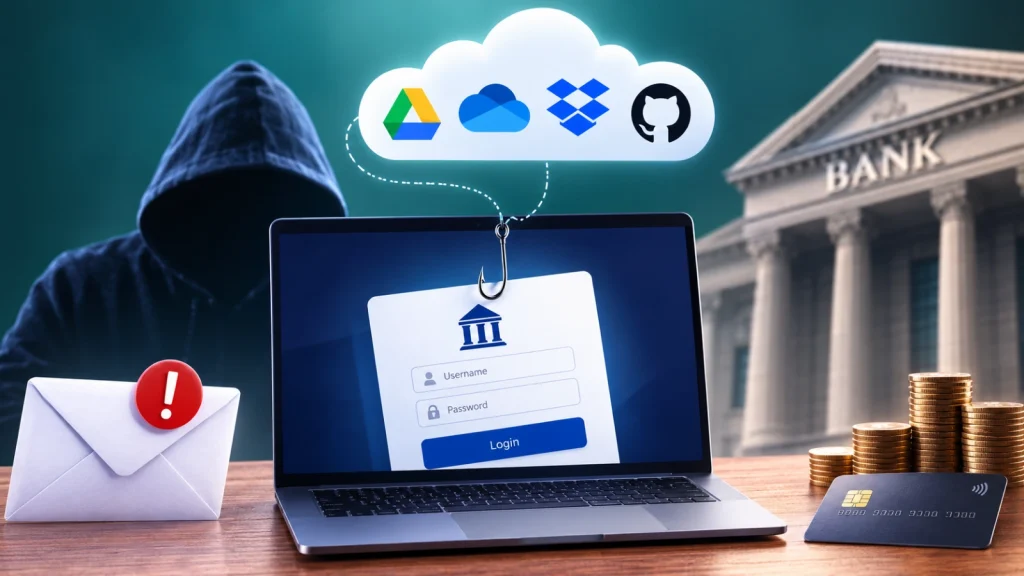
Cybercriminals are no longer relying solely on obscure or easily identifiable malicious domains. Instead, they are actively weaponizing trusted cloud platforms like Microsoft Azure, Google Firebase, Google Cloud Storage, Amazon Web Services (AWS), and Cloudflare. This tactic, described by security researchers as a structural shift, has given rise to what’s being termed Trusted Infrastructure Phishing. The core problem lies in the inherent trust associated with these major cloud providers. When phishing infrastructure resides on domains like azurewebsites.net, firebaseapp.com, or storage.googleapis.com, traditional reputation-based security controls often fail to flag the activity as malicious.
Why Cloud Services are a Prime Target for Phishing Infrastructure
The allure of cloud services for threat actors is multifaceted:
- High Reputation and Trust: Traffic originating from reputable cloud providers is generally considered legitimate. This allows phishing emails and landing pages to bypass many email filters and web proxies that would otherwise flag suspicious domains.
- Scalability and Availability: Cloud platforms offer unparalleled scalability and global distribution, enabling attackers to host a vast number of phishing pages and distribute them efficiently, ensuring high availability for their campaigns.
- Cost-Effectiveness: Many cloud services offer free tiers or low-cost options, making it economically viable for attackers to set up and maintain their phishing infrastructure.
- Evasion of Detection: The sheer volume of legitimate traffic flowing through these cloud providers provides a perfect camouflage for malicious activity, making it harder for security teams to isolate and identify threats.
- Ease of Setup: Modern cloud services are designed for user-friendliness, allowing even less technically sophisticated attackers to quickly deploy phishing sites.
The Impact on Financial Organizations
For financial organizations, the implications of Trusted Infrastructure Phishing are severe. Phishing remains one of the most effective initial access vectors for cybercriminals, leading to:
- Credential Theft: Attackers aim to steal login credentials for banking portals, employee accounts, and financial systems.
- Malware Distribution: Phishing campaigns often serve as a delivery mechanism for various forms of malware, including ransomware, info-stealers, and banking Trojans.
- Financial Fraud: Compromised accounts can lead directly to unauthorized transactions and significant financial losses.
- Reputational Damage: Successful phishing attacks erode customer trust and damage the organization’s reputation.
Remediation Actions and Mitigations
Combating Trusted Infrastructure Phishing requires a multi-layered approach that goes beyond traditional security measures. Financial institutions must adapt their defenses to this evolving threat landscape.
- Enhanced Email Security: Implement advanced email security solutions capable of deep content inspection, URL rewriting, and sandboxing, even for URLs hosted on reputable cloud platforms. Focus on behavioral analysis rather than solely reputation.
- User Education and Training: Regular and comprehensive training for employees is paramount. Educate them on the subtle signs of phishing, even when links appear to be from trusted sources. Emphasize scrutinizing sender details, email content, and unexpected requests.
- Multi-Factor Authentication (MFA): Enforce MFA across all critical systems and employee accounts. Even if credentials are stolen, MFA can significantly reduce the likelihood of a successful account takeover.
- Web Content Filtering and DNS Filtering: Deploy robust web content filtering solutions that can identify and block access to known phishing sites, even those hosted on legitimate cloud infrastructure. Implement DNS filtering to prevent resolution of known malicious domains.
- Threat Intelligence Integration: Subscribe to and integrate high-quality threat intelligence feeds that specifically track phishing campaigns leveraging trusted cloud services. This allows for proactive blocking of newly identified malicious infrastructure.
- Endpoint Detection and Response (EDR): Utilize EDR solutions to detect and respond to suspicious activities on endpoints, such as attempts to access known phishing domains or execute malicious payloads downloaded from such sites.
- Zero Trust Architecture: Embrace a Zero Trust security model, where every access request is verified regardless of its origin. This minimizes the impact of a successful phishing attack by limiting lateral movement.
- Continuous Monitoring and Anomaly Detection: Implement continuous monitoring of network traffic and user behavior. Leverage AI and machine learning to detect anomalous patterns that might indicate phishing activity or compromised accounts.
- Cloud Security Posture Management (CSPM): For organizations actively using cloud services, CSPM tools can help identify misconfigurations that attackers might exploit to host phishing content.
The Path Forward
The abuse of trusted cloud services for phishing represents a significant challenge, but not an insurmountable one. By understanding the motivations and methodologies of these advanced phishing campaigns, and by implementing a robust, adaptable security posture, financial organizations can significantly enhance their resilience. The key lies in moving beyond static, signature-based defenses to a dynamic, intelligence-driven approach that prioritizes continuous verification and user awareness.