Hackers Target US and EU Firms With Microsoft 365 Session Hijacking and RMM Abuse
The Growing Threat: Microsoft 365 Session Hijacking and RMM Abuse
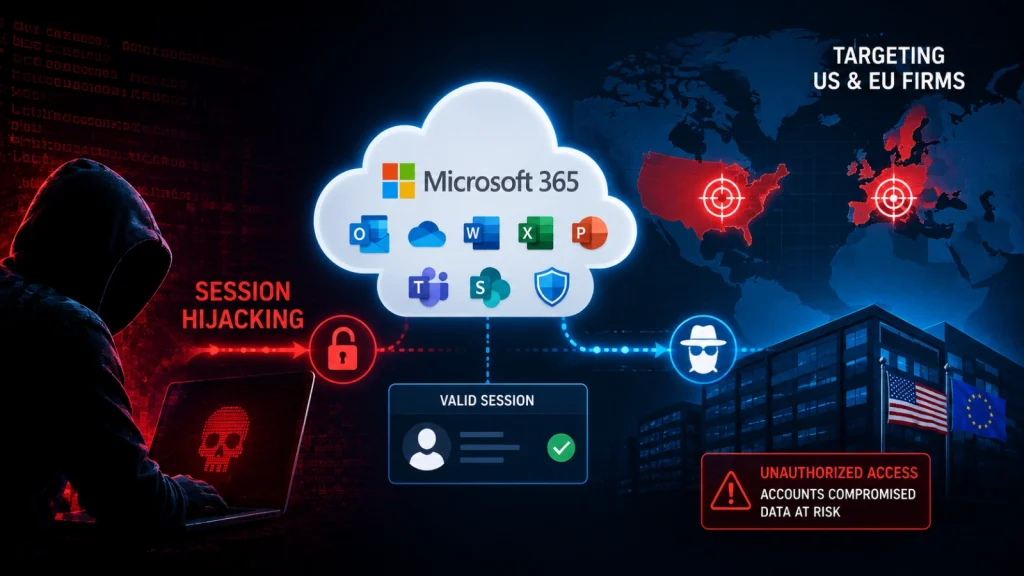
In August, a concerning wave of cyberattacks swept across the US and Europe, leveraging the very tools businesses rely on daily. Attackers skillfully weaponized Microsoft 365 logins, remote management software (RMM), and even routine business documents to breach organizational defenses. Security researchers have meticulously tracked these campaigns, revealing a sophisticated blend of account takeover, persistent remote access, and credential theft, all artfully disguised as legitimate operations. This aggressive tactic underscores a critical shift in attacker methodology: exploiting trust in established platforms rather than seeking out obscure vulnerabilities. Understanding these methods is paramount for any organization serious about its digital security.
Deconstructing the Attack Chain: Session Hijacking and RMM Exploitation
The core of these recent campaigns hinges on two primary vectors: Microsoft 365 session hijacking and the abuse of Remote Monitoring and Management (RMM) tools. Attackers initiate the compromise often through phishing or other credential-theft techniques to gain initial access to a user’s Microsoft 365 session. Once inside, instead of just stealing credentials, they hijack the active session. This allows them to bypass multi-factor authentication (MFA) mechanisms, as they are operating within an already authenticated session. This technique is particularly insidious because it circumvents a common and effective security control.
Following successful session hijacking, attackers pivot to abusing legitimate RMM software. Tools like ConnectWise Control, AnyDesk, or TeamViewer, typically used by IT departments for legitimate remote support and system maintenance, become powerful conduits for malicious activity. By installing or exploiting existing RMM agents on compromised endpoints, attackers establish persistent, covert access to the network. This allows them to move laterally, escalate privileges, deploy further malware, and exfiltrate sensitive data, all while blending in with regular network traffic associated with these trusted tools.
The Blended Threat: Account Takeover, Persistence, and Credential Theft
These campaigns are not singular events but rather a multi-faceted assault. The initial account takeover provides the beachhead. From there, session hijacking ensures persistence and circumvents MFA. The abuse of RMM tools establishes a robust, long-term backdoor into the compromised environment, often with elevated privileges. This combination creates a powerful attack framework:
- Account Takeover (ATO): Gaining unauthorized access to legitimate user accounts, often through phishing for credentials or session tokens.
- Session Hijacking: Exploiting active user sessions to bypass authentication, including MFA, and operate as the legitimate user. This often involves stealing session cookies.
- Persistent Remote Access: Utilizing legitimate RMM tools to maintain covert access to compromised systems, making detection and removal significantly harder.
- Credential Theft: Once inside, attackers seek to escalate privileges and steal additional credentials, furthering their reach within the network.
Such a comprehensive approach makes these attacks challenging to detect and remediate, as each stage leverages legitimate functionality or user trust.
Remediation Actions: Fortifying Your Defenses
Addressing these sophisticated threats requires a multi-layered security strategy. Organizations must assume compromise and implement robust controls across identity, endpoint, and network security.
- Strengthen Authentication for Microsoft 365:
- Implement strong, phishing-resistant multi-factor authentication (MFA), such as FIDO2 security keys, where possible.
- Enforce conditional access policies that evaluate user and device risk, location, and compliance before granting access.
- Monitor Microsoft 365 audit logs for suspicious login patterns, unusual application access, and mailbox rule changes.
- Secure Remote Management Tools:
- Strictly control the deployment and use of RMM software. Only allow approved applications and enforce least privilege.
- Implement strong authentication (including MFA) for RMM consoles and agents.
- Monitor RMM tool logs for unusual activity, connections from unexpected IPs, or connections to unauthorized machines.
- Regularly audit RMM access permissions and revoke unnecessary privileges.
- Endpoint Detection and Response (EDR):
- Deploy EDR solutions to monitor endpoints for malicious activities, including the installation of unauthorized software, unusual process executions, and attempts to modify system configurations.
- Ensure EDR agents are up-to-date and configured to detect known living-off-the-land (LotL) techniques.
- User Education and Awareness:
- Conduct regular cybersecurity training to educate employees about phishing, social engineering tactics, and the importance of reporting suspicious activity.
- Emphasize the dangers of clicking on unsolicited links or opening suspicious attachments.
- Network Segmentation:
- Implement network segmentation to limit lateral movement if an attacker gains a foothold in one part of the network.
- Isolate critical assets and systems that manage RMM tools.
- Regular Security Audits and Penetration Testing:
- Periodically audit configurations for Microsoft 365 and RMM solutions.
- Conduct penetration tests to identify potential weaknesses in your defenses against account takeover and persistent access tactics.
Tools for Detection and Mitigation
Leveraging the right tools is crucial for both preventing and responding to these sophisticated attacks.
| Tool Name | Purpose | Link |
|---|---|---|
| Microsoft 365 Defender | Comprehensive security suite for M365 environments, including identity, endpoint, and cloud app security. Detects suspicious logins and activity. | Microsoft 365 Defender |
| Endpoint Detection and Response (EDR) Solutions (e.g., CrowdStrike Falcon, SentinelOne) | Monitors endpoints for malicious behavior, detects living-off-the-land attacks, and provides response capabilities. | CrowdStrike / SentinelOne |
| Security Information and Event Management (SIEM) | Aggregates and analyzes security logs from various sources (M365, RMM, network devices) to detect correlations and anomalies. | (e.g., Splunk, IBM QRadar – specific links vary by vendor) |
| Identity and Access Management (IAM) Solutions | Enforces strong authentication, conditional access, and manages user identities and privileges. | (e.g., Okta, Azure AD Identity Protection – specific links vary by vendor) |
Conclusion
The recent surge in attacks targeting Microsoft 365 sessions and abusing RMM tools signals a critical evolution in cyber threats. Attackers are increasingly adept at exploiting trust and legitimate functionality, making traditional perimeter defenses less effective. Organizations must adopt a proactive, defense-in-depth approach, prioritizing strong authentication, vigilant monitoring, and continuous employee education. By understanding the attacker’s playbook and implementing robust security measures, businesses can significantly reduce their risk exposure and protect their valuable digital assets from these persistent and stealthy adversaries.