Hackers Abuse Trusted Google Services to Hide Credential-Stealing Phishing Attacks
The Deceptive Cloak: How Hackers Leverage Trusted Google Services for Credential Theft
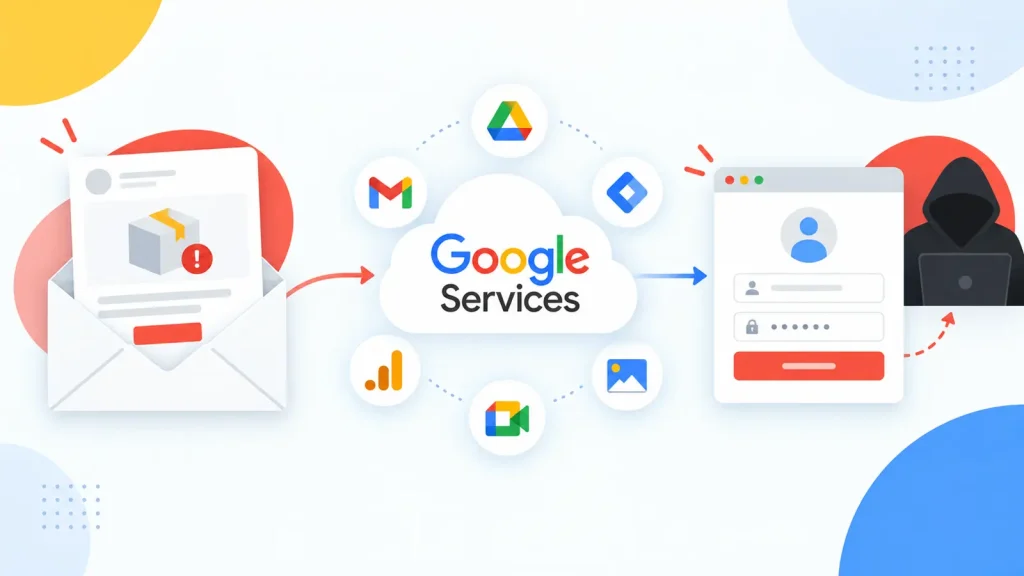
In a concerning evolution of phishing tactics, cybercriminals are actively exploiting the inherent trust associated with Google’s extensive suite of services to orchestrate sophisticated credential-stealing campaigns. This strategy allows malicious actors to bypass traditional security filters and deliver highly convincing phishing attempts, ultimately compromising corporate accounts and, in some cases, installing remote access software. Understanding this new wave of attacks is critical for any organization relying on Google’s ecosystem.
The Phishing Pipeline: Abusing Google’s Credibility
The core of this advanced phishing scheme lies in its ingenious use of legitimate Google-owned domains as a conduit. Instead of directing users immediately to overtly suspicious websites, the attack vector cleverly routes traffic through trusted Google infrastructure. This initial redirection lends an air of legitimacy to the phishing attempt, making it significantly harder for both automated security solutions and discerning users to identify the malicious intent.
The emails themselves are crafted to mimic common workplace communications, leveraging themes that elicit an immediate response. These include:
- Document Review Requests: Emails urging recipients to review important documents, often disguised as shared files or collaborative projects.
- Expiring Mailbox Notifications: Alarms about dwindling storage or imminent mailbox deactivation, pressuring users to “verify” their accounts.
- Package Delivery Alerts: Fake notifications about missed deliveries or pending shipments, prompting users to click for details.
- Payment Notices: Bogus invoices or payment reminders that demand immediate attention.
- Voicemail Notifications: Impersonated voicemail alerts, a classic social engineering trick.
Once a user clicks on the deceptive link embedded within these emails, they are led through a series of redirects, often via Google-owned URLs, before ultimately landing on attacker-controlled phishing pages designed to harvest credentials. This multi-stage redirection adds complexity, making forensic analysis and immediate blocking more challenging.
Beyond Credential Theft: The Remote Access Threat
While the primary objective of these campaigns is credential theft, some variations of this attack go a step further. After successfully compromising user credentials, attackers may then pivot to install remote-access software on the victim’s machine. This allows for persistent access, enabling deeper penetration into the corporate network, data exfiltration, or further malware deployment. The installation of remote access tools transforms a simple phishing incident into a potentially severe breach with long-term implications.
Remediation Actions: Fortifying Defenses Against Google-Abuse Phishing
Mitigating the risk posed by these sophisticated phishing attacks requires a multi-layered approach, combining robust technical controls with continuous user education.
- Enhanced Email Security Gateways: Implement and meticulously configure advanced email security solutions capable of detecting URL redirection chains and anomalous link behavior, even when originating from trusted domains.
- Multi-Factor Authentication (MFA): Enforce MFA across all corporate accounts, especially for Google services. Even if credentials are compromised, MFA provides a critical barrier against unauthorized access.
- User Awareness Training: Conduct regular and realistic phishing simulations. Educate users on the evolving tactics of cybercriminals, emphasizing the importance of verifying sender identities, scrutinizing URLs before clicking, and reporting suspicious emails. Train them to recognize the signs of a phishing attempt, regardless of the perceived legitimacy of the sender or initial domain.
- URL Analysis Tools: Encourage users to employ URL analysis tools or browser extensions that can preview links and identify redirects before visiting a page.
- Endpoint Detection and Response (EDR): Deploy EDR solutions to monitor endpoints for suspicious activity, including the installation of unauthorized remote access software or unusual network connections.
- Principle of Least Privilege: Ensure users only have access to the resources absolutely necessary for their role. This limits the potential damage if an account is compromised.
- Regular Security Audits: Periodically audit user permissions and access logs for Google Workspace and other critical services to identify any anomalous behavior.
Key Takeaways: Staying Ahead of the Threat
The exploitation of trusted platforms like Google services for phishing attacks underscores a crucial shift in the threat landscape. Cybercriminals are becoming increasingly adept at bypassing traditional security measures by leveraging perceived legitimacy. Organizations must move beyond basic email filtering and adopt a comprehensive security posture that includes advanced threat detection, rigorous user education, and strong authentication protocols. Proactive defense, continuous monitoring, and an informed workforce are paramount in combating these evolving and deceptive attacks.