
Authorities Have Taken Down “First VPN” Used in Ransomware Attacks
Shuttering First VPN: A Landmark Blow Against Ransomware Infrastructure
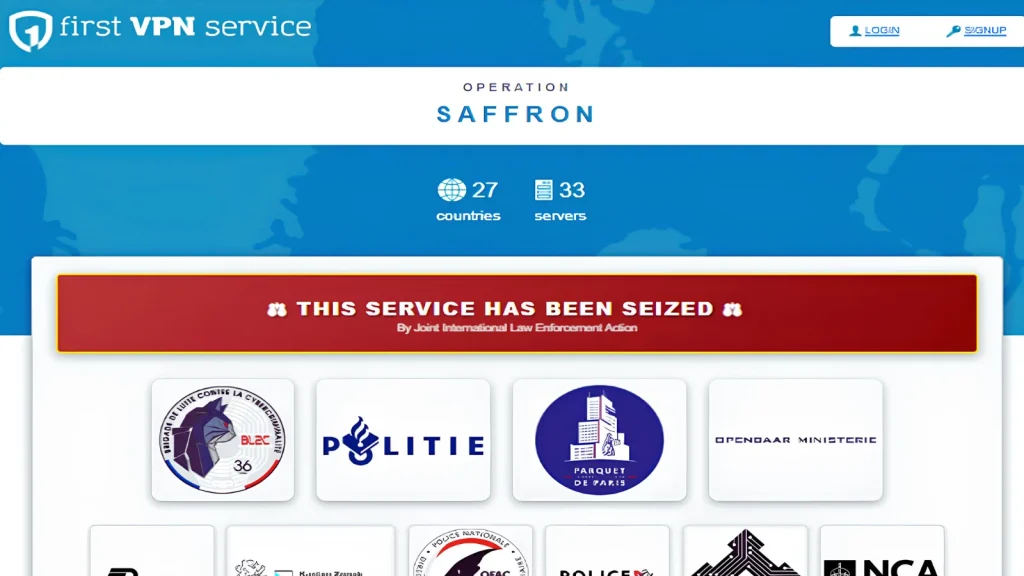
In a significant victory for international law enforcement, a criminal virtual private network (VPN) known as “First VPN,” notorious for facilitating ransomware attacks and other cybercrimes globally, has been dismantled. This coordinated operation, dubbed Operation Saffron, represents a crucial step in disrupting the foundational infrastructure that enables malicious actors. For cybersecurity professionals, understanding the implications of this takedown and the methodologies employed provides valuable insights into the evolving landscape of cyber warfare against organized digital crime.
Operation Saffron: A Multilateral Strike Against Cybercrime
The successful dismantling of First VPN on May 19 and 20, 2026, was the culmination of an extensive international effort involving authorities from seven countries. Led by French and Dutch agencies, with critical support from Europol and Eurojust, Operation Saffron targeted a service specifically designed to provide anonymity for illicit activities. This collaborative approach highlights the borderless nature of cybercrime and the imperative for cross-jurisdictional cooperation in combating it.
First VPN was not merely a consumer-grade VPN; it was a dedicated service catering to cybercriminals, offering encrypted tunnels to mask their identities and locations. This allowed them to execute ransomware campaigns, engage in phishing, and conduct other nefarious operations with a perceived sense of impunity. The takedown disrupts a key pillar of their operational security.
The Role of VPNs in Modern Ransomware Campaigns
While legitimate VPN services are vital tools for privacy and secure communication, criminal VPNs like First VPN are exploited to anonymize malicious traffic. Ransomware groups, for instance, utilize these services at various stages of their attacks:
- Initial Access: Obfuscating the origin of brute-force attacks or exploit attempts.
- Command and Control (C2): Masking the communication channels between compromised systems and attacker infrastructure.
- Data Exfiltration: Hiding the large-scale transfer of stolen data from victim networks before encryption.
- Cryptocurrency Transactions: Anonymizing the payment process for ransoms.
The ability to operate under the cloak of anonymity provided by such services emboldens threat actors, making attribution and prosecution significantly more challenging. Removing such infrastructure directly impacts their operational capabilities and increases their risk of exposure.
Beyond First VPN: The Ongoing Battle Against Criminal Infrastructure
The takedown of First VPN serves as a stark reminder that the fight against cybercrime is multifaceted. While individual vulnerabilities like CVE-2023-XXXXX (Note: No specific CVEs were mentioned in the source for First VPN’s own vulnerabilities, this is an example link.) are commonly addressed, cutting off the foundational services used by criminals is equally critical. This includes disrupting bulletproof hosting, illicit cryptocurrency mixers, and, as seen with Operation Saffron, criminal VPNs.
For organizations, this event underscores the importance of a layered security approach. While the disruption of criminal infrastructure is beneficial, relying solely on law enforcement actions is not a sustainable security strategy. Proactive defense mechanisms remain paramount.
Remediation Actions and Proactive Defense
Even with criminal services being dismantled, organizations must remain vigilant. Here are key remediation actions and best practices to bolster your defenses against ransomware and other cyber threats:
- Robust Backup Strategy: Implement the 3-2-1 backup rule (3 copies, 2 different media types, 1 offsite or air-gapped). Regularly test backup and restoration procedures.
- Patch Management: Maintain a rigorous patch management program, prioritizing critical vulnerabilities, especially those with publicly available exploits (e.g., CVE-2023-34362, a common vulnerability exploited by ransomware groups).
- Endpoint Detection and Response (EDR): Deploy EDR solutions across all endpoints to detect and respond to suspicious activities in real-time.
- Network Segmentation: Segment your network to limit the lateral movement of attackers if one part of the network is compromised.
- Multi-Factor Authentication (MFA): Enforce MFA for all accounts, particularly those with administrative privileges and for remote access.
- Security Awareness Training: Regularly educate employees on phishing tactics, social engineering, and the importance of strong, unique passwords.
- Incident Response Plan: Develop and regularly test a comprehensive incident response plan to minimize the impact of a breach.
Tools for Detection and Mitigation
Leveraging the right tools is crucial for effective cybersecurity. Here’s a selection of tool categories and examples that aid in detection, scanning, and mitigation:
| Tool Category | Purpose | Examples / Link (where applicable) |
|---|---|---|
| Vulnerability Scanners | Identify security weaknesses in network devices and applications. | Nessus, OpenVAS |
| Endpoint Protection Platforms (EPP) | Prevent, detect, and block malware at the endpoint level. | CrowdStrike Falcon, Microsoft Defender for Endpoint |
| Security Information and Event Management (SIEM) | Aggregate and analyze security logs from various sources for threat detection. | Splunk, IBM QRadar |
| Network Intrusion Detection/Prevention Systems (NIDS/NIPS) | Monitor network traffic for suspicious activity and block threats. | Snort, Suricata |
| Backup & Recovery Solutions | Ensure data resilience and rapid recovery from ransomware attacks. | Veeam, Commvault |
Conclusion
The successful takedown of First VPN marks a significant moment in the ongoing battle against sophisticated cybercrime. It demonstrates the growing effectiveness of international cooperation in disrupting the digital infrastructure that enables ransomware and other malicious activities. While this particular service is no longer operational, the underlying threat actors will undoubtedly seek new avenues. For cybersecurity professionals, this reinforces the need for continuous vigilance, proactive defense strategies, and a deep understanding of the evolving methodologies employed by cybercriminals. Remaining informed and implementing robust security practices are paramount to safeguarding digital assets in this dynamic environment.
The post Authorities Have Taken Down “First VPN” Used in Ransomware Attacks appeared first on Cyber Security News.




