Cybersecurity for SaaS Applications
SaaS Security: Cybersecurity Application Best Practices & Key Risks
As organizations increasingly rely on SaaS platforms for critical business operations, ensuring robust SaaS security becomes paramount. This definitive guide to SaaS security aims to provide a comprehensive understanding of SaaS security risks, challenges, and best practices, enabling businesses to navigate the complexities of securing their SaaS environment and protect their valuable data.
Understanding SaaS Security

Definition of SaaS Applications
SaaS applications, or SaaS apps, represent a software distribution model where applications are hosted by a SaaS provider and made available to customers over the internet. Unlike traditional software, where applications are installed on local devices, SaaS applications are accessed through web browsers or dedicated apps, offering flexibility and scalability. These cloud services cover a wide range of business functions, including customer relationship management (CRM), enterprise resource planning (ERP), and collaboration tools. Understanding the nature of SaaS applications is the first step in addressing SaaS security challenges effectively.
Importance of SaaS Security
The importance of addressing SaaS security issues cannot be overstated in any cloud environment. SaaS security cannot be overstated, as the reliance on cloud services and SaaS platforms introduces potential security risks that can have significant consequences. With sensitive data residing within SaaS environments, organizations must implement robust security measures to protect against threats and breaches. Neglecting SaaS security can lead to data leaks, compliance violations, and reputational damage for applications and data. Therefore, prioritizing application security and establishing strong security policies are crucial for maintaining a secure SaaS posture and ensuring business continuity across SaaS applications and data. Addressing common SaaS security risks helps protect your business from potential security incidents.
Key Components of SaaS Security
Effective SaaS security encompasses several key components that work together to protect SaaS data and mitigate potential security risks. These components include:
- Identity and access management
- Data security measures like encryption and data loss prevention
Security monitoring and incident response, and compliance with relevant security standards and regulations are also crucial. Cloud access security broker (CASB) solutions play a vital role in providing visibility and control over SaaS usage, enabling organizations to enforce security policies and prevent unauthorized access. A strong SaaS security posture management strategy also involves regular security assessments and penetration testing to identify and address potential vulnerabilities.
Common SaaS Security Risks and Threats
Overview of Security Risks
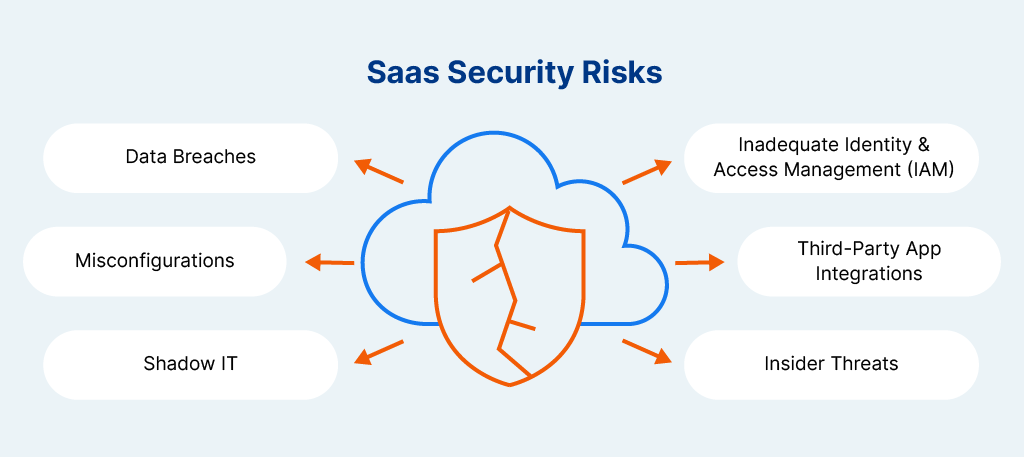
Understanding the landscape of Addressing common SaaS security issues is paramount. for organizations leveraging SaaS applications and data effectively. These risks range from data breaches and unauthorized access to malware infections and insider threats. A strong SaaS security posture management begins with recognizing the potential security risks inherent in multi-tenant SaaS environments. Organizations must proactively assess their SaaS cybersecurity defenses, identify vulnerabilities, and implement appropriate security measures to mitigate these risks. Regular security assessments can help uncover potential security issues that might otherwise go unnoticed, allowing security teams to address them before they escalate into security incidents.
Specific SaaS Security Challenges
Specific SaaS security challenges often arise from the shared responsibility model, where both the SaaS provider and the customer have distinct security obligations. One of the critical challenges is ensuring adequate data security, including encryption and access controls, within SaaS platforms. Organizations must also address identity and access management challenges, such as weak passwords and inadequate multi-factor authentication, to prevent unauthorized access to sensitive SaaS data. Another common SaaS security risk is misconfiguration, where incorrect settings can expose SaaS applications to potential security threats. Addressing these SaaS security challenges requires a collaborative approach between the organization and its SaaS provider.
Impact of Cybersecurity Breaches
The impact of cybersecurity breaches targeting SaaS applications can be devastating, leading to data leaks, financial losses, and reputational damage. Security incidents can disrupt business operations, compromise sensitive customer information, and erode trust in the organization. Addressing security breaches requires a swift and effective incident response plan, including containment, eradication, and recovery measures. Additionally, organizations must comply with relevant security standards and regulations to avoid legal and financial penalties. Investing in robust security tools and solutions, such as cloud access security broker (CASB) and security information and event management (SIEM) systems, is essential for detecting and responding to threats effectively. Proactive security monitoring is crucial for minimizing the impact of potential security breaches.
Best Practices for SaaS Security

Implementing Security Tools and Solutions
For maintaining a strong SaaS security posture, implementing robust security tools and solutions is paramount. Key tools to consider include:
- Cloud access security broker (CASB) solutions, which play a crucial role in monitoring SaaS usage and enforcing security policies, preventing unauthorized access and data leaks.
- Security information and event management (SIEM) systems, providing real-time security monitoring, enabling security teams to detect and respond to incidents promptly.
Organizations should also consider implementing layers of SaaS security. data loss prevention (DLP) tools to prevent sensitive data from leaving the secure SaaS environment, adhering to SaaS security best practices. These security measures enhance visibility and control over SaaS applications, reducing potential security risks and strengthening overall SaaS security.
Establishing a Strong Security Posture
Establishing a strong SaaS security posture involves implementing comprehensive security policies and security controls across all SaaS applications. Organizations should define clear access controls, data encryption policies, and incident response procedures. Regularly reviewing and updating these security policies ensures they remain effective against evolving threats. Implementing multi-factor authentication (MFA) adds an extra layer of security, preventing unauthorized access even if passwords are compromised. A proactive approach to SaaS cybersecurity, including regular security awareness training for employees, is crucial for fostering a security-conscious culture and minimizing potential security risks within SaaS platforms.
Regularly Assessing Security Risks
Regularly assessing security risks is essential for identifying vulnerabilities and ensuring the effectiveness of SaaS security measures that protect applications and data. Organizations should conduct periodic security assessments, including penetration testing and vulnerability scanning, to uncover potential security issues within SaaS applications and data. These assessments should evaluate the effectiveness of existing security controls and identify areas for improvement. Staying informed about common SaaS security risks and emerging threats is also crucial for adapting security strategies accordingly. Addressing identified vulnerabilities promptly reduces the likelihood of security incidents and strengthens the overall security of the SaaS environment, ensuring secure SaaS applications and data.
Benefits of Securing SaaS Applications

Enhancing Trust with Customers
Enhancing trust with customers is a pivotal benefit of prioritizing SaaS security. When you demonstrate a commitment to protecting sensitive data within SaaS applications, you build confidence and loyalty, which are key to addressing SaaS security issues and enhancing security protocols. Customers are more likely to engage with businesses that prioritize security measures, especially in today’s environment where data breaches are rampant. Demonstrating robust data security and adherence to security standards reassures customers that their information is safe, reinforcing their trust in your brand. This, in turn, fosters long-term relationships and strengthens your competitive edge while addressing SaaS security issues. Investing in robust SaaS security measures, which are part of SaaS security best practices, translates to stronger customer relationships and a more trustworthy reputation.
Improving Compliance and Regulatory Standards
Improving compliance and regulatory standards is another significant advantage of focusing on SaaS security. Many industries are subject to stringent regulations regarding data protection and privacy, such as GDPR and HIPAA. Implementing comprehensive security controls and adhering to security policies for your SaaS applications helps ensure that you meet these regulatory requirements, addressing potential SaaS security issues. This not only avoids potential fines and legal repercussions but also demonstrates your commitment to ethical security protocols. data handling practices. By prioritizing security and compliance, you can navigate the complex regulatory landscape with confidence and maintain a reputation as a responsible and trustworthy organization, mitigating potential security risks effectively.
Minimizing Financial and Operational Risks
Minimizing financial and operational risks is a critical outcome of robust SaaS security. Cybersecurity incidents, such as data breaches and ransomware attacks, can result in significant financial losses, including recovery costs, legal fees, and reputational damage. By investing in security tools and solutions to protect your SaaS environment, you reduce the likelihood of these costly incidents. A strong SaaS security posture management also ensures business continuity by preventing disruptions to critical business operations. Effective security measures minimize potential security risks, safeguarding your organization’s financial stability and operational efficiency, allowing you to focus on growth and innovation without the constant threat of breaches. Implementing proper security policies is thus vital to protect yourself from potential security risks.
Future of SaaS Security
Emerging Trends in Cloud Security
The future of SaaS security is shaped by emerging trends in cloud security, driven by the evolving threat landscape and advancements in technology. One key trend is the adoption of security protocols for SaaS applications and data. increasing adoption of cloud-native security solutions designed to seamlessly integrate with SaaS platforms and provide enhanced visibility and control. Another trend is the growing use of artificial intelligence (AI) and machine learning (ML) to automate threat detection and incident response, enabling security teams to proactively address potential security risks. Additionally, the shift towards zero-trust security models, which assume that no user or device is inherently trustworthy, is gaining momentum as organizations seek to strengthen their SaaS security posture. These emerging trends underscore the need for organizations to continuously adapt their security strategies to stay ahead of evolving threats. It is crucial to keep your SaaS application secure.
Innovative Security Solutions for SaaS
Innovative security solutions are emerging to address the unique security challenges posed by SaaS applications. Cloud access security broker (CASB) solutions continue to evolve, offering advanced capabilities such as user behavior analytics and data loss prevention to detect and prevent unauthorized access and data leaks. Security information and event management (SIEM) systems are also becoming more sophisticated, leveraging AI and ML to provide real-time security monitoring and threat intelligence. Additionally, new approaches to identity and access management, such as biometric authentication and adaptive authentication, are enhancing app security and usability. These innovative security solutions are transforming the landscape of SaaS security, empowering organizations to protect their SaaS data and applications more effectively. Implementing these SaaS security best practices will help manage SaaS security risks.
Preparing for Evolving Security Threats
Preparing for evolving security threats in a cloud environment is an ongoing process. that requires vigilance and adaptability. Organizations must stay informed about the latest common SaaS security risks and emerging attack techniques to proactively adjust their security measures. This includes regularly assessing security risks, conducting penetration testing, and updating security policies and procedures according to SaaS security best practices and traditional security measures. Investing in security awareness training for employees is also crucial, as human error remains a significant factor in many breaches. By fostering a security-conscious culture and staying ahead of emerging threats, organizations can strengthen their SaaS security posture and minimize the likelihood of security incidents. In today’s cybersecurity environment, being proactive is essential to maintain secure SaaS applications. A dedicated security team is key when facing SaaS security challenges.

What are the essential security best practices for SaaS applications?
Essential security best practices for SaaS applications include enforcing strong access controls (least privilege and MFA), securing API access with tokenization and rate limits, performing regular security testing and security audits, keeping security configurations and vendor security settings up to date, and monitoring for security vulnerabilities and security misconfigurations. Combine network security, data encryption at rest and in transit, and regular patching from the provider’s security and third-party SaaS vendors. These practices reduce security gaps, unauthorized SaaS risks, and help maintain compliance with security standards while addressing common SaaS security issues.
How can organizations implement a SaaS security solution to close security gaps?
Implementing a SaaS security solution begins with discovery of all SaaS platforms and third-party SaaS in use, mapping data flows and identifying critical SaaS and unauthorized SaaS instances. Deploy a solution that continuously monitors SaaS activity and security posture across accounts to detect security vulnerabilities, SaaS misconfigurations, and suspicious behavior. Integrate API security, automated remediation for security misconfigurations, and vendor security assessments, and schedule regular security audits. This approach fixes security issues faster and strengthens organizational security and compliance with security requirements.
Why is SaaS security posture management important for entire SaaS ecosystems?
SaaS security posture management is important because many SaaS service configurations and permissions change frequently, creating security misconfigurations and new security exposures. Continuous posture management provides visibility into security configurations, third-party integrations, stored data in SaaS applications, and who has access to SaaS applications. It helps prioritize risks across the entire SaaS estate, supports security testing and remediation, and aligns with security requirements and security compliance initiatives to mitigate common security concerns associated with SaaS.
What are the benefits of SaaS cloud security and how does it affect software as a service usage?
The benefits of SaaS cloud security include centralized provider security controls, scalable protection across many SaaS platforms, faster deployment of security updates by the provider, and improved resilience against cyber security threats. Effective SaaS cloud security, which refers to adhering to SaaS security best practices, increases trust in the use of SaaS applications, safeguards data stored in SaaS applications, and enables secure collaboration for employees on SaaS security. When combined with security best practices and a right SaaS security posture, organizations gain the business advantages of software as a service while minimizing security concerns and compliance risks.
What security requirements and practices should be used to address common security issues in SaaS apps?
To address common security issues in SaaS apps, define clear security requirements covering access management, encryption, logging and monitoring, incident response, and vendor security obligations, which are part of SaaS security best practices. Implement security practices such as regular security testing, API security reviews, security audits of the provider’s security and third-party integrations, and automated detection of security vulnerabilities and security misconfigurations. Include contractual security clauses for data protection, require security compliance evidence from SaaS solutions, and train employees on secure usage of SaaS applications to reduce organizational security risk and fix security gaps proactively.