
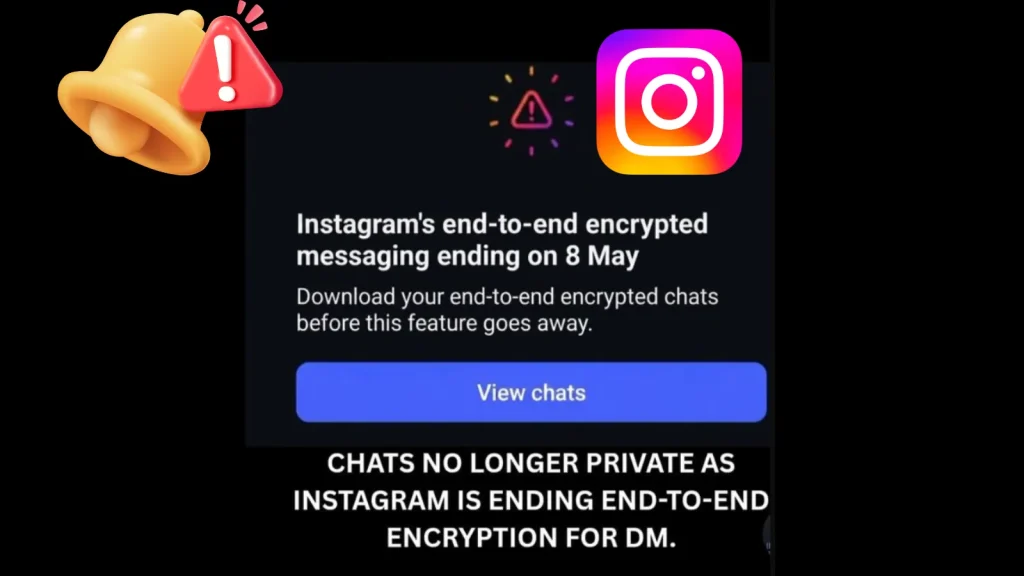
Instagram’s to End Encrypted Chats for Direct Messages
In a significant shift that impacts user privacy and digital communication security, Meta has announced the discontinuation of optional end-to-end encryption for Instagram Direct Messages. This decision, set to take effect on May 8, 2026, marks the end of a feature that was once touted as a cornerstone of secure messaging for the platform. For cybersecurity professionals and privacy advocates, this move raises important questions about data integrity and the future of encrypted communications on mainstream social media platforms.
The Sunset of Instagram’s Encrypted DMs
Originally introduced in 2021 as an opt-in feature, end-to-end encryption (E2EE) for Instagram Direct Messages aimed to provide a secure channel where only the sender and recipient could read messages. This cryptographic safeguard prevents eavesdropping by third parties, including Meta itself. The concept is straightforward: messages are scrambled on the sender’s device and can only be decrypted on the recipient’s device, ensuring privacy throughout their journey across the network.
Meta’s rationale for this upcoming change centers on low adoption rates among Instagram’s vast user base. While the technical specifics of this underutilization are not fully elaborated, it suggests a potential disconnect between the availability of privacy features and user engagement with them. This situation is particularly noteworthy given the increasing global emphasis on digital privacy and data protection regulations.
Understanding End-to-End Encryption
End-to-end encryption is a fundamental security mechanism in modern digital communication. It ensures that data remains confidential and unaltered between the communication endpoints. Unlike transport layer encryption (e.g., HTTPS), which only secures data in transit, E2EE provides protection from the moment a message is sent until it is received. This means that even if a server hosting the communication were compromised, the content of E2EE messages would remain secure, as the decryption keys are held exclusively by the communicating parties.
The absence of optional E2EE on Instagram DMs means that, after May 8, 2026, messages exchanged on the platform will likely traverse Meta’s servers in a state that is accessible (at least in principle) by the company. This poses concerns for users who rely on Instagram for sensitive communications and for organizations whose employees use the platform for work-related discussions.
Implications for User Privacy and Data Security
For individual users, the removal of optional E2EE signifies a reduction in privacy assurances. Conversations that might contain personal information, financial details, or confidential discussions will no longer benefit from the strongest form of cryptographic protection directly within the Instagram app. This could lead to a shift in user behavior, with some individuals potentially migrating to platforms that offer robust, default E2EE for all communications.
From an enterprise perspective, this development has several implications:
- Increased Risk of Data Exposure: Organizations that permit or cannot prevent employees from using Instagram DMs for business communications face a heightened risk of sensitive data exposure. Company secrets, proprietary information, and client data could be intercepted or accessed by unauthorized parties if Meta’s systems are breached.
- Compliance Challenges: Industries subject to stringent regulations like GDPR, HIPAA, or CCPA may find it more challenging to maintain compliance if employees are using a non-E2EE platform for communication that falls under these regulatory frameworks.
- Security Policy Review: Cybersecurity teams will need to review and potentially update their acceptable use policies and data handling guidelines regarding social media platforms, specifically addressing the use of Instagram Direct Messages.
Remediation Actions and Best Practices
While Instagram’s decision limits E2EE within its own app, users and organizations can take proactive steps to safeguard their digital communications.
- Migrate Sensitive Communications to E2EE Platforms: For any communication requiring true confidentiality, users should opt for messaging applications that offer default, strong end-to-end encryption. Examples include Signal, WhatsApp (which uses Signal Protocol), and Telegram (for secret chats). These platforms often implement secure protocols, such as those that remediate vulnerabilities like CVE-2018-1000166, related to insecure data handling.
- Educate Users on Privacy Risks: Both individuals and organizations should prioritize educating their constituencies about the implications of communicating on platforms without robust E2EE. This includes understanding what data could be exposed and the potential consequences.
- Implement Data Loss Prevention (DLP) for Enterprise: For businesses, deploying DLP solutions can help monitor and prevent sensitive information from being shared over unauthorized or insecure channels, including social media direct messages.
- Regular Security Audits: Organizations should conduct regular audits of their communication channels and practices to ensure adherence to security policies and compliance requirements.
Looking Ahead: The Future of Encrypted Messaging
The phasing out of optional E2EE on Instagram DMs is a reminder of the evolving landscape of digital privacy. While Meta’s stated reason is low adoption, it also highlights the challenge of balancing robust security features with broad user accessibility and ease of use. The industry continues to grapple with these trade-offs, particularly as governments globally debate access to encrypted communications for law enforcement and national security purposes. For instance, discussions around vulnerabilities like CVE-2021-34499 in messaging protocols underscore the ongoing need for rigorous security development and auditing in E2EE implementations.
Conclusion
Instagram’s decision to discontinue optional end-to-end encrypted direct messages by May 8, 2026, marks a regression in user privacy for the platform. While Meta cites low adoption rates, the move underscores the importance of understanding the mechanisms that protect our digital conversations. For users and organizations alike, this serves as a critical prompt to review communication practices and prioritize platforms that offer strong, default end-to-end encryption for any sensitive exchanges. The responsibility for securing digital communication increasingly falls on informed user choices and robust organizational policies.




