Understanding Social Engineering Attacks.
Social Engineering Attacks: Understanding Prevention Tips & What is it?
In today’s digital landscape, cybersecurity threats are constantly evolving, and among the most insidious are social engineering attacks. These attacks exploit human psychology to bypass technical security measures, making them a significant threat to individuals and organizations alike, especially when login credentials are at risk. Understanding what social engineering is, how it works, and how to prevent it is crucial for maintaining a strong security posture.
Understanding the Social Engineer

Definition and Role of a Social Engineer
A social engineer is an individual who uses manipulation and deception to gain access to systems, data, or physical locations. The role of a social engineer is to exploit the human element in security, often by impersonating someone with authority, creating a sense of urgency, or appealing to emotions. They use social engineering tactics to trick people into divulging sensitive information, such as passwords or credentials. A successful social engineer can bypass even the most sophisticated security software, making them a formidable threat to information security.
Characteristics of a Social Engineer
A successful social engineer possesses a unique blend of psychological skills and technical awareness. They are typically charismatic and persuasive, capable of building trust quickly. Social engineers are adept at research, gathering information about their targets to craft convincing pretexts. They exhibit excellent communication skills and the ability to think on their feet, adapting their approach as needed. An ability to create a sense of urgency or fear is also a key characteristic, as it can cloud judgment and lead individuals to make hasty decisions that compromise security, such as sharing login credentials. A social engineer will often use social networking to gather needed information.
The Human Element in Cybersecurity
Cybersecurity is not solely about firewalls, encryption, and antivirus software; it is also about the human element. Social engineering attacks target human vulnerabilities rather than technical flaws. Even the most robust security systems can be compromised if an employee falls victim to a phishing attack or divulges credentials to a scammer. Security awareness training is essential to educate individuals about common social engineering schemes and techniques. By understanding how social engineers operate, employees can become the first line of defense against these attacks. This will, in turn, prevent social engineering attacks.
Types of Social Engineering Attacks
![What Is Social Engineering in Cybersecurity? [Examples & Tips] | Hideez](https://cdn.shopify.com/s/files/1/0007/8017/3348/files/Types_of_Social_Engineering_Attacks_2_1024x1024.webp?v=1733912042)
Common Types of Social Engineering
Understanding the various types of social engineering is crucial for effective defense. Social engineering attacks manifest in diverse forms, each exploiting different human vulnerabilities. Some common examples of these attacks include:
- Phishing
- Pretexting
- Baiting
- Quid pro quo
Each type of social engineering attack is designed to manipulate individuals into divulging sensitive information or performing actions that compromise security. Recognizing these various social engineering techniques, such as spoofing and tailgating, is the first step in preventing them. Comprehensive security awareness training should cover examples of social engineering to ensure employees are well-prepared.
Phishing: The Most Notorious Social Engineering Technique
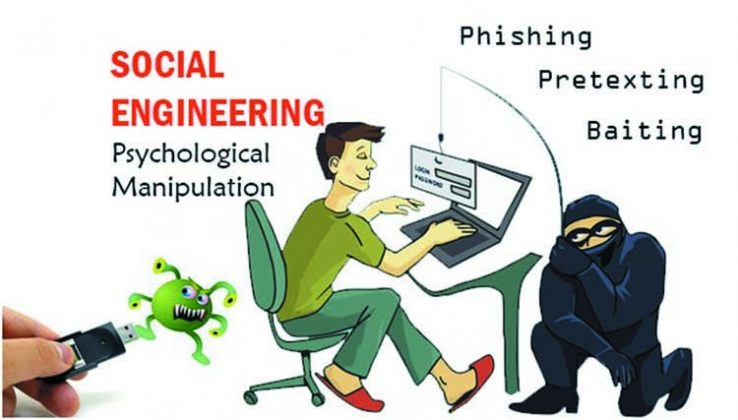
Phishing remains one of the most prevalent and dangerous social engineering techniques. A phishing attack typically involves sending fraudulent emails or messages that appear to be from legitimate sources, such as banks or trusted companies. The goal of the attacker is to trick recipients into providing sensitive information like passwords, credit card details, or personal information. Spear phishing is a more targeted type of phishing, where the attacker tailors the message to a specific individual or organization, making it even more convincing. Effective cybersecurity practices and security software are vital to defending against sophisticated phishing attacks. Remember, a successful phishing scam can lead to a major data breach and significant financial losses.
Pretexting and Baiting Explained
Pretexting is a social engineering tactic where an attacker creates a false scenario, or pretext, to trick a victim into revealing information or granting access. For instance, a social engineer might impersonate a fellow employee needing assistance or a vendor requesting information to complete a transaction. Baiting, on the other hand, involves offering something tempting, like a free download or a promotional item, to lure victims into clicking a malicious link or providing personal information. These forms of social engineering rely on human curiosity and trust to exploit vulnerabilities. The use of social networking can amplify the effectiveness of these attacks by providing attackers with more information about their targets.
Quid Pro Quo: The Offer You Can’t Refuse
Quid pro quo, meaning “something for something,” is a type of social engineering attack where the attacker offers a service or benefit in exchange for information or access. For example, a scammer might pose as IT support through a text message and offer to fix a computer problem, but in reality, they are installing malware or gaining unauthorized access to confidential information. These quid pro quo attacks often target employees who are less tech-savvy, exploiting their willingness to accept help to gain access to confidential information. Recognizing and questioning unsolicited offers is crucial in preventing quid pro quo social engineering attacks. Remember to always verify the legitimacy of any offer before providing any information or granting access.
Examples of Social Engineering Attacks

Real-World Case Studies
Examining real-world case studies provides invaluable insights into how social engineering attacks unfold and the potential consequences. Many high-profile data breaches have stemmed from successful social engineering tactics, demonstrating the serious impact of these attacks. These examples of social engineering attacks often involve a combination of phishing attacks, pretexting, and exploiting human psychology to gain unauthorized access to systems. One notorious instance includes the hack of a major social networking platform, where attackers used social engineering to trick employees into divulging credentials. Learning from these incidents can significantly bolster our ability to prevent social engineering attacks.
How Social Engineering Techniques Are Used in Cyberattacks
Social engineering techniques are frequently employed as a critical component of larger cyberattacks. Attackers often use social engineering as the initial stage to gain a foothold in a target organization’s network. By using social engineering tactics to obtain usernames, passwords, or other sensitive information, a hacker can bypass traditional security measures. For example, a spear phishing attack might target specific employees with malware-laden attachments, enabling the attacker to gain remote access. From there, they can move laterally within the network, stealing data or causing disruption. This demonstrates how social engineering works to amplify the impact of other cyber threats.
Learning from Examples: What Went Wrong?
Analyzing the “what went wrong” aspects of social engineering attacks is crucial for developing effective prevention tips. Most of the time, social engineering schemes exploit human vulnerabilities, such as a lack of awareness about how attackers may manipulate personal data. Failures in security awareness training often contribute to the success of social engineering attacks. A common mistake is the failure to verify the legitimacy of requests, whether through phone calls, emails, or in-person interactions. Organizations can learn from these errors by implementing robust security software, employee training programs, and multi-factor authentication. Moreover, encouraging a culture of skepticism and vigilance is essential in preventing future incidents involving the use of social engineering.
Preventing Social Engineering Attacks

Key Prevention Tips for Individuals
For individuals, recognizing the signs of a potential watering hole attack is crucial for protecting their personal data. vigilance is the cornerstone of preventing social engineering attacks. Always be skeptical of unsolicited requests for personal information, whether they arrive via email, phone, or in person. Never share your passwords, date of birth, or other sensitive information with anyone you cannot positively verify. Examine emails and URLs closely for inconsistencies or misspellings, which are often signs of a phishing attack. Use strong, unique passwords for each of your accounts, and enable multi-factor authentication whenever possible. Regularly update your security software and be cautious about clicking on links or downloading attachments from unknown sources. Remaining vigilant is key to preventing the use of social engineering tactics.
Best Practices for Organizations
Organizations must implement robust cybersecurity measures to protect against social engineering. This includes developing and enforcing Establishing clear security policies can help employees understand the risks associated with sharing login credentials. that address various social engineering schemes. Conduct regular security assessments and penetration testing to identify vulnerabilities. Implement multi-factor authentication for all critical systems and applications. Restrict access to sensitive data and systems on a need-to-know basis. Utilize security software and intrusion detection systems to monitor for suspicious activity. Encourage employees to report any suspected social engineering attempts immediately. A holistic approach is essential to mitigating the risk of data breach and preventing social engineering attacks on a larger scale.
Training and Awareness Programs
Security awareness training is paramount in educating employees about various types of phishing and other social engineering schemes. These programs should cover common social engineering tactics, such as phishing, pretexting, and baiting. Training should emphasize the importance of verifying requests for information and reporting suspicious activity. Conduct regular phishing simulations to test employees’ awareness and identify areas for improvement. Keep training materials up-to-date with the latest threats and techniques used by attackers. Foster a culture of security awareness throughout the organization, where employees feel empowered to question and report potential security breaches. A well-informed workforce is the best defense against social engineering attacks, including those that involve psychological manipulation and the exploitation of personal data.
The Risk of Social Engineering
Impact on Businesses and Individuals
Social engineering attacks pose a significant risk to both businesses and individuals. For businesses, a successful social engineering attack can lead to data breaches, financial losses, reputational damage, and legal liabilities. Sensitive customer data can be compromised, leading to loss of trust and regulatory fines. Individuals can suffer financial fraud, identity theft, and emotional distress. Phishing attacks, for instance, can trick people into revealing their bank account details or social security numbers. The use of social engineering techniques can have devastating consequences, emphasizing the need for proactive cybersecurity measures.
Cybersecurity Measures Against Social Engineering
Cybersecurity measures play a crucial role in defending against social engineering attacks. Implementing robust email security solutions can help protect login credentials from being compromised. can help detect and block phishing emails before they reach employees’ inboxes. Endpoint protection software can prevent malware from being installed on devices. Web filtering can block access to malicious websites that are used in baiting attacks. Intrusion detection systems can monitor network traffic for suspicious activity, including potential tailgate attempts. Regular security audits and vulnerability assessments can identify weaknesses in the organization’s defenses. Moreover, employee training and awareness programs are essential to complement technical security measures.
Future Trends in Social Engineering Threats
The landscape of social engineering threats is constantly evolving, with attackers becoming increasingly sophisticated in their techniques. Future trends include the increased use of artificial intelligence (AI) to craft more convincing phishing emails and generate realistic deepfake videos for pretexting attacks. Attackers are also targeting mobile devices and social media platforms more frequently, exploiting the ubiquitous nature of these technologies. As our reliance on digital technologies grows, the potential attack surface for social engineers expands. Staying ahead of these trends requires continuous vigilance and adaptation to new forms of psychological manipulation. Continuous vigilance, adaptation, and investment in cutting-edge security technologies are essential to defend against psychological manipulation tactics. Proactive cyber security measures are more important now than ever.
5 Surprising Facts About Understanding Social Engineering Attacks
- Social engineering attacks often exploit psychological tactics rather than technical vulnerabilities, making them particularly insidious.
- Approximately 90% of successful cyberattacks involve some form of social engineering, highlighting the importance of awareness.
- Many social engineering attacks are carried out through seemingly innocent channels, such as email, phone calls, or social media.
- Attackers often research their targets extensively, using information from public sources to craft convincing messages.
- Training employees to recognize and respond to social engineering tactics can reduce the risk of successful attacks by over 70%.

What are the different types of social engineering attacks?
Social engineering attacks can be categorized into several types, including phishing, pretexting, baiting, and quid pro quo. Each type employs different techniques to manipulate victims into giving away sensitive information or access to systems. Phishing, for instance, is one of the most common types and often involves deceptive emails that appear legitimate, prompting users to click on links or provide personal details.
How do attackers exploit social proof in their attacks?
Attackers often exploit social proof by presenting false information or scenarios that make their requests seem more legitimate. For example, they might claim that “everyone is doing it” or use testimonials from fake users to convince the victim that providing sensitive information is safe. This psychological manipulation can lead individuals to fall victim to a social engineering attack.
What is a type of phishing attack and how can I recognize one?
A type of phishing attack is spear phishing, which targets specific individuals or organizations with personalized messages. Unlike generic phishing attempts, spear phishing emails often contain specific information about the victim, making them seem more credible. Recognizing such attacks involves scrutinizing the sender’s email address, checking for grammatical errors, and being cautious of attachments or links.
What are some examples of social engineering techniques used by attackers?
Examples of social engineering techniques include pretexting, where the attacker creates a fabricated scenario to obtain information, and baiting, which involves offering a false promise to lure victims into providing sensitive information. Each technique leverages psychological manipulation to gain trust and exploit vulnerabilities in the victim.
How can I prevent social engineering attacks?
Preventing social engineering attacks requires a combination of awareness and proactive measures. Users should be educated about the risks of social engineering and trained to recognize common tactics. Implementing security protocols, such as using multi-factor authentication, can also help safeguard sensitive information against unauthorized access.
What is the risk of social engineering in physical security?
The risk of social engineering in physical security is significant, as attackers may use tactics like impersonation to gain physical access to restricted areas. Techniques such as tailgating or posing as maintenance personnel can enable attackers to bypass security measures. Organizations should ensure comprehensive training for employees to recognize suspicious behavior and maintain vigilance in physical security protocols.
How do social engineering attacks rely on exploiting human psychology?
Social engineering attacks rely heavily on exploiting human psychology by leveraging emotions such as fear, curiosity, or urgency. Attackers manipulate these emotions to encourage victims to act quickly without thinking critically. For example, an urgent email claiming there has been unusual activity in a bank account may prompt a victim to provide sensitive information hastily.
What are prevention tips for avoiding falling victim to a social engineering attack?
Prevention tips for avoiding falling victim to a social engineering attack include verifying the identity of anyone requesting sensitive information, being cautious of unsolicited communications, and regularly updating passwords. Utilizing multi-factor authentication can also add an extra layer of security, making it more difficult for attackers to gain unauthorized access to sensitive information.