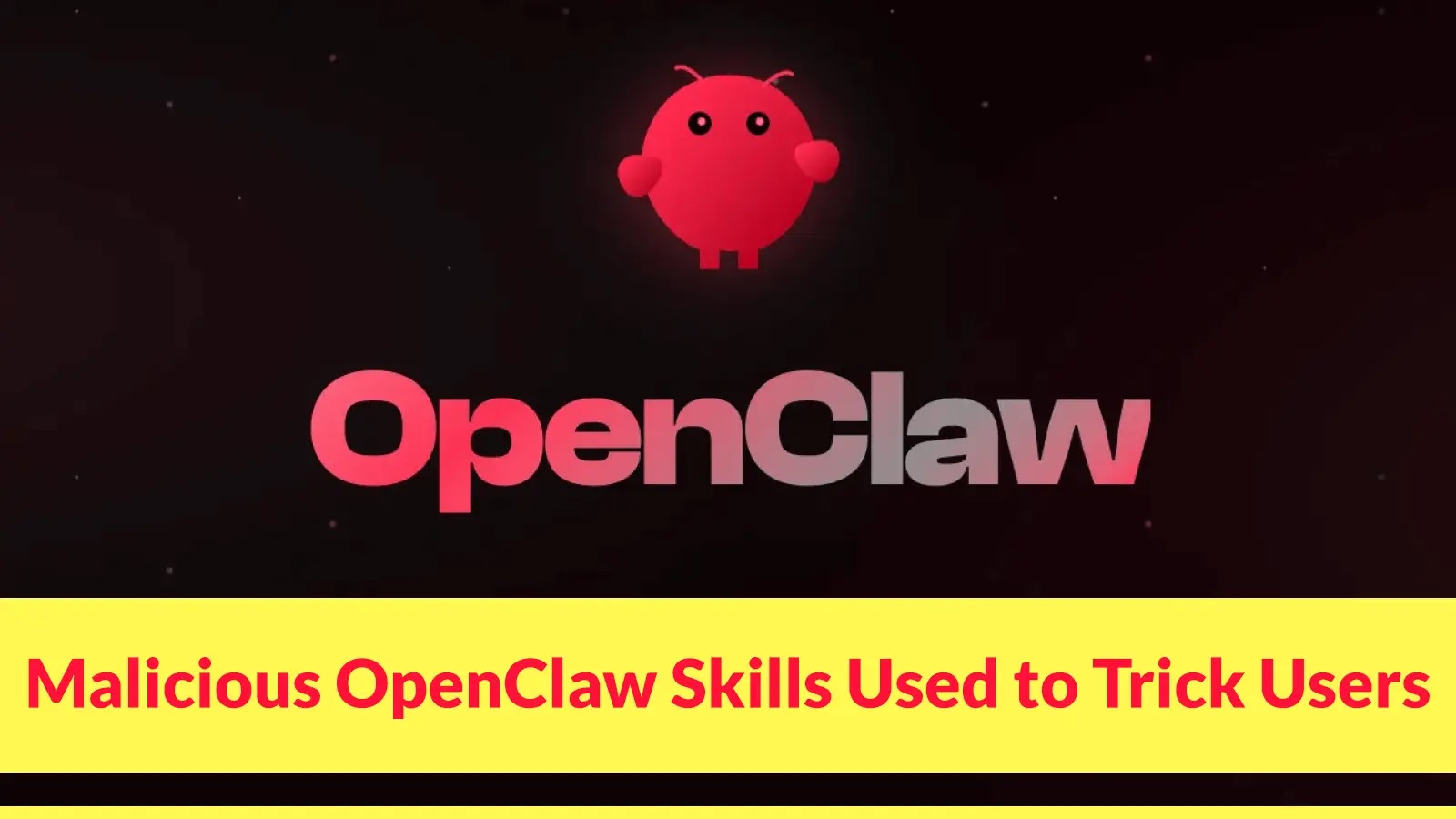
Malicious OpenClaw Skills Used to Trick Users into Manual Password Entry for AMOS Infection
In a concerning evolution of cyber threats, the notorious Atomic macOS Stealer (AMOS) has adopted a new, insidious tactic to compromise users. Previously relying on disguising itself within pirated software, AMOS is now leveraging malicious add-ons, or “skills,” designed for AI agent platforms like OpenClaw. This shift represents a significant move by threat actors to exploit the expanding ecosystem of AI tools, tricking unsuspecting users into manually providing their credentials and facilitating widespread data theft.
The Evolution of AMOS: From Cracks to AI Skills
Atomic macOS Stealer, or AMOS, has long been recognized as a potent data-theft malware specifically targeting macOS users. Its primary objective is to exfiltrate sensitive information, including cryptocurrency wallet data, browser autofill information, saved passwords, and system files. Historically, AMOS infections predominantly occurred through users downloading and installing seemingly legitimate, but in fact cracked, software applications from illicit sources.
The recent change in distribution vector marks a sophisticated adaptation by threat actors. Instead of relying on the diminishing pool of users seeking cracked software, they are now targeting the burgeoning field of AI agent platforms. By embedding AMOS within malicious OpenClaw skills, attackers exploit the trust users place in extending their AI agents’ capabilities. These skills, often presented as benign enhancements, act as Trojan horses, initiating the infection chain once installed.
How Malicious OpenClaw Skills Facilitate AMOS Infection
The new attack vector is particularly cunning because it capitalizes on user interaction and perceived legitimacy. Here’s a breakdown of the typical infection process:
- Deceptive Presentation: Threat actors create and upload OpenClaw skills that appear legitimate and offer useful functionalities for AI agents. These skills might promise enhanced productivity, specialized data processing, or unique integrations.
- User Installation: Users, seeking to augment their AI agent’s capabilities, download and install these malicious skills onto their platforms.
- Execution and Evasion: Once installed, the malicious OpenClaw skill executes its payload. This payload is configured to deploy AMOS onto the user’s macOS system. The malware often employs obfuscation techniques to evade detection by standard security software.
- Manual Password Entry Lure: A key aspect of this new technique is tricking users into manual password entry. The malicious skill or the deployed AMOS payload might present a convincing, but fake, login prompt for a legitimate service (e.g., a cloud storage provider, an email service, or even the OpenClaw platform itself).
- Data Exfiltration: When the user enters their credentials into this fake prompt, AMOS intercepts and records them. Subsequently, the malware proceeds with its primary objective: stealing a wide array of sensitive data from the compromised macOS device, including cryptocurrency wallets, browser bookmarks, cookies, autofill data, and more.
This method circumvents some traditional security measures as the initial execution is often initiated by the user through what appears to be a legitimate platform interaction.
Remediation Actions and Prevention Strategies
Protecting against this evolving threat requires a multi-layered approach, combining user awareness with robust technical controls.
- Exercise Extreme Caution with AI Skills/Add-ons: Only download and install skills or add-ons for AI platforms from trusted, verified sources. Authenticate the developer and review user feedback thoroughly before installation.
- Scrutinize Permissions Requests: Pay close attention to the permissions requested by any skill or application. If an OpenClaw skill asks for system-level access or unusual permissions, it should raise a red flag.
- Strong, Unique Passwords and MFA: Implement strong, unique passwords for all accounts and enable Multi-Factor Authentication (MFA) whenever possible. Even if credentials are stolen, MFA can significantly reduce the chances of account compromise.
- Keep macOS and Software Updated: Regularly update your macOS operating system, web browsers, and all installed applications. These updates often include security patches that address vulnerabilities exploited by malware like AMOS.
- Employ Reputable Endpoint Security: Utilize robust endpoint detection and response (EDR) or antivirus solutions designed for macOS. Ensure these solutions are kept up-to-date and conduct regular scans.
- Educate Users: Conduct cybersecurity awareness training for employees, emphasizing the dangers of social engineering, phishing, and deceptive software. Users should be taught to recognize fake login prompts and suspicious requests.
- Backup Critical Data: Regularly back up important data to an offline or cloud-based secure location. In the event of an infection, this can minimize data loss.
Tools for Detection and Mitigation
While AMOS doesn’t have a specific CVE designation for this new distribution method, its underlying capabilities are consistent. Users can leverage various security tools to detect and mitigate such threats.
| Tool Name | Purpose | Link |
|---|---|---|
| Malwarebytes for Mac | Malware detection and removal | https://www.malwarebytes.com/mac |
| SentinelOne Singularity Platform | Advanced EDR and threat prevention | https://www.sentinelone.com/ |
| Objective-See Tools (e.g., LuLu, BlockBlock) | macOS firewall (LuLu), persistent malware detection (BlockBlock) | https://objective-see.com/products.html |
| VirusTotal | File and URL analysis for suspicious indicators | https://www.virustotal.com/gui/home |
Conclusion
The shift by threat actors to embed Atomic macOS Stealer within malicious OpenClaw skills underscores the dynamic nature of cyber threats. As AI platforms become more integrated into daily workflows, the attack surface expands, demanding increased vigilance from users and robust security protocols from organizations. Staying informed about new attack vectors, practicing diligent cyber hygiene, and employing advanced security solutions are paramount in safeguarding against sophisticated data-theft operations like those employing AMOS.