
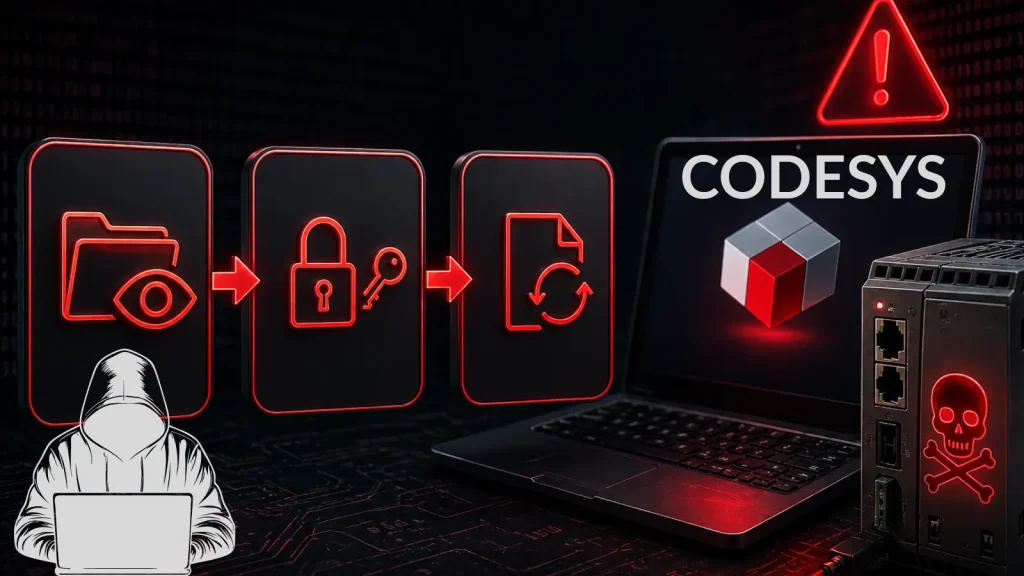
Attackers Can Backdoor CODESYS Applications by Chaining Vulnerabilities
The operational technology (OT) landscape is a perpetual target for threat actors, and the stability of industrial control systems (ICS) hinges on robust security. A recent discovery by Nozomi Networks Labs has sent ripples through the sector, revealing a critical vulnerability chain that could allow attackers to backdoor CODESYS applications. This isn’t just about a potential system disruption; it’s about an authenticated attacker gaining full administrative control, effectively holding the reins of your industrial processes. As cybersecurity analysts, understanding these intricate attack paths is paramount to safeguarding our critical infrastructure.
Understanding CODESYS and the Attack Vector
CODESYS is a widely adopted development environment for programming industrial controllers. Its control runtime, often functioning as a software-based Programmable Logic Controller (Soft PLC), is at the heart of countless automated systems. The vulnerabilities identified by Nozomi Networks Labs researchers exploit specific weaknesses within this architecture. By chaining these flaws, an authenticated attacker can elevate their privileges and replace legitimate industrial control logic with malicious code. This creates a covert backdoor, granting them enduring administrative access and the ability to manipulate processes at will.
The Chained Vulnerabilities: A Closer Look
While the detailed specifics of each vulnerability are often under close wraps until patches are widely deployed, the researchers highlighted a chain of security flaws within the CODESYS Control runtime. This chaining is crucial. Individual vulnerabilities might pose a risk, but when combined – much like a series of keys unlocking a fortified door – they provide a comprehensive attack path. The outcome is the ability to bypass security mechanisms, inject unauthorized code, and ultimately achieve full administrative control. This means an attacker could not:
- Modify operational parameters.
- Introduce denial-of-service conditions.
- Exfiltrate sensitive process data.
- Manipulate physical equipment directly.
The Impact: Full Administrative Control
The phrase “full administrative control” resonates with a chilling implication in the OT domain. It signifies a complete takeover. Imagine an attacker capable of manipulating production lines, altering safety protocols, or even causing physical damage to equipment or personnel. The economic ramifications of such an attack could be catastrophic, let alone the potential for widespread disruption and safety hazards. This isn’t merely a data breach; it’s a potential compromise of the physical world driven by software vulnerabilities.
Remediation Actions for CODESYS Users
Given the severity of these findings, immediate and proactive measures are essential for organizations utilizing CODESYS applications. Here’s what you need to do:
- Apply Patches and Updates: Monitor official CODESYS and vendor advisories diligently. Promptly apply all security patches and firmware updates as they become available. This is the single most critical step to address known vulnerabilities.
- Implement Network Segmentation: Isolate your OT networks from enterprise IT networks. Strictly control ingress and egress points, and segment critical systems within the OT environment to limit the lateral movement of attackers.
- Strengthen Authentication and Authorization: Ensure strong, unique credentials for all CODESYS users and administrators. Implement multi-factor authentication (MFA) wherever possible. Regularly review and revoke unnecessary privileges.
- Monitor for Anomalies: Deploy robust intrusion detection systems (IDS) and security information and event management (SIEM) solutions specifically tailored for OT environments. Monitor for unusual network traffic, unauthorized program changes, or deviations from expected operational behavior.
- Regular Security Audits: Conduct frequent security audits and penetration tests on your CODESYS installations and associated networks. Engage specialized OT security firms to identify potential weaknesses before attackers do.
- Secure Configuration Practices: Adhere to secure configuration best practices for all CODESYS devices and projects. Disable unnecessary services, close unused ports, and restrict access to programming interfaces.
Relevant CVEs and Further Information
While specific CVEs were not listed in the initial reporting from Cybersecurity News, it is imperative for CODESYS users to regularly consult the official CODESYS security advisories and the CVE database for newly assigned identifiers related to these vulnerabilities. Nozomi Networks Labs has likely disclosed these directly to CODESYS, leading to patched software versions.
Tools for Detection and Mitigation
Effective cybersecurity relies on a combination of robust processes and capable tools. Here are some categories of tools relevant to detecting and mitigating vulnerabilities in industrial control systems:
| Tool Name/Category | Purpose | Link |
|---|---|---|
| Industrial IDS/IPS Solutions | Detecting malicious activities, unauthorized access, and anomalous network traffic within OT networks. | (Vendor dependent, e.g., Nozomi Networks Guardian, Claroty Continuous Threat Detection) |
| OT Security Platforms | Comprehensive security monitoring, asset inventory, vulnerability management, and threat detection for industrial environments. | (Vendor dependent, e.g., Nozomi Networks Vantage, Claroty Platform, Dragos Platform) |
| Vulnerability Scanners (OT-specific) | Identifying known vulnerabilities in industrial hardware and software, including CODESYS components. | (Vendor dependent, often integrated into OT security platforms) |
| Configuration Management Tools | Ensuring secure configurations and tracking changes to CODESYS projects and controller settings. | (Both commercial and open-source solutions exist, often custom-built for specific ICS environments) |
Conclusion: Fortifying Our Industrial Defenses
The ability of attackers to chain vulnerabilities and backdoor CODESYS applications underscores the critical need for a proactive and layered security strategy in industrial environments. This isn’t a theoretical threat; it’s a demonstrated capability that could lead to severe operational disruptions and safety incidents. By staying informed, swiftly applying patches, implementing robust security controls, and continuously monitoring our OT networks, we can collectively fortify our industrial defenses against these evolving and sophisticated threats. The security of our critical infrastructure depends on our vigilance.




