
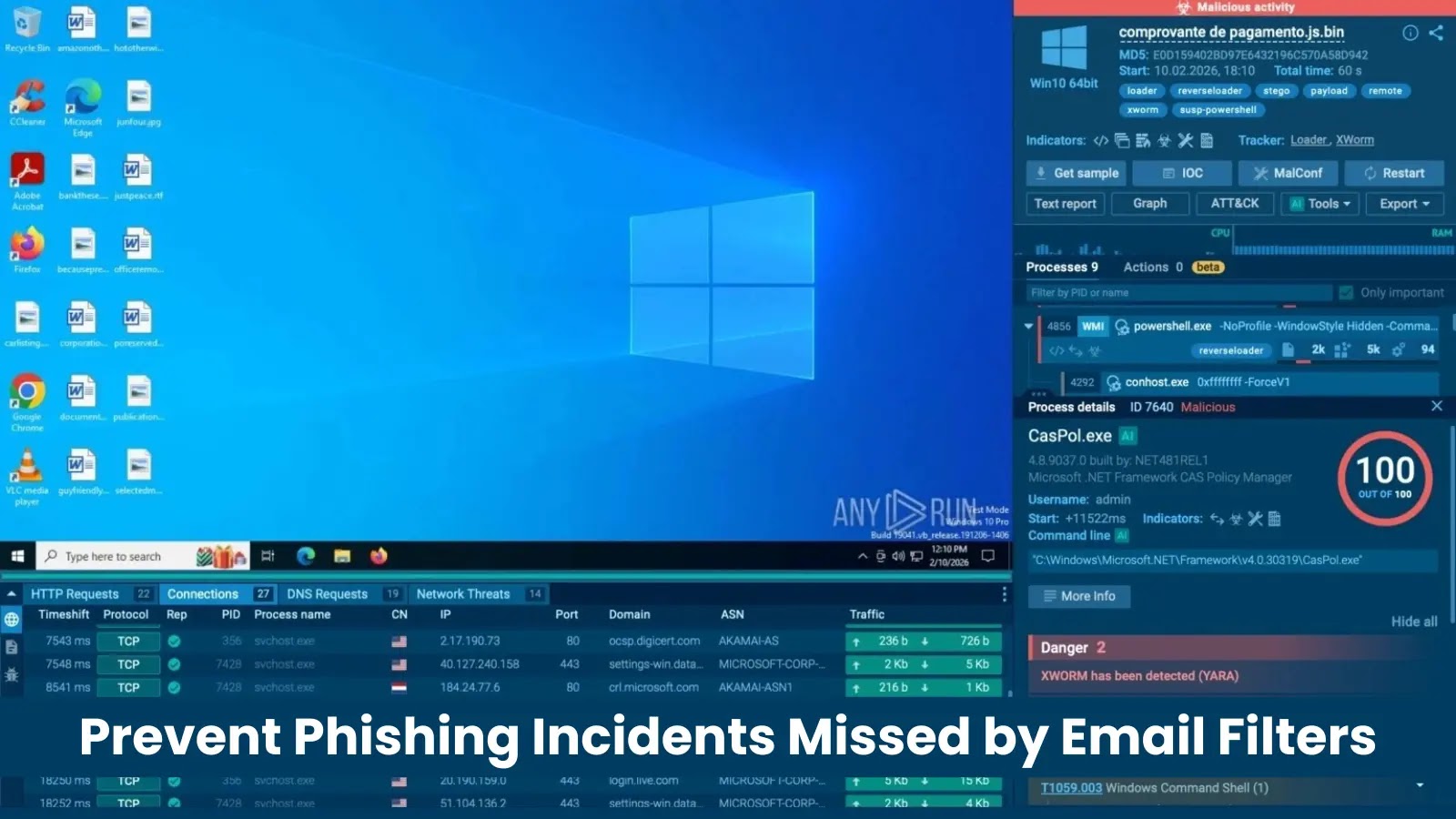
How Top SOCs and MSSPs Prevent Phishing Incidents Missed by Email Filters
Beyond the Filter: How Elite SOCs and MSSPs Neutralize Phishing Attacks Email Gateways Miss
Modern cybersecurity organizations face an unrelenting adversary: the sophisticated phishing campaign. While robust email filters are a foundational defense, relying solely on them is a dangerous gamble. Today’s phishing attempts are meticulously crafted to bypass these initial layers, leveraging cunning tactics that leave even the most advanced filters blinking in confusion. This isn’t just about a missed email; it’s about business exposure, slowed incident response, and eroded team confidence. The question security leaders must confront is not if a phishing email will slip through, but rather how their Security Operations Centers (SOCs) and Managed Security Service Providers (MSSPs) are equipped to catch it.
The Evolving Landscape of Phishing Bypasses
The days of easily identifiable typos and blatant scam links are largely behind us. Phishing actors have perfected their craft, employing a diverse arsenal of techniques designed to mimic legitimate communication and evade detection. Understanding these methods is the first step in building a robust defense:
- Fresh and Lookalike Domains: Attackers frequently register new domains that closely resemble legitimate company websites or trusted services. These domains haven’t accumulated a negative reputation yet, allowing them to pass through reputation-based filters without issue.
- CAPTCHA Checks and Intermediary Pages: To further obscure their malicious intent, some campaigns incorporate CAPTCHA challenges or redirect users through intermediary, seemingly harmless pages. This mimics legitimate user flows and can fool automated analysis tools.
- Authentic-Looking Login Pages and Credential Theft: Crafting pixel-perfect replicas of well-known login portals is a common tactic. Victims are lured into entering their credentials on these fake pages, leading directly to account compromise.
- One-Time Password (OTP) Theft: More advanced attacks integrate OTP requests, often after a victim has provided initial credentials on a fake site. This bypasses multi-factor authentication (MFA) schemes, which are typically designed to protect against simpler credential theft.
- Abuse of Legitimate Remote Monitoring and Management (RMM) Tools: Shockingly, attackers are increasingly using legitimate software like RMM tools to gain initial access or persistent control. This leverages trusted software, making it harder for traditional security solutions to flag as malicious. For an example of how such vulnerabilities can be exploited, consider the kind of threats documented like CVE-2023-35639 in legitimate software.
How Top SOCs and MSSPs Elevate Phishing Defense
When email filters fail, a well-structured and proactive cybersecurity strategy is paramount. Elite SOCs and MSSPs don’t just react; they anticipate and build layers of defense that intercept these sophisticated threats:
- Advanced Threat Detection and Behavioral Analysis: Beyond static signatures, leading security teams deploy solutions that analyze email content, attachments, and link behavior in real-time. This includes sandboxing suspicious attachments and monitoring URL redirects for malicious indicators of compromise (IOCs). Behavioral analysis also looks for anomalies in user activity post-delivery, such as unusual login attempts or data access.
- Security Awareness Training (SAT) with Phishing Simulations: The human element remains a critical defense layer. Regular, engaging security awareness training, coupled with realistic phishing simulations, educates employees on how to identify and report suspicious emails. This transforms end-users from potential vulnerabilities into frontline defenders.
- Endpoint Detection and Response (EDR) & Extended Detection and Response (XDR): These advanced platforms go beyond traditional antivirus. EDR monitors endpoints for suspicious activities, such as file modifications, process executions, and network connections that might indicate a post-delivery compromise from a phishing email. XDR extends this visibility across multiple security layers, including email, network, cloud, and endpoint data, providing a more comprehensive view and faster correlation of events.
- Threat Intelligence Integration: Top SOCs and MSSPs integrate real-time threat intelligence feeds into their security operations. This provides immediate context on emerging phishing campaigns, known malicious domains, and attacker tactics, enabling proactive blocking and detection.
- Incident Response Playbooks and Automation: A rapid and coordinated incident response is crucial. Pre-defined playbooks for phishing incidents ensure that once a threat is identified (whether by a filter, EDR, or a vigilant employee), containment, eradication, and recovery steps are executed swiftly and consistently. Automation helps in isolating affected systems, revoking access, and initiating forensic investigations.
- Dark Web Monitoring: Proactive dark web monitoring helps identify if company credentials or sensitive information have been compromised and are being circulated by threat actors, often as a result of successful phishing attacks. This allows organizations to take immediate remedial action before further damage occurs.
Remediation Actions: Fortifying Your Phishing Defenses
For organizations looking to harden their defenses against advanced phishing, here are actionable steps:
- Implement DMARC, SPF, and DKIM: Ensure your email authentication protocols are correctly configured and enforced. This helps prevent domain spoofing, a common phishing tactic.
- Multi-Factor Authentication (MFA) Everywhere: Mandate MFA for all critical accounts and services. Even if credentials are stolen via phishing, MFA acts as a vital secondary defense.
- Regular Penetration Testing and Red Teaming: Conduct regular assessments that include social engineering and phishing simulations to identify weaknesses in both your technology and human defenses.
- Zero Trust Architecture: Adopt a Zero Trust approach where all users and devices, even those inside the network perimeter, must be continuously verified. This significantly limits the impact of a successful phishing compromise.
- Automated Email Post-Delivery Protection: Invest in solutions that can scan and remediate emails even after they’ve landed in inboxes, automatically removing or sandboxing suspicious content.
Conclusion: A Multi-Layered Defense is Non-Negotiable
The notion that email filters alone can prevent all phishing incidents is a dangerous misconception in the current threat landscape. Sophisticated phishing attacks are specifically engineered to bypass these initial defenses, making a human-centric and technologically advanced security posture absolutely critical. By combining robust threat detection, proactive employee training, advanced endpoint protection, and rapid incident response, top SOCs and MSSPs demonstrate that even the most cunning phishing attempts can be identified, mitigated, and ultimately, defeated. The goal isn’t just to catch some phishing attempts, but to create a resilient ecosystem where even those that slip through the cracks are quickly neutralized, minimizing business risk and maintaining operational integrity.




