
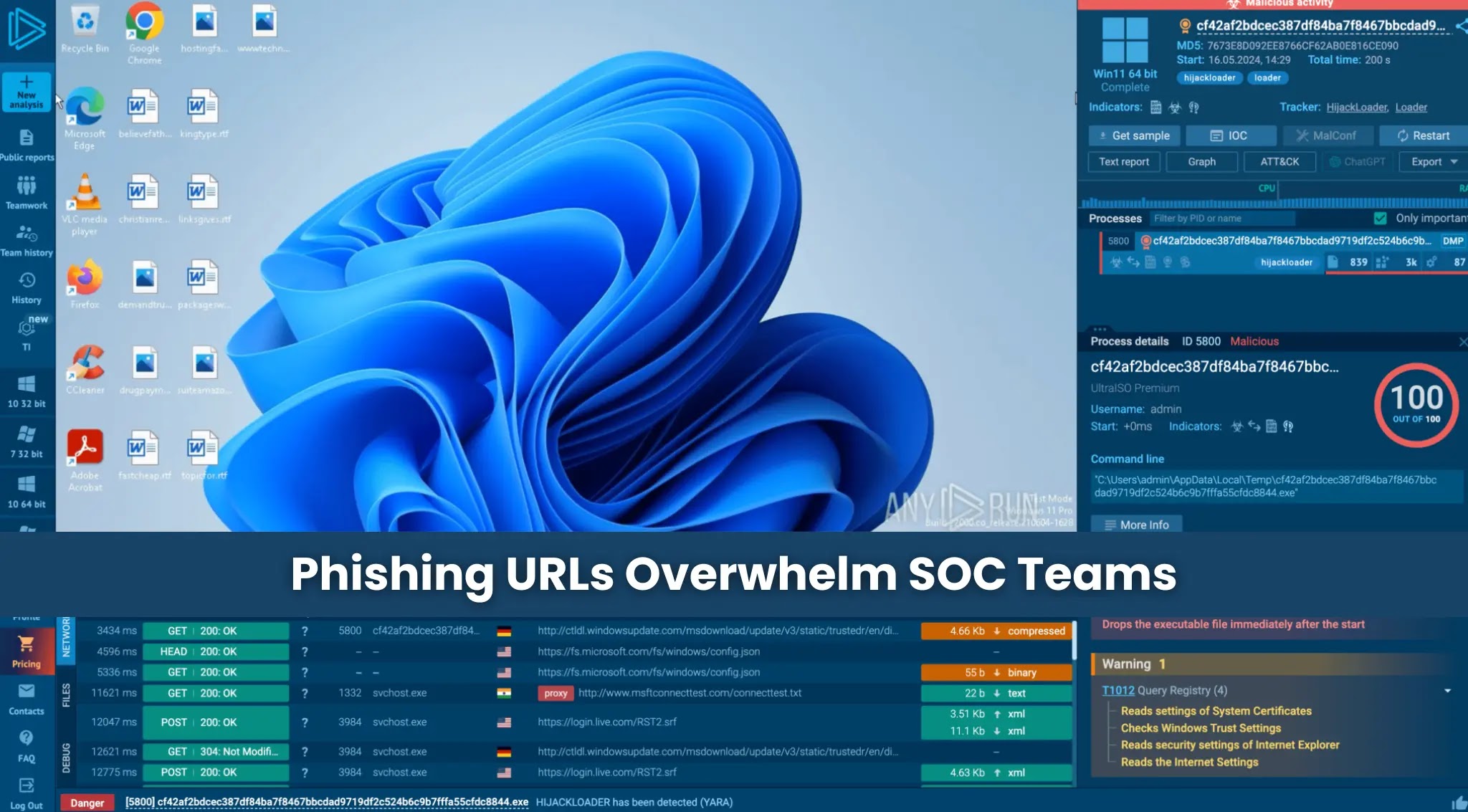
URL Phishing Is Draining SOCs, How to Cut Triage Time and Catch Incidents Early
The Silent Drain: How URL Phishing Overwhelms SOCs and How to Fight Back
In the relentless battle against cyber threats, Security Operations Centers (SOCs) are constantly under siege. A pervasive and increasingly sophisticated adversary, URL phishing, is quietly draining their resources and delaying critical incident responses. The sheer volume and advanced tactics of these attacks make thorough triage at scale a monumental challenge. SOC teams find themselves spending inordinate amounts of time trying to unravel malicious links, often delaying critical decisions and escalating risks.
This isn’t merely about identifying a suspicious URL. Modern phishing campaigns leverage sophisticated techniques like redirects, brand-new domains, and dynamic browser-side content, all designed to evade traditional, static URL checks. This article will delve into why URL phishing is becoming such a significant bottleneck for SOCs and, more importantly, outline actionable strategies to cut triage time and catch these incidents early.
The Evolving Threat Landscape: Beyond Basic URL Checks
The days when a simple string comparison could reliably flag a phishing URL are long gone. Attackers have adapted, understanding that SOC analysts are looking for tell-tale signs. They’ve developed methods that make URL analysis a time-consuming investigative process rather than a quick verification:
- Elusive Redirects: Malicious links often hide behind a series of legitimate-looking redirects, leading to the actual phishing site only after several hops. Traditional URL scanners might only see the initial, benign link.
- Ephemeral and Freshly Registered Domains: Phishers frequently register new domains for their campaigns, sometimes just hours before launching an attack. These domains won’t show up on blacklists, bypassing common defenses.
- Browser-Side Alchemy: Advanced phishing sites use JavaScript and other browser-side technologies to render their malicious content. What an automated scanner sees at the server level might be entirely different from what a user’s browser displays. This dynamic content generation is a significant blind spot for many security tools.
Each of these tactics forces analysts to spend valuable time “rebuilding” the full user experience, often in sandboxed environments, to understand the true intent of a suspicious link. This manual reconstruction is resource-intensive and severely impacts incident response timelines.
The Critical Need for Browser-Level Visibility
To effectively combat these sophisticated URL phishing attacks, SOC teams require a fundamental shift in their approach. The key lies in gaining browser-level visibility. This means moving beyond analyzing just the URL string itself and observing what actually happens when a page loads in a real browser environment. This includes:
- Rendered Content Analysis: Understanding the final HTML, CSS, and JavaScript that a browser processes, not just the raw server response. This reveals dynamic content and cloaked phishing pages.
- Resource Loading Patterns: Observing all requests made by the page, including embedded scripts, images, and cross-site calls. Malicious pages often load resources from unusual or suspicious origins.
- Behavioral Analysis: Monitoring user interactions within the simulated browser environment. Does the page attempt to prompt for credentials? Does it try to download files? Is it attempting to exploit browser vulnerabilities?
By capturing and analyzing this comprehensive browser-level data, SOC analysts can gain a true understanding of a suspicious link’s intent without the manual overhead. This allows for faster, more accurate triage and significantly reduces the time from detection to response.
Remediation Actions and Proactive Defenses
Cutting down triage time and catching URL phishing incidents early requires a multi-faceted approach. Here are key remediation actions and proactive defenses SOCs should implement:
- Implement Advanced URL Analysis Tools: Invest in solutions that offer browser-level rendering and behavioral analysis, simulating a real user’s interaction with the link. These tools should go beyond static URL reputation checks.
- Leverage Threat Intelligence Feeds: Integrate robust and up-to-date threat intelligence feeds that include new domain registrations, known phishing kits, and attacker infrastructure.
- Automate Triage Workflows: Automate initial analysis steps for suspicious URLs. Tools leveraging AI and machine learning can rapidly analyze browser-level activity and flag high-confidence phishing attempts, presenting enriched data to analysts.
- Continuous Security Awareness Training: Educate employees on recognizing phishing tactics, especially those that leverage social engineering and psychological manipulation. Reinforce the importance of reporting suspicious emails and links.
- Email Security Gateways with Sandboxing: Utilize email security solutions that include robust sandboxing capabilities, allowing unknown or suspicious URLs to be detonated in a safe environment before reaching the user’s inbox.
- Endpoint Detection and Response (EDR) Systems: Ensure EDR solutions are configured to detect and alert on suspicious browser activity, such as credential harvesting attempts or unexpected file downloads initiated from a web page.
- Incident Response Playbooks: Develop and regularly drill specific playbooks for URL phishing incidents to ensure a swift and coordinated response when an attack is confirmed.
Tools for Enhanced Phishing Detection and Triage
To aid in detecting and mitigating URL phishing, several categories of tools can be invaluable for SOC teams. These range from open-source utilities to comprehensive commercial platforms.
| Tool Name | Purpose | Type |
|---|---|---|
| PhishTank | Community-based phishing URL verification | OSINT/Database |
| URLScan.io | Website sandbox and report generation | Sandbox |
| Any.Run | Interactive online malware analysis sandbox (features browser emulation) | Sandbox |
| Avanan (Check Point) | API-driven email security with advanced URL analysis | Commercial Email Security |
| Proofpoint URL Defense | Advanced email and URL protection, including rewrite and sandboxing | Commercial Email Security |
| VirusTotal | Aggregate URL/file scanning with multiple engines | Multi-A/V Scanner |
Conclusion
URL phishing is no longer a simple problem solvable with basic checks. Its sophisticated evolution demands an equally advanced approach from SOCs. The persistent drain on analyst time caused by manual, complex triage is unsustainable. By embracing browser-level visibility, integrating advanced analysis tools, automating workflows, and continuously training the workforce, organizations can significantly reduce incident response times and bolster their defenses against these insidious attacks. Prioritizing these strategic shifts is essential for any SOC looking to efficiently protect its assets and users in today’s threat landscape.




