New DirtyClone Linux Vulnerability Allows Attackers to Gain Root Access Via Cloned Packets
Unmasking DirtyClone: A Stealthy Linux Root Vulnerability
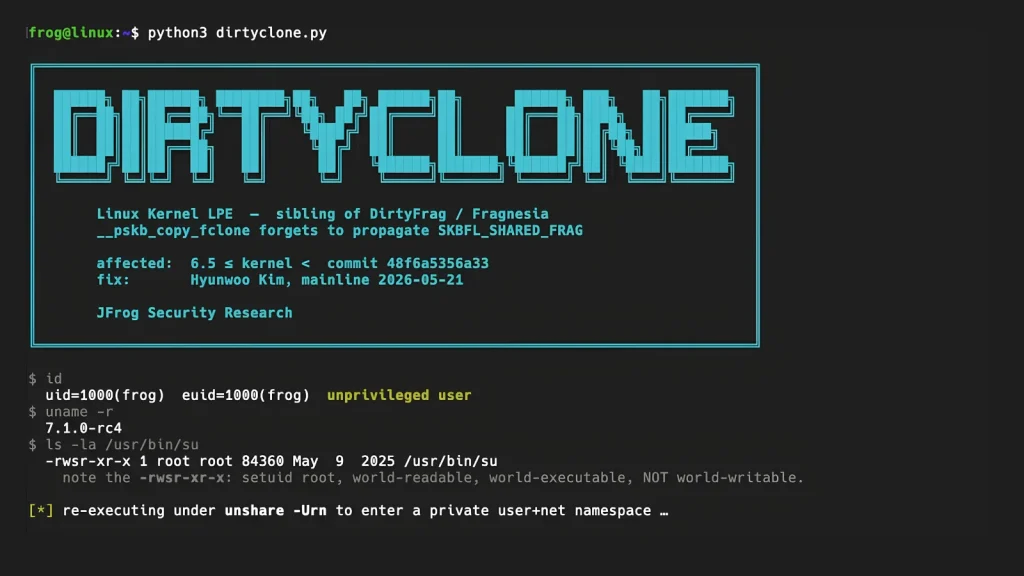
The Linux kernel, the robust foundation of countless servers and devices globally, is once again under the microscope. A new local privilege escalation vulnerability, dubbed “DirtyClone” (CVE-2026-43503), has emerged, posing a significant threat to system security. This high-severity flaw allows unprivileged local users to achieve full root access by cleverly manipulating cloned network packets within the kernel’s XFRM/IPsec subsystem. What makes DirtyClone particularly insidious is its ability to operate stealthily, leaving no discernible trace in kernel logs or audit records, raising concerns about undetectable breaches.
Understanding the intricacies of DirtyClone is paramount for IT professionals, security analysts, and developers responsible for maintaining secure Linux environments. This vulnerability isn’t just another bug; it’s a cunning exploitation of fundamental networking protocols, demanding immediate attention and a clear remediation strategy.
The Anatomy of DirtyClone: How Cloned Packets Lead to Root Privileges
DirtyClone extends the legacy of the “DirtyFrag” vulnerability family, a class of exploits known for their ingenious manipulation of network packet fragmentation and reassembly. Unlike its predecessors, DirtyClone specifically targets the XFRM/IPsec subsystem, a critical component responsible for handling secure network communication within the Linux kernel.
The core of the attack lies in an unprivileged local user’s ability to create and manipulate a specific sequence of network packets. These packets are “cloned” in a way that triggers a critical flaw in how the XFRM/IPsec subsystem processes them. By carefully crafting these cloned packets, an attacker can induce a kernel memory corruption, ultimately leading to local privilege escalation. This memory corruption grants the attacker the ability to execute arbitrary code with root privileges, effectively taking complete control of the system.
The silent nature of DirtyClone is a significant concern. The exploit is designed to bypass standard logging mechanisms within the kernel and audit subsystems, making detection incredibly challenging. This “stealth mode” means an attack could occur and persist without administrators being immediately aware, significantly increasing the potential for damage and data exfiltration.
CVE-2026-43503: The Identifier of a Serious Threat
The official identifier for this vulnerability is CVE-2026-43503. Assigning a CVE number is a critical step in standardizing the reporting and tracking of security vulnerabilities, allowing security researchers and system administrators to universally identify and address the issue. The “high-severity” classification underscores the potential for severe impact, emphasizing the urgency of applying necessary patches and mitigation strategies.
Organizations and individual users running Linux systems must closely monitor official announcements from their respective Linux distribution vendors for patches and updates related to CVE-2026-43503. Proactive patching is the most effective defense against such sophisticated local privilege escalation vulnerabilities.
Remediation Actions: Protecting Your Linux Systems from DirtyClone
Addressing DirtyClone requires a multi-faceted approach focusing on rapid patching and diligent system monitoring. Here are key remediation actions:
- Immediate Kernel Updates: This is the most crucial step. Vendors of Linux distributions (e.g., Red Hat, Debian, Ubuntu, SUSE) will release patched kernel versions that address CVE-2026-43503. System administrators must prioritize applying these updates across all affected systems as soon as they become available. Maintain a rigorous patch management schedule.
- Implement Least Privilege: While DirtyClone is a local privilege escalation, a strong “least privilege” model can limit the impact of an initial compromise. Ensure that unprivileged users have only the minimum necessary permissions to perform their tasks.
- Network Segmentation and Firewalls: Although this is a local exploit, robust network segmentation can contain potential lateral movement should an attacker successfully gain root access. Employ firewalls to restrict unnecessary inbound and outbound connections.
- Enhanced Monitoring: Given DirtyClone’s stealthy nature, invest in advanced threat detection and anomaly-based monitoring solutions. While kernel logs might be bypassed, other system behaviors or resource consumption anomalies could indicate a compromise.
- Security Audits and Penetration Testing: Regularly conduct security audits and penetration tests to identify potential weaknesses in your Linux environments and validate the effectiveness of your security controls.
- Stay Informed: Continuously follow cybersecurity news and advisories from your Linux distribution vendor and reputable security organizations to stay aware of new threats and vulnerabilities.
Tools for Detection and Mitigation
While direct detection of DirtyClone’s exploitation might be difficult due to its stealth, several tools can assist in maintaining a secure posture and identifying suspicious activities that might precede or follow an attack:
| Tool Name | Purpose | Link |
|---|---|---|
| Kernel Live Patching Solutions | Apply kernel security fixes without requiring a system reboot, reducing downtime. | Various (e.g., kpatch, Livepatch) |
| Nessus / OpenVAS | Vulnerability scanning to identify unpatched systems and misconfigurations. | Nessus / OpenVAS |
| Falco | Runtime security monitoring; can detect unusual system calls and processes. | Falco |
| osquery | Operating system instrumentation for low-level detection and anomaly investigation. | osquery |
| SELinux / AppArmor | Mandatory Access Control (MAC) frameworks to restrict process capabilities. | SELinux / AppArmor |
Conclusion
The emergence of DirtyClone (CVE-2026-43503) serves as a potent reminder of the ongoing sophistication of kernel-level vulnerabilities. Its ability to grant root access silently through clever manipulation of cloned network packets within the XFRM/IPsec subsystem presents a formidable challenge to Linux system security. Proactive security measures, particularly timely kernel updates, rigorous patch management, and enhanced monitoring, are non-negotiable. Organizations must prioritize addressing this vulnerability to safeguard their critical Linux infrastructure from the severe consequences of undetected root compromise.