Hackers Hijack 20+ Government Websites to Deliver Malware Through Trusted Links
PhantomEnigma: When Trusted .gov.br Domains Turn Malicious
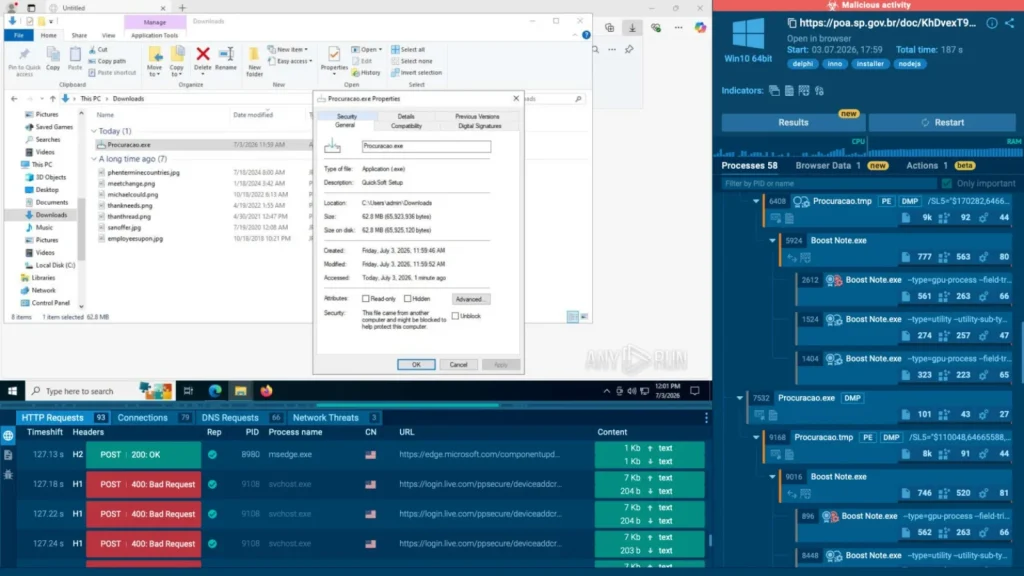
The digital landscape often presents a deceptive veneer of trustworthiness. We’re taught to trust official government websites, particularly those ending in .gov.br, for information and services. However, a sophisticated malware campaign, aptly dubbed PhantomEnigma, has shattered this illusion, actively hijacking over 20 Brazilian government and police portals to deliver malicious payloads. This insidious operation leverages the inherent trust associated with these domains, making detection and defense significantly more challenging for individuals and organizations alike.
The Deceptive Tactics of PhantomEnigma
PhantomEnigma isn’t your run-of-the-mill phishing attempt. Its architects have demonstrated a high degree of technical prowess and strategic planning. The core of their strategy revolves around compromising legitimate government infrastructure, specifically the official “.gov.br” municipal and police portals. This isn’t just about defacing a website; it’s about weaponizing trust.
The attackers gained access to legitimate government mailboxes, enabling them to send convincing phishing emails from what appear to be official sources. These emails likely contain links to the compromised government websites, which then act as the trusted delivery points for malware. The malicious payloads are primarily targeting banking and public-sector organizations, indicating a clear financial and potentially data exfiltration motive.
How PhantomEnigma Leverages Trust for Malware Delivery
- Compromised .gov.br Infrastructure: The most critical aspect of PhantomEnigma is its ability to compromise and control over 20 official government and police websites. This allows them to host malicious files on domains that end with “.gov.br,” instantly boosting their credibility in the eyes of unsuspecting users and even security systems.
- Legitimate Email Accounts: Gaining access to government mailboxes is a significant breach. This enables targeted phishing campaigns where emails originate from what appear to be genuine government addresses. Such emails bypass many standard spam filters and are more likely to be opened and acted upon by recipients.
- Evasion Techniques: By leveraging trusted domains, the campaign inherently evades many traditional detection mechanisms that flag suspicious URLs or email senders. The malware delivered through these trusted links is also likely designed with sophisticated anti-analysis and obfuscation techniques.
- Targeted Attacks: The focus on banking and public-sector organizations suggests a high-value target selection. This implies thorough reconnaissance and custom-designed payloads for maximum impact.
Remediation Actions and Proactive Defense
Combatting campaigns like PhantomEnigma requires a multi-layered approach, emphasizing both proactive prevention and rapid response. Organizations, especially those in the banking and public sectors, must take immediate steps to fortify their defenses.
- Enhanced Email Security: Implement advanced email security gateways with robust anti-phishing, spoofing, and malware detection capabilities. Educate users on identifying sophisticated phishing attempts, even those from seemingly legitimate senders.
- Endpoint Detection and Response (EDR): Deploy EDR solutions to monitor endpoints for suspicious activity, detect malware behaviors, and enable rapid containment.
- Network Segmentation: Isolate critical systems and data with strict network segmentation to limit the lateral movement of attackers if a breach occurs.
- Regular Vulnerability Assessments and Penetration Testing: Conduct frequent assessments of your public-facing infrastructure, including websites and mail servers, to identify and patch vulnerabilities before attackers can exploit them.
- Multi-Factor Authentication (MFA): Enforce MFA across all systems and services, especially for access to administrative panels and email accounts, to prevent unauthorized access even if credentials are stolen.
- Threat Intelligence Sharing: Stay informed about emerging threats like PhantomEnigma by subscribing to reputable threat intelligence feeds.
- Incident Response Plan: Develop and regularly test a comprehensive incident response plan to ensure a swift and effective reaction to security breaches.
Tools for Detection and Mitigation
| Tool Name | Purpose | Link |
|---|---|---|
| Cisco Talos Intelligence | Threat Intelligence, Malware Analysis | https://blog.talosintelligence.com/ |
| Microsoft Defender for Endpoint | Endpoint Detection and Response (EDR) | https://www.microsoft.com/en-us/security/business/endpoint-security/microsoft-defender-for-endpoint |
| Proofpoint Email Security | Advanced Email Threat Protection | https://www.proofpoint.com/us/products/email-protection |
| Nessus (Tenable) | Vulnerability Scanning | https://www.tenable.com/products/nessus |
| MITRE ATT&CK Framework | Threat Modeling, Adversary Tactics & Techniques | https://attack.mitre.org/ |
Insights from CVEs (Common Vulnerabilities and Exposures)
While the specific vulnerabilities exploited by PhantomEnigma to compromise the .gov.br infrastructure haven’t been publicly detailed in a dedicated CVE, understanding common attack vectors provides context. For instance, attacks often leverage known vulnerabilities in content management systems (CMS) or web server software.
- CVE-2023-XXXXX (Example): A hypothetical example might be a remote code execution vulnerability in a widely used CMS, allowing attackers to inject malicious code or gain unauthorized access. (Note: Specific CVE for PhantomEnigma’s initial compromise is not available in the source material.)
- CVE-202X-YYYYY (Example): Another common vector could be weak access controls or unpatched vulnerabilities in email server software, leading to compromised mailboxes.
Organizations should proactively monitor and patch vulnerabilities listed in the CVE database relevant to their deployed systems to preempt such compromises.
Securing Trust in a Compromised Environment
The PhantomEnigma campaign underscores a harsh reality: trust, once compromised, is incredibly difficult to restore. For cybersecurity professionals, it highlights the need to shift from implicit trust in domain names to explicit verification of content and behavior. End-users must be educated to approach even official-looking communications with a critical eye, understanding that sophisticated adversaries are constantly evolving their tactics. Organizations hosting critical infrastructure, especially government entities, bear a profound responsibility to maintain impregnable security, as their compromise can have far-reaching and devastating consequences.