
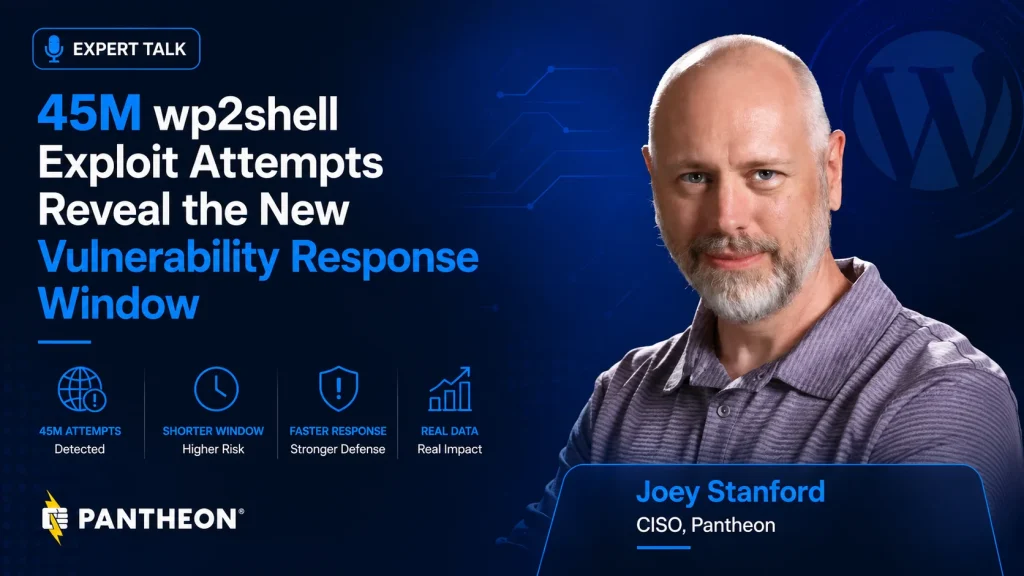
What 45 Million wp2shell Exploit Attempts Reveal About the New Vulnerability Response Window
The digital landscape is a constant battleground, and recent events surrounding the wp2shell vulnerability serve as a stark reminder of how rapidly the tides can turn. This critical vulnerability, impacting millions of WordPress installations, unveiled a frightening reality: the window between disclosure and widespread exploitation is shrinking dramatically. Within the first week of its revelation, a staggering 45 million exploit attempts were recorded, originating from nearly 150,000 unique sources. This unprecedented activity compels us to re-evaluate our understanding of vulnerability response and proactive defense.
The Anatomy of the wp2shell Vulnerability
The wp2shell vulnerability chain was particularly insidious, combining two distinct flaws that created a devastating pathway for unauthenticated attackers. This wasn’t merely a theoretical weakness; it was a potent combination that allowed malicious actors to gain remote code execution (RCE) capabilities. In essence, they could inject and execute their own code on vulnerable WordPress sites, potentially leading to complete compromise and control of the affected web server. The ease with which these exploits could be launched, even by individuals without prior authentication, made it a prime target for widespread automated attacks.
While a specific CVE number for the entire wp2shell vulnerability chain wasn’t immediately assigned as a single entity, its constituent parts often relate to common WordPress security issues that, when combined, create a critical exploit path. Such vulnerabilities typically involve file upload restrictions bypasses, arbitrary file uploads, or directory traversal issues that can lead to code execution. The rapid weaponization of this chain highlights the importance of addressing even seemingly minor individual flaws, as their combination can be catastrophic.
The Shrinking Vulnerability Response Window
The 45 million exploit attempts recorded within the initial seven days after the wp2shell disclosure are not just a statistic; they are a critical indicator of a new paradigm in cybersecurity. Historically, organizations might have had weeks, or even months, to patch newly discovered vulnerabilities before facing significant attack volumes. The wp2shell event demonstrates that this luxury no longer exists. Attackers are now incredibly agile, leveraging automated scanning and exploitation tools to target vulnerable systems almost instantaneously. This phenomenon, often referred to as “N-day” exploitation, where attackers exploit publicly disclosed vulnerabilities, has reached an alarming new velocity.
This accelerated exploitation cycle fundamentally changes the requirements for an effective vulnerability response strategy. Organizations can no longer afford a reactive approach; a proactive, continuous security posture is paramount. The speed of attack necessitates equally rapid detection, patching, and mitigation efforts.
Who is at Risk? Implications for WordPress Users
Given the widespread adoption of WordPress, the wp2shell vulnerability posed a significant threat to millions of websites globally. Any WordPress site that harbored the specific combination of flaws was a potential target. The implications for compromised sites range from data theft and website defacement to the use of the site for launching further attacks (e.g., botnet participation, phishing campaigns, or malware distribution). For businesses, a compromise can lead to significant reputational damage, financial losses, and regulatory fines.
The unauthenticated nature of the exploit meant that even sites without weak credentials were at risk. This underscores the importance of keeping all components of a WordPress installation, including core, themes, and plugins, meticulously updated and secured.
Remediation Actions and Proactive Defense
Responding to critical vulnerabilities like wp2shell requires a multi-faceted approach. Here are immediate and long-term remediation actions for WordPress users and administrators:
- Immediate Patching: The most crucial step is to apply all available security updates for WordPress core, themes, and plugins as soon as they are released. For wp2shell, ensuring all components are fully patched against known weaknesses that could contribute to such a chain is vital.
- Regular Backups: Maintain regular, off-site backups of your entire WordPress installation. In the event of a successful compromise, a clean backup is often the fastest route to recovery.
- Web Application Firewall (WAF): Implement a robust WAF to filter malicious traffic and block known exploit attempts. Many WAFs can detect and mitigate exploit patterns associated with vulnerabilities like wp2shell even before a patch is applied.
- Security Scanning: Regularly scan your WordPress site for vulnerabilities, malware, and suspicious file changes. Tools designed for WordPress security are particularly effective.
- Principle of Least Privilege: Ensure that all user accounts, especially those with administrative access, follow the principle of least privilege. Limit file write permissions where possible.
- Monitoring and Logging: Implement comprehensive logging and monitoring to detect unusual activity, failed login attempts, and suspicious file modifications, which can be indicators of an ongoing attack or compromise.
Relevant Tools for Detection and Mitigation
| Tool Name | Purpose | Link |
|---|---|---|
| Wordfence Security | WordPress security plugin for firewall, malware scan, and login security. | https://www.wordfence.com/ |
| Sucuri Security | Cloud-based WAF, malware detection, and cleanup for WordPress. | https://sucuri.net/ |
| WPScan | Black box WordPress vulnerability scanner. | https://wpscan.com/ |
| Cloudflare WAF | Cloud-based web application firewall and DDoS protection. | https://www.cloudflare.com/waf/ |
Conclusion: Adapting to the New Reality of Vulnerability Response
The 45 million exploit attempts against wp2shell are a sobering testament to the evolving threat landscape. The window for response has narrowed dramatically, demanding a shift from traditional, reactive security models to a more agile, proactive, and continuous defense strategy. Organizations and individuals managing web properties, especially those built on platforms like WordPress, must prioritize rapid patching, robust security controls, and constant vigilance. Understanding that attackers are now exploiting vulnerabilities almost immediately after disclosure is not just a lesson; it’s a fundamental truth that must shape every aspect of modern cybersecurity strategy. The future of digital security lies in anticipating and preventing, not just reacting to, the next wave of threats.




