
Iran-Linked Hackers Expand Attacks With New Backdoor and Reverse SSH Tunnels
The persistent threat landscape continues to evolve, with state-sponsored actors constantly refining their tactics. Recent intelligence highlights a significant expansion in the espionage activities attributed to Iran-linked hacking groups. These adversaries are now leveraging a sophisticated Windows backdoor alongside novel reverse SSH tunneling capabilities, granting them enhanced persistence and stealth within compromised networks. Understanding these new techniques is crucial for defenders.
The Expanding Arsenal of Iran-Linked Hackers
The latest reports detail an amplified espionage campaign associated with a group tracked under various monikers: Tortoiseshell, also known as Mirage Kitten, UNC1549, and Nimbus Manticore. These names all point to the same persistent threat actor, known for its focus on intelligence gathering and disruptive operations, often targeting critical infrastructure and government entities.
This expansion signifies a strategic shift, providing these operators with a more robust toolkit for maintaining illicit access. The introduction of a new Windows backdoor, specific details of which are still emerging, suggests a focus on broadening the range of target systems they can compromise and control. Backdoors are critical for adversaries as they allow for covert re-entry into a system, even after initial access methods might be detected or mitigated.
Understanding Reverse SSH Tunnels in Cyber Espionage
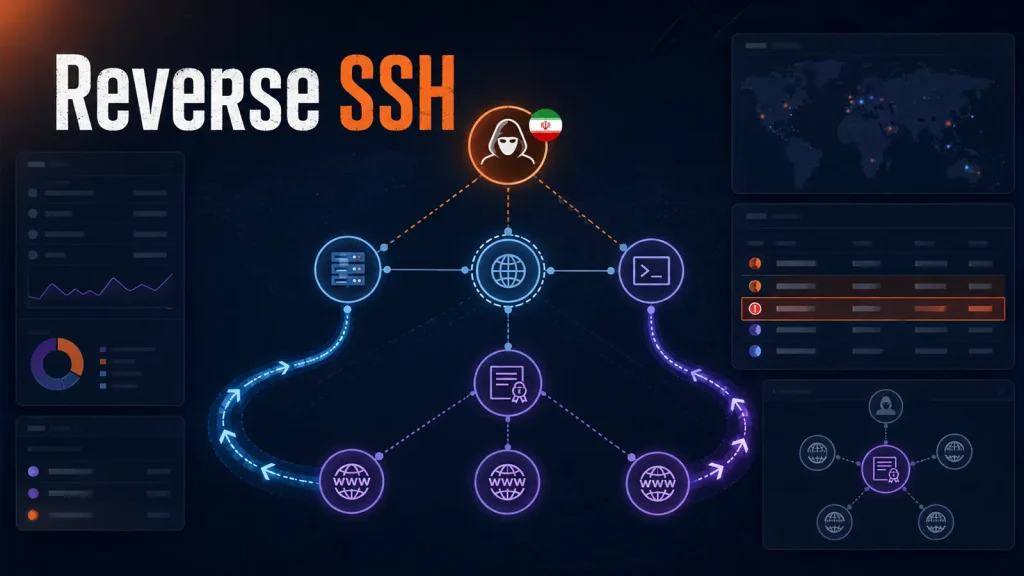
Perhaps the most concerning new development is the deployment of a specialized reverse SSH tunneling utility. SSH (Secure Shell) is a cryptographic network protocol for operating network services securely over an unsecured network. While often used for legitimate remote administration, its capabilities can be weaponized. A reverse SSH tunnel is particularly insidious in an attack scenario.
- Traditional SSH vs. Reverse SSH: In a standard SSH connection, a client initiates a connection to a server. With a reverse SSH tunnel, the compromised internal host (the victim) initiates an outbound connection to an attacker-controlled server.
- Evading Firewalls: This technique is highly effective at bypassing network perimeter defenses. Most organizational firewalls are configured to allow outbound connections from internal hosts, but strictly block inbound connections. By initiating the connection outwards, the attacker effectively punches a hole through the firewall from the inside.
- Establishing a Foothold: Once the reverse tunnel is established, the attacker can then route traffic from their external command-and-control (C2) server directly into the compromised internal network, bypassing traditional network segmentation and security controls. This creates a persistent, covert communication channel for data exfiltration, further payload delivery, or lateral movement.
This capability provides the Iran-linked hackers with significantly more flexibility and stealth, making detection and eradication considerably more challenging for security teams.
Implications for Network Security
The integration of a new Windows backdoor and reverse SSH tunneling utility into the Tortoiseshell group’s operational framework has several critical implications:
- Enhanced Persistence: Attackers gain multiple avenues to maintain access, reducing their reliance on a single point of entry. If one backdoor is discovered, another might remain active.
- Increased Evasion Capabilities: Reverse SSH tunnels are inherently designed to circumvent perimeter defenses, making traditional firewall rules less effective.
- Broader Attack Surface: A new Windows backdoor likely means broader compatibility with various Windows environments, expanding the potential target pool.
- Data Exfiltration Risk: Secure, encrypted tunnels facilitate the exfiltration of sensitive data without immediate detection.
Remediation Actions and Defensive Strategies
Organizations must adopt a proactive and layered security approach to counter these evolving threats. Here are actionable recommendations:
- Endpoint Detection and Response (EDR): Implement robust EDR solutions capable of detecting anomalous process behavior, unauthorized file modifications, and suspicious network connections originating from endpoints.
- Network Segmentation: Strictly segment networks to limit lateral movement. Even if an attacker gains initial access, segmentation can prevent them from reaching critical assets.
- Outbound Traffic Monitoring: Pay close attention to outbound network connections. Implement deep packet inspection and behavioral analytics to identify unusual outbound SSH traffic or connections to suspicious external IP addresses.
- Principle of Least Privilege: Enforce the principle of least privilege for all users and applications. Restrict administrative access and ensure users only have the permissions necessary for their roles.
- Patch Management: Maintain a rigorous patch management schedule. While these attacks often leverage sophisticated techniques, unpatched vulnerabilities remain common entry points.
- Behavioral Analytics: Deploy tools that can establish a baseline of normal network and user behavior. Deviations from this baseline can indicate compromise.
- Threat Intelligence: Stay updated on the latest threat intelligence regarding groups like Tortoiseshell/Mirage Kitten. Understand their TTPs (Tactics, Techniques, and Procedures) to better anticipate and defend against their attacks.
- SSH Configuration Hardening: Review and harden SSH configurations across all systems. Disable root login, enforce strong authentication (e.g., key-based authentication), and restrict SSH access to only necessary hosts.
Key Takeaways
The expansion of Iran-linked hacking campaigns, specifically the integration of new Windows backdoors and reverse SSH tunneling tools by groups like Tortoiseshell, underscores a critical evolution in their operational capabilities. These developments highlight a clear intent to enhance persistence, evade detection, and facilitate covert data exfiltration. Robust defensive strategies, focusing on advanced endpoint protection, meticulous network monitoring, strict segmentation, and continuous threat intelligence integration, are no longer optional but essential for safeguarding digital assets against such sophisticated adversaries.




