
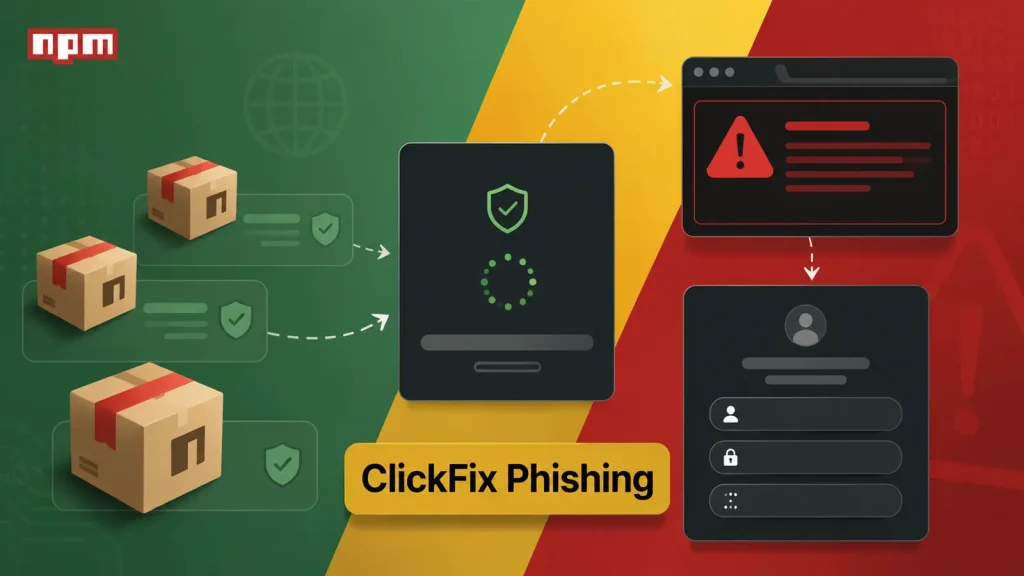
24 Malicious npm Packages Abuse Trusted Mirrors to Host ClickFix Phishing Pages
Unmasking the Threat: How 24 Malicious npm Packages Exploit Trusted Mirrors for ClickFix Phishing
The digital supply chain, particularly package repositories like npm, forms the backbone of modern software development. Developers rely on the trust and integrity of these platforms. However, a recent campaign has highlighted a disturbing new tactic: 24 malicious npm packages are leveraging trusted package mirrors to host deceptive ClickFix phishing pages. This insidious approach bypasses traditional infection vectors, exploiting user confidence in familiar hosting domains to make phishing attempts appear legitimate.
The Deceptive Mechanism: Abusing Trust, Not Infecting Code
Unlike typical supply chain attacks that inject malicious code directly into a developer’s project, this campaign operates on a more subtle yet equally dangerous premise. The threat actors behind these 24 npm packages aren’t aiming to infect your development environment or embed malware in your applications directly. Instead, their strategy revolves around social engineering and domain reputation hijacking. They’ve discovered a way to weaponize the very infrastructure designed for reliability and accessibility.
The core of this attack lies in its ability to transform legitimate package mirrors into staging grounds for phishing attacks. By embedding malicious content within these npm packages, the attackers can then direct unsuspecting users to phishing pages that appear to be hosted on trusted domains. This significantly elevates the perceived legitimacy of the phishing attempt, making it far more likely for individuals to fall victim. The packages themselves contain a specific payload designed to facilitate this redirection, creating a convincing façade of a benign link within a well-known environment.
ClickFix Phishing: A New Angle on Credential Theft
The term “ClickFix phishing” in this context refers to the campaign’s objective: to trick users into clicking links that lead to malicious pages, often designed to harvest credentials or sensitive information. The efficacy of this method stems from its ability to piggyback on the established trust associated with npm’s infrastructure. When a user sees a link or is redirected to a page that appears to be hosted on a domain they implicitly trust (like a package mirror), their guard is naturally lowered. This makes them more susceptible to interacting with the fake interface, ultimately compromising their data.
This tactic represents an evolution in phishing methodologies, moving beyond simple malicious links in emails to leveraging legitimate software distribution channels for illicit purposes. It highlights the importance of not just scrutinizing the origin of code, but also the context in which seemingly harmless links appear, even within trusted environments.
Remediation Actions and Proactive Defense
Defending against such nuanced attacks requires a multi-faceted approach. While direct infection via package installation isn’t the primary vector here, understanding the underlying mechanisms and implementing robust security practices are paramount.
- Educate Developers and Users: Foster a culture of skepticism, even when interacting with seemingly legitimate domains. Emphasize the importance of verifying URLs meticulously before entering credentials or sensitive information.
- Implement Strong Phishing Detection: Utilize email gateways and browser extensions that are capable of detecting and flagging known phishing attempts, even those hosted on unusual subdomains.
- Monitor DNS and HTTP Traffic: Organizations should actively monitor their network traffic for unusual DNS queries or HTTP requests that lead to suspicious domains, even if they appear to originate from trusted sources. Behavioral analytics can be particularly effective here.
- Regular Security Audits: Conduct regular security audits of all public-facing assets and dependencies to identify and remediate potential vulnerabilities that could be exploited for redirection or content injection.
- Utilize Software Supply Chain Security Tools: While the direct infection isn’t the primary threat here, tools that analyze package metadata and source code for anomalies can still provide valuable insights into the intent behind seemingly benign packages.
Tools for Enhanced Security Posture
To bolster your defenses against sophisticated phishing campaigns and supply chain threats, consider integrating the following tools into your security stack:
| Tool Name | Purpose | Link |
|---|---|---|
| Phishing Education Platforms | Train users to identify and report phishing attempts, including those using sophisticated redirection. | KnowBe4, Cofense |
| Email Security Gateways | Filter malicious emails and links before they reach end-users. | Proofpoint, Mimecast |
| Threat Intelligence Platforms | Provide up-to-date information on known malicious domains, IPs, and attack vectors. | Recorded Future, Mandiant (Google Cloud) |
| Network Detection and Response (NDR) | Monitor network traffic for suspicious activity, including anomalous DNS queries and outbound connections. | Darktrace, ExtraHop |
Key Takeaways: Vigilance in a Shifting Threat Landscape
The discovery of these 24 malicious npm packages underscores a critical shift in the threat landscape. Attackers are increasingly resourceful, targeting not just vulnerabilities in code but also the psychological element of trust that underpins our digital interactions. The exploitation of trusted package mirrors for ClickFix phishing highlights the need for constant vigilance and a holistic security approach.
Organizations and individual developers must recognize that security is not just about preventing direct infections; it’s also about understanding the subtle ways in which legitimate infrastructure can be weaponized. By focusing on user education, robust detection mechanisms, and proactive monitoring, we can collectively enhance our resilience against these evolving threats.




