Hackers Target AI Infrastructure With RCE, Prompt Injection and API Key Theft
The rapid integration of Artificial Intelligence (AI) into enterprise infrastructure has opened new, sophisticated attack vectors for cybercriminals. Recent intelligence reveals a significant shift: hackers are no longer just targeting the data AI processes, but the very infrastructure powering AI models. This evolution presents a critical challenge for cybersecurity professionals, as exposed AI gateways and agent tools are being weaponized for remote code execution (RCE), credential theft, and illicit cryptomining operations.
AI Infrastructure: The New Cloud Entry Point
For too long, the focus on AI security has largely been on model integrity and data privacy. However, threat actors have quickly recognized that the intricate web of services, APIs, and tools that constitute AI infrastructure offers a compelling entry point into broader cloud environments. In fact, AI infrastructure is emerging as a primary cloud entry point, with attackers actively probing and exploiting misconfigurations and vulnerabilities.
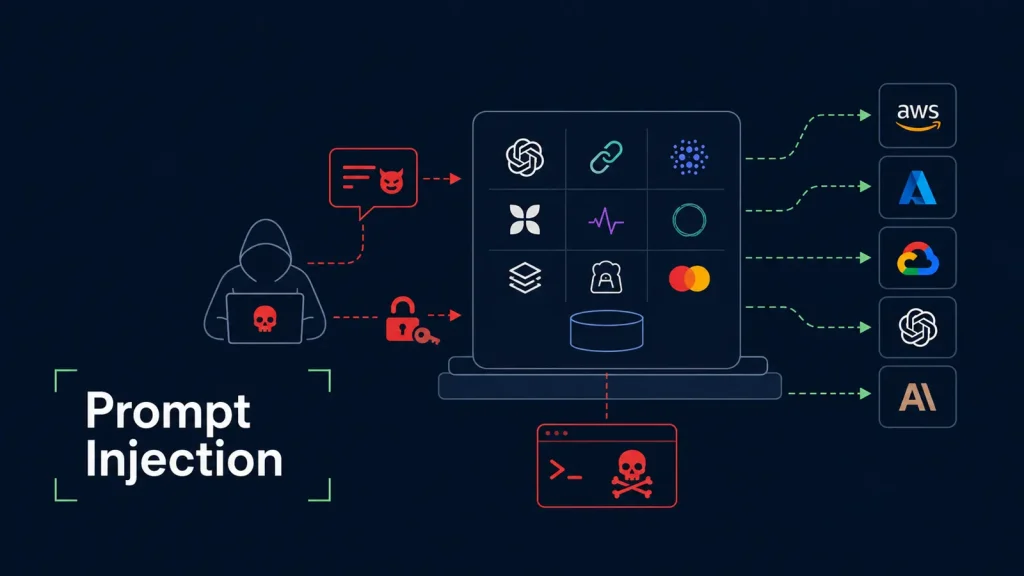
Over the past 90 days, security researchers have observed a noticeable tailoring of attack techniques. Adversaries are specifically targeting services responsible for routing model traffic and connecting AI agents to various tools. This sophisticated approach involves pairing exposed server flaws with crafted instructions, effectively hijacking AI agents to perform malicious tasks.
Understanding the Attack Modalities
The current wave of attacks against AI infrastructure leverages several key techniques. Understanding these methods is crucial for developing robust defense strategies:
- Remote Code Execution (RCE): Attackers are exploiting vulnerabilities in exposed AI gateways and associated services to execute arbitrary code on the underlying infrastructure. This allows them to gain control over systems, deploy malware, or establish persistence. While specific CVEs are still emerging for AI-specific platforms, general RCE vulnerabilities like those found in web servers or API gateways (e.g., outdated Apache Struts vulnerabilities such as CVE-2017-5638, though not directly AI-specific, illustrate the impact of RCE) can be repurposed against AI-facing components.
- Prompt Injection: This technique manipulates AI models and agents by injecting malicious instructions through carefully crafted prompts. The goal is to force the AI to deviate from its intended behavior, potentially revealing sensitive information, executing unauthorized actions, or generating harmful content. For instance, an attacker might inject a prompt designed to make an AI assistant divulge API keys it uses to access external services.
- API Key Theft: AI systems often rely on API keys to access external services, databases, or other AI models. Attackers are actively targeting these keys through various means, including RCE, prompt injection, and exploitation of insecure storage practices. Compromised API keys grant attackers unauthorized access to interconnected systems, leading to data exfiltration, service disruption, or further lateral movement within the network.
The Cryptomining Connection
Beyond data theft and system control, cryptomining remains a persistent motive. The computational power required for AI models makes their underlying infrastructure attractive targets for cryptojacking. By gaining RCE on AI servers, attackers can covertly install cryptocurrency miners, siphoning off valuable computing resources and increasing operational costs for organizations.
Remediation Actions for Securing AI Infrastructure
Protecting AI infrastructure requires a multi-layered approach, addressing both foundational cybersecurity principles and AI-specific vulnerabilities. IT professionals, security analysts, and developers must collaborate to implement these critical measures:
- Robust API Security: Implement strong authentication and authorization for all AI APIs. Utilize API gateways to enforce security policies, rate limiting, and input validation. Regularly rotate API keys and store them securely using secrets management tools.
- Input Validation and Sanitization: Crucially, all inputs to AI models and agents, especially user-supplied prompts, must be rigorously validated and sanitized to prevent prompt injection attacks. Implement allow-list approaches where possible and use adversarial testing to uncover potential prompt manipulation vectors.
- Least Privilege Principle: Ensure that AI agents and services operate with the absolute minimum privileges required to perform their functions. Restrict network access and file system permissions to prevent lateral movement in case of compromise.
- Regular Security Audits and Penetration Testing: Conduct frequent security audits of your AI infrastructure, including code reviews of AI applications and configurations of cloud services. Employ penetration testing specifically targeting AI components to identify RCE vulnerabilities, API key exposures, and prompt injection weaknesses.
- Network Segmentation: Isolate AI infrastructure components from other critical network segments. This minimizes the blast radius of an attack and prevents compromised AI systems from being used as a pivot point into sensitive corporate networks.
- Patch Management: Maintain a rigorous patch management program for all operating systems, libraries, frameworks, and AI software components. Timely patching of known vulnerabilities (e.g., general cloud security CVEs like those impacting container runtimes, like CVE-2022-0185, if applicable to your AI deployment) is fundamental.
- Monitoring and Logging: Implement comprehensive logging and monitoring solutions for AI-related traffic, API calls, and system behavior. Look for anomalous activities that could indicate RCE attempts, prompt injections, or unauthorized access. Integrate these logs with Security Information and Event Management (SIEM) systems for real-time threat detection.
Essential Tools for AI Infrastructure Security
Leveraging the right tools can significantly enhance your ability to detect, prevent, and mitigate attacks on AI infrastructure.
| Tool Name | Purpose | Link |
|---|---|---|
| OWASP ZAP | Web application security scanner, useful for API security and detecting RCE vulnerabilities in AI gateways. | https://www.zaproxy.org/ |
| Cloud Security Posture Management (CSPM) solutions (e.g., Wiz, Orca Security) | Identifies misconfigurations and vulnerabilities across cloud environments where AI infrastructure often resides. | (Specific vendor links vary) |
| Prompt Injection Testing Frameworks (e.g., Garak) | Specialized tools for systematically testing AI models for prompt injection vulnerabilities. | https://github.com/leondf/garak |
| Secrets Management Solutions (e.g., HashiCorp Vault, AWS Secrets Manager) | Securely stores and manages API keys and other credentials for AI applications. | https://www.vaultproject.io/ |
| Runtime Application Self-Protection (RASP) | Provides real-time protection against RCE and other attacks directly within the application runtime. | (Specific vendor solutions like Contrast Security) |
Conclusion
The shift in attacker focus towards AI infrastructure signals a critical turning point in cybersecurity. As AI becomes increasingly embedded in business operations, securing the underlying systems is paramount. Organizations must proactively address vulnerabilities related to RCE, prompt injection, and API key theft. By adopting robust security practices, leveraging specialized tools, and maintaining a vigilant security posture, enterprises can protect their AI investments and prevent AI infrastructure from becoming the next major frontier for cyberattacks.