Hackers Make Phishing Pages Change Their Code Every Time Someone Opens Them
The landscape of cyber threats is in constant flux, with attackers consistently refining their methods to bypass traditional defenses. A particularly insidious evolution in phishing tactics has recently come to light: the deployment of dynamic phishing pages. These aren’t your typical static replicas; instead, they adapt their underlying code with every visit, presenting a significant challenge for detection and mitigation. This new approach makes it substantially harder for security solutions to flag and block these malicious sites, amplifying the risk of credential theft and other data breaches. Understanding this advanced technique is crucial for anyone involved in cybersecurity, from IT professionals to end-users.
The Evolving Threat of Dynamic Phishing Pages
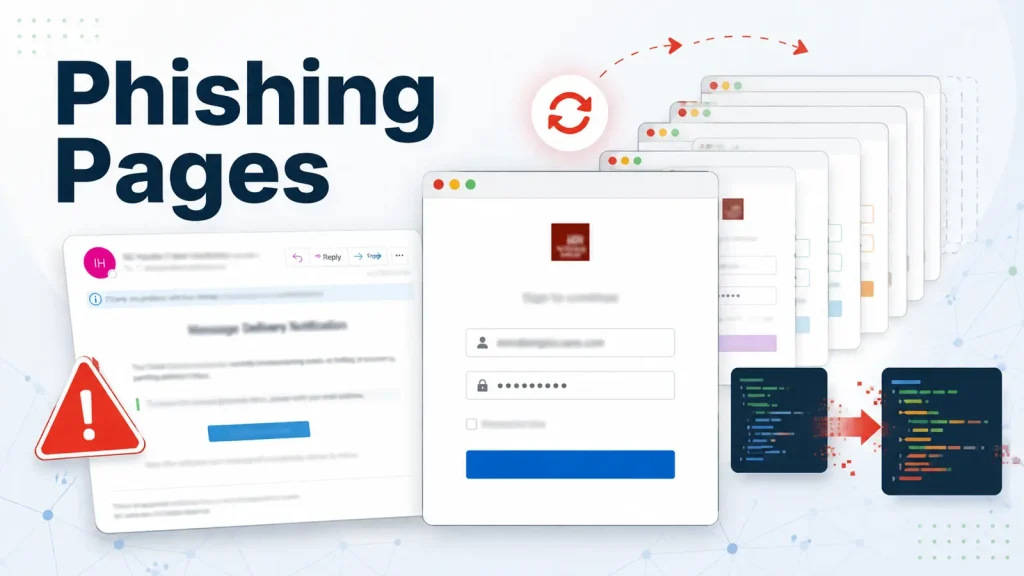
Traditional phishing pages often rely on a fixed structure, making them susceptible to signature-based detection. Security tools can analyze the HTML, CSS, and JavaScript of known malicious sites and block subsequent encounters with similar code. However, the emergence of dynamic phishing pages shatters this paradigm. As reported by Cyber Security News, these pages are engineered to serve different code to each visitor, even while maintaining a consistent visual appearance. This means that a security scanner might encounter one version of the page, deem it benign, while a subsequent user visit receives a completely different, malicious payload.
The core of this technique lies in sophisticated server-side scripting that generates unique page structures on demand. While the end-user sees a familiar login prompt – perhaps for a bank, email service, or cloud platform – the underlying code that renders that prompt is constantly randomized. This obfuscation makes it incredibly difficult for automated analysis tools to build a consistent signature, effectively hiding the malicious intent within a sea of varying, seemingly innocuous code permutations.
How Dynamic Phishing Evades Detection
The primary advantage for attackers using dynamic phishing pages is their ability to bypass established security mechanisms. Here’s a breakdown of how they achieve this:
- Signature-Based Evasion: Traditional security solutions rely on known signatures to identify and block malicious content. By constantly altering the code, dynamic phishing pages prevent the creation of reliable signatures. Each visit is effectively a “new” page from a code perspective.
- Honeypot and Sandbox Circumvention: Security researchers often use honeypots and sandboxes to analyze malicious websites. A dynamic phishing page can detect if it’s being accessed by a bot or an analysis environment and serve benign content, only revealing its true malicious nature to a legitimate human visitor.
- Reduced Blacklisting Effectiveness: When a phishing page is identified, its URL is typically added to blacklists. However, attackers can quickly shift to new URLs or leverage compromised legitimate domains, making blacklisting a reactive and often insufficient defense against highly dynamic threats.
- Complexity for Incident Response: For incident responders, analyzing a dynamic phishing attack becomes significantly more complex. Without a consistent code structure, understanding the attack’s full scope and identifying all compromised elements requires more sophisticated tools and expertise.
Remediation Actions and Proactive Defenses
Combating dynamic phishing requires a multi-layered approach that combines technological solutions with robust user education. There is no specific CVE associated with the general concept of dynamic phishing pages themselves, as it’s an attack technique rather than a software vulnerability. However, the resulting credential theft could lead to various compromises that might leverage existing vulnerabilities, for example, social engineering leading to access to systems with CVE-2023-38831. Here are key remediation and prevention strategies:
- Enhanced Email Security Gateways (ESG): Implement advanced ESGs with AI-powered threat detection and behavioral analysis capabilities. These systems can look beyond simple signatures to identify suspicious patterns in email content, sender reputation, and URL characteristics.
- Browser Security Extensions: Encourage or enforce the use of browser security extensions that offer real-time phishing protection. Many of these leverage machine learning to analyze page content and behavior for anomalies, even on dynamically generated pages.
- Multi-Factor Authentication (MFA): This remains the most effective defense against credential theft. Even if a user falls victim to a dynamic phishing attack and provides their credentials, MFA prevents unauthorized access by requiring a second verification step.
- DNS Filtering and Web Content Filtering: Implement robust DNS filtering and web content filtering solutions that can block access to known malicious domains and categorize suspicious websites, even if their content changes.
- User Education and Awareness Training: Regularly train employees on how to identify phishing attempts, including subtle clues like grammatical errors, suspicious sender addresses, and unexpected requests for credentials. Emphasize the importance of verifying URLs and never clicking on suspicious links.
- Threat Intelligence Feeds: Integrate reliable threat intelligence feeds into your security operations. These feeds can provide real-time information about emerging phishing campaigns, compromised domains, and attack methodologies.
- Endpoint Detection and Response (EDR) / Extended Detection and Response (XDR): Deploy EDR/XDR solutions to monitor endpoints for suspicious activity, including attempts to access phishing sites or unexpected credential submission events.
Tools for Detection and Mitigation
While no single tool can completely eliminate the threat of dynamic phishing, a combination of technologies can significantly enhance your defenses:
| Tool Name | Purpose | Link |
|---|---|---|
| Proofpoint Email Protection | Advanced email security, URL rewriting, and sandboxing for phishing detection. | https://www.proofpoint.com/us/products/email-protection |
| Cisco Talos Threat Intelligence | Comprehensive threat intelligence for identifying emerging threats and malicious infrastructure. | https://talosintelligence.com/ |
| Cloudflare Gateway | DNS filtering, web content filtering, and Zero Trust network access for preventing access to malicious sites. | https://www.cloudflare.com/products/zero-trust/gateway/ |
| KnowBe4 Security Awareness Training | User education and simulated phishing campaigns to build human firewalls. | https://www.knowbe4.com/ |
| Microsoft Defender for Endpoint | Endpoint detection and response (EDR) for identifying and responding to threats at the endpoint level. | https://www.microsoft.com/en-us/security/business/endpoint-security/microsoft-defender-endpoint |
Conclusion
The rise of dynamic phishing pages underscores the continuous arms race between attackers and defenders in cybersecurity. By constantly changing their code while maintaining a familiar facade, these malicious sites pose a substantial challenge to traditional detection mechanisms. Organizations and individuals must prioritize robust, multi-layered security strategies that combine advanced technological defenses like AI-driven email security and MFA with continuous user education. Staying informed about evolving threat methodologies and proactively implementing adaptive security measures are paramount to safeguarding against these sophisticated and evasive phishing campaigns.