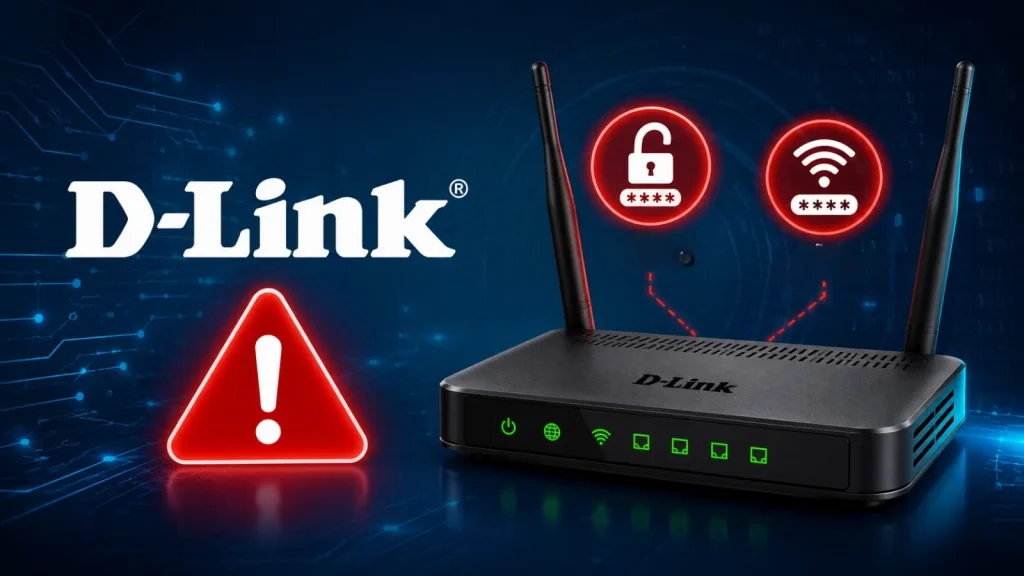
D-Link Router Flaws Let Unauthenticated Attackers Change Admin Password and Steal Wi-Fi Credentials
Imagine your home network, a supposed sanctuary, being compromised by an attacker sitting just outside your door. For users of a specific D-Link router model, this unsettling scenario became a tangible threat. Recent revelations have highlighted critical security vulnerabilities in the D-Link DIR-X1860Z router that could allow unauthenticated attackers to seize control of the device and expose sensitive network information. This isn’t just about inconvenience; it’s about the potential for complete network takeover and data exposure.
Critical Flaws Uncovered in D-Link DIR-X1860Z Router
D-Link recently issued a crucial firmware update addressing significant security weaknesses in its DIR-X1860Z router. These vulnerabilities, detailed in D-Link advisory SAP10513, published on August 26, 2023, pose a serious risk to users. At their core, these flaws represent access-control and information-disclosure issues, paving the way for malicious actors to manipulate the router’s configuration and steal vital network credentials.
Specifically, two primary vulnerabilities have been identified:
- Unauthenticated Administrator Password Change: An attacker connected to the local network could exploit an access-control bypass to change the router’s administrator password without needing any prior authentication. This grants them full administrative control over the device, allowing them to reconfigure settings, block legitimate users, or even install malicious firmware.
- Wi-Fi Credential Disclosure: Coupled with the password change capability, the flaws also enable an attacker to recover the wireless configuration details. This includes the Wi-Fi network name (SSID) and, more critically, the Wi-Fi password. With these credentials, an attacker gains direct access to the wireless network, potentially compromising all connected devices.
These vulnerabilities are particularly concerning because they do not require the attacker to be authenticated, meaning they don’t need a username or password to initiate the attack. Simply being connected to the local network is enough, whether through a guest network, an exposed Ethernet port, or by exploiting other initial access vectors.
Identified CVEs and Their Impact
The vulnerabilities disclosed by D-Link have been assigned the following Common Vulnerabilities and Exposures (CVE) identifiers:
- CVE-2023-45598: This CVE likely pertains to the access-control bypass that allows an unauthenticated attacker to change the administrator password. The impact is critical, as it grants full control over the router to an attacker.
- CVE-2023-45599: This CVE is associated with the information-disclosure vulnerability, specifically the recovery of Wi-Fi credentials. The compromise of Wi-Fi passwords enables direct access to the local network, bypassing traditional security measures.
Together, these vulnerabilities create a potent attack chain. An unauthenticated attacker can gain administrative control, then extract Wi-Fi credentials, effectively owning the network. This could lead to further attacks, including data exfiltration, malware injection, or the establishment of persistent backdoors.
Remediation Actions
Addressing these critical vulnerabilities is paramount. D-Link has already provided the necessary fix, and users are strongly urged to act immediately.
- Firmware Update: The most crucial step is to update your D-Link DIR-X1860Z router to the latest firmware version. D-Link advisory SAP10513 specifically details the updated firmware. Always download firmware directly from the official D-Link support website for your region to avoid malicious updates.
- Regular Firmware Checks: Make it a habit to regularly check for and install firmware updates for all your network devices, not just your D-Link router. Manufacturers frequently release patches for newly discovered vulnerabilities.
- Strong, Unique Passwords: Even after updating, ensure your router’s administrator password is strong, unique, and complex. Avoid default passwords or easily guessable combinations.
- Guest Network Isolation: If your router supports it, utilize guest network isolation. This prevents devices connected to the guest network from accessing devices on your main network, limiting the blast radius of any potential compromise.
- Network Segmentation: For more advanced users or small businesses, consider segmenting your network to isolate critical devices and services from general user access.
Tools for Network Security and Monitoring
While firmware updates are the primary defense, various tools can help monitor and secure your network.
| Tool Name | Purpose | Link |
|---|---|---|
| Nmap (Network Mapper) | Network discovery and security auditing. Can identify open ports and services. | https://nmap.org/ |
| Wireshark | Network protocol analyzer. Useful for monitoring network traffic for suspicious activity. | https://www.wireshark.org/ |
| Router Security Scanners | Automated tools that check router configurations for common vulnerabilities. (e.g., RouterSploit) | https://github.com/threat9/routersploit |
| Intrusion Detection Systems (IDS)/Intrusion Prevention Systems (IPS) | Hardware or software that monitors network traffic for malicious activity and can block it. | (Various commercial and open-source options exist) |
Protecting Your Digital Perimeter
The D-Link DIR-X1860Z vulnerabilities serve as a stark reminder of the constant need for vigilance in network security. Routers, often the first line of defense, are also frequent targets for attackers due to their privileged position on the network. Proactive security measures, especially timely firmware updates, are non-negotiable. By understanding these threats and taking immediate action, users can significantly harden their digital perimeters against potential breaches. Keep your devices updated, maintain strong security practices, and stay informed about emerging vulnerabilities to protect your network effectively.