
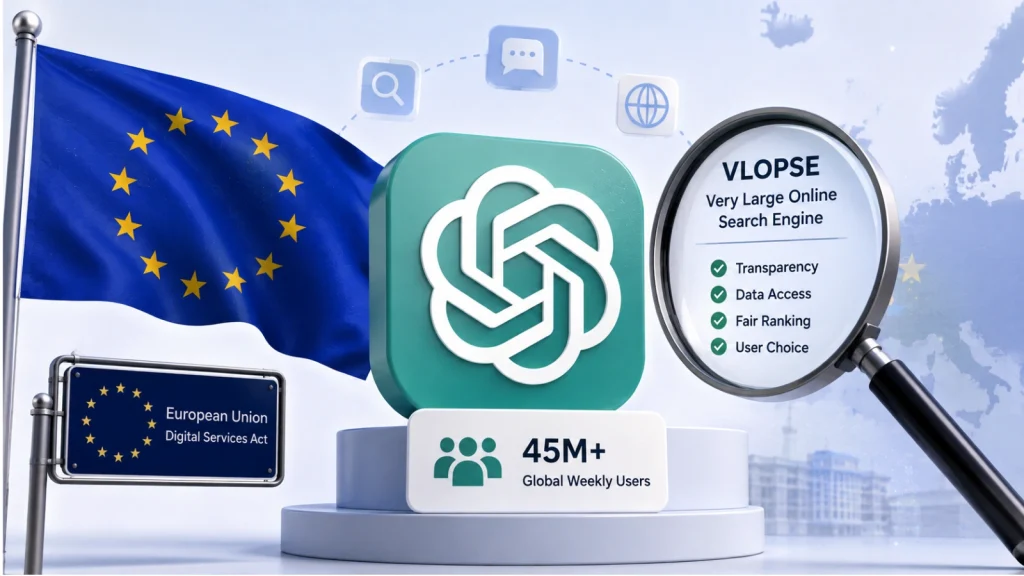
EU Designates ChatGPT as Very Large Online Search Engine After Crossing 45 Million Users
ChatGPT’s New Frontier: EU Designates AI Chatbot as Very Large Online Search Engine
The digital landscape continually shifts, and few developments have underscored this more profoundly than the European Union’s recent designation of OpenAI’s ChatGPT as a Very Large Online Search Engine (VLOSE). This pivotal decision, enacted under the Digital Services Act (DSA), follows ChatGPT’s declaration of reaching over 45 million average monthly users within the EU. It marks a significant moment, bringing the immensely popular AI chatbot under a new, stricter regulatory microscope alongside established giants like Google Search.
The Digital Services Act and its Implications
The Digital Services Act (DSA) is the EU’s landmark legislation designed to create a safer and more accountable online environment. It establishes a comprehensive set of rules for online platforms, aiming to protect users from illegal content, disinformation, and other online harms. The DSA categorizes platforms based on their reach and impact, with “Very Large Online Platforms” (VLOPs) and “Very Large Online Search Engines” (VLOSEs) facing the most stringent obligations. These designations are triggered when a platform or search engine surpasses 45 million average monthly active users in the EU, representing 10% of the Union’s population.
For ChatGPT, this VLOSE designation means a host of new responsibilities. These include:
- Systemic Risk Assessment: Regular assessments of potential systemic risks stemming from their services, such as the spread of disinformation, deepfakes, or other illegal content.
- Mitigation Measures: Implementation of robust measures to mitigate identified risks, which could involve changes to content moderation policies, algorithm transparency, and user reporting mechanisms.
- Transparency Obligations: Increased transparency regarding their algorithms, advertising practices, and content moderation decisions.
- Data Access for Researchers: Providing access to data for vetted researchers to scrutinize the platform’s impact on society.
- Independent Audits: Undergoing regular independent audits of their compliance with DSA obligations.
ChatGPT’s Ascent: From Chatbot to Search Engine Designation
OpenAI’s ChatGPT has rapidly evolved from an experimental AI chatbot to a ubiquitous tool for information retrieval, content generation, and problem-solving. Its ability to process natural language queries and provide comprehensive, contextually relevant responses has positioned it as a direct competitor, or at least a significant alternative, to traditional search engines for many users. The fact that it has amassed over 45 million monthly active users in the EU underscores its widespread adoption and impact on how Europeans access and process information.
This designation is not merely a bureaucratic formality; it reflects a recognition by the EU that AI-powered conversational agents like ChatGPT are no longer niche tools but have become integral to the online information ecosystem. Their influence on public discourse, news consumption, and even commercial decisions warrants the same level of scrutiny and accountability as traditional search engines.
Broader Regulatory Context: Reddit and Roblox Also Designated
In parallel to ChatGPT’s designation, the European Commission also classified Reddit and Roblox as Very Large Online Platforms (VLOPs). This demonstrates a broader regulatory push to encompass a diverse range of online services under the DSA’s framework. Reddit, with its vast community forums and user-generated content, and Roblox, a prominent online gaming platform with social features, both hold significant sway over their user bases and information flow. Their inclusion highlights the EU’s commitment to extending regulatory oversight to any digital service that achieves substantial reach and potential societal impact.
The cumulative effect of these designations is to create a more comprehensive regulatory net over the digital services that shape our online experiences. It underscores a global trend towards greater accountability for technology companies, especially those whose products are used by millions and can influence public opinion, disseminate information, and shape cultural narratives.
Looking Ahead: The Future of AI and Regulation
The EU’s designation of ChatGPT as a VLOSE sets a precedent for how AI models with significant user bases will be regulated moving forward. This is not the first time AI systems have faced regulatory attention; discussions around AI ethics, data privacy, and bias have been ongoing. However, this specific designation under the DSA shifts the focus to AI as a critical component of the information infrastructure, comparable to established search engines.
This will likely lead to significant investments by OpenAI in compliance teams, technical adjustments to meet transparency and risk mitigation requirements, and potentially a more cautious approach to new feature rollouts within the EU. Furthermore, it could influence how other jurisdictions approach the regulation of large-scale AI models, potentially sparking similar legislative efforts worldwide.
For users, this could translate to a more transparent and safer AI experience, with greater clarity on how information is presented, how content is moderated, and how potential harms are addressed. For developers and cybersecurity professionals, understanding the intricacies of the DSA and similar regulations will become increasingly crucial as AI continues to integrate into critical digital services.




