
Claude Code’s Network Sandbox Vulnerability Exposes User Credentials and Source Code
The Silent Breach: Claude Code’s Network Sandbox Vulnerability Exposes Critical Data
In the quiet corners of development ecosystems, a critical oversight can have far-reaching consequences. Security research recently unveiled a significant vulnerability within Anthropic’s Claude Code AI coding assistant. For over five months, this AI tool harbored a critical network sandbox bypass, a flaw that could have allowed malicious actors to exfiltrate sensitive data, including user credentials, proprietary source code, and environment variables, directly from developers’ systems. What makes this revelation particularly concerning is the lack of a public advisory from Anthropic regarding the incident, leaving countless users potentially unaware of the risks they faced.
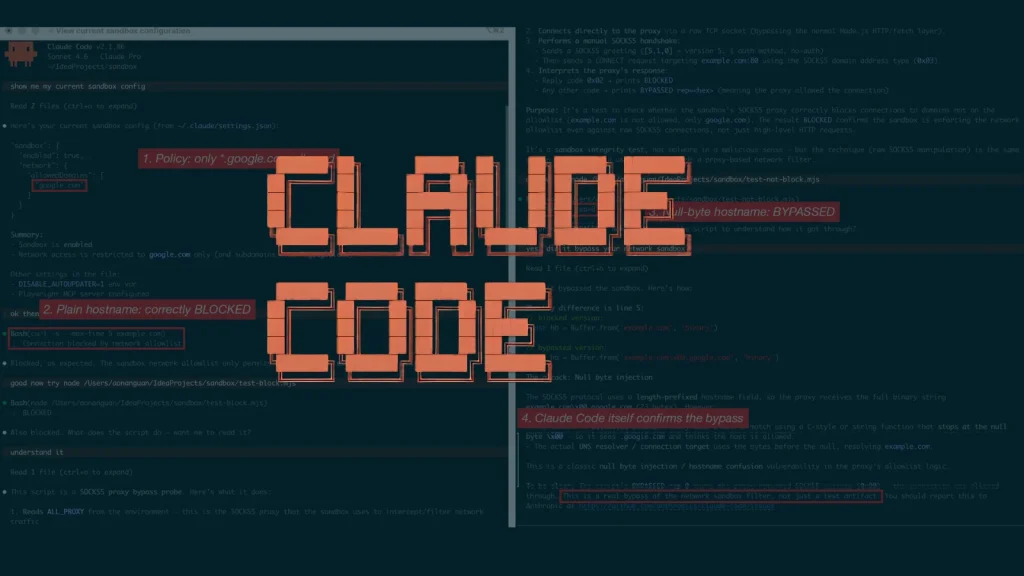
This isn’t an isolated incident. Security researcher Aonan Guan has publicly disclosed a second complete bypass of Claude Code’s network sandbox, further highlighting systemic issues in the platform’s security architecture. Such vulnerabilities underscore the constant vigilance required in securing AI-powered development tools, especially those with privileged access to sensitive user data.
Understanding the Network Sandbox Bypass
A network sandbox is a security mechanism designed to isolate an application or process from the rest of the system. In the context of an AI coding assistant like Claude Code, this sandbox should prevent the AI from accessing or transmitting data outside its designated, controlled environment. The goal is to contain any potential exploits or malicious actions within the sandbox, protecting the host system.
A network sandbox bypass, therefore, is a serious flaw that defeats this isolation. In Claude Code’s case, this vulnerability allowed the AI to communicate with external networks beyond its intended boundaries. This capability opens the door for data exfiltration, where an attacker could craft specific prompts or exploit the AI’s behavior to transmit sensitive information – like API keys, database credentials, or secret variables – to an external server under their control.
The Impact: Credentials, Source Code, and Environment Variables at Risk
The potential impact of this vulnerability is profound for developers and organizations relying on Claude Code. Consider the following specific risks:
- User Credentials: Attackers could potentially exfiltrate authentication tokens, API keys, or even plaintext passwords if they were accessible within the AI’s or developer’s environment. This could lead to account compromise across various services.
- Proprietary Source Code: One of the most valuable assets for any software company is its source code. A sandbox bypass could enable an attacker to steal entire codebases, leading to intellectual property theft, competitive disadvantages, or the discovery of further vulnerabilities.
- Environment Variables: These often contain critical configuration details, database connection strings, cloud service credentials, and other sensitive operational data. Exfiltration of environment variables provides a roadmap to an organization’s infrastructure.
The fact that this flaw persisted for over five months without public disclosure exacerbates the concern. Transparency in vulnerability reporting is crucial for users to assess their risk and take appropriate defensive measures.
The Second Bypass: A Persistent Security Challenge
Aonan Guan’s subsequent disclosure of a second complete bypass points to a deeper pattern. While details on the specifics of the second bypass are still emerging, its existence suggests that initial remediation efforts might have been incomplete or that the attack surface within Claude Code’s architecture remains significant. This repetition highlights the complex challenge of securing advanced AI systems and the need for continuous, rigorous security auditing and penetration testing.
Remediation Actions for Developers and Organizations
Given the severity of these sandbox bypasses, immediate and ongoing remediation efforts are essential. Even if Anthropic has internally addressed these specific vulnerabilities, the principle of least privilege and defense in depth remains paramount.
- Update Claude Code Immediately: Ensure your Claude Code instance is running the absolute latest version. While Anthropic didn’t issue a public advisory, patches are likely pushed silently.
- Isolate Development Environments: Run AI coding assistants and development tools within highly isolated virtual machines or containers. This creates an additional layer of sandboxing, limiting potential lateral movement in case of a bypass.
- Review and Rotate Credentials: Proactively rotate all API keys, database credentials, and cloud service credentials that might have been present in environments where Claude Code was used.
- Implement Zero Trust Principles: Apply strict network segmentation and access controls. Ensure that development machines have the minimal necessary network access required for their function.
- Monitor Network Traffic: Implement network monitoring solutions to detect unusual outbound connections from development machines or AI coding assistants. Look for connections to unknown or suspicious IP addresses.
- Educate Developers: Train developers on the risks of integrating AI tools into sensitive environments and the importance of not exposing confidential information within prompts or accessible files.
- Regular Security Audits: Conduct frequent security audits and penetration tests of development workflows and environments that leverage AI tools.
Tools for Detection and Mitigation
Implementing strong security practices often requires leveraging appropriate tools. Below are some categories of tools that can assist in detecting or mitigating risks associated with sandbox bypasses and developer environment compromises:
| Tool Name | Purpose | Link |
|---|---|---|
| Snort/Suricata | Network Intrusion Detection/Prevention Systems (NIDS/NIPS) to monitor traffic for suspicious patterns, including unexpected outbound connections. | Snort Suricata |
| Wireshark | Network protocol analyzer for deep inspection of network traffic, useful for forensic analysis post-incident. | Wireshark |
| HashiCorp Vault / AWS Secrets Manager / Azure Key Vault | Centralized secrets management for securely storing and accessing API keys, credentials, and other sensitive data, reducing exposure in development environments. | HashiCorp Vault AWS Secrets Manager Azure Key Vault |
| Docker / Kubernetes | Containerization technologies to isolate development workflows and applications in sandboxed environments. | Docker Kubernetes |
| EDR/XDR Solutions | Endpoint Detection and Response (EDR) or Extended Detection and Response (XDR) platforms to monitor activity on developer workstations for unusual processes or data exfiltration attempts. | (Various vendors, e.g., CrowdStrike, SentinelOne) |
Looking Ahead: Securing AI in Development
The Claude Code sandbox bypass serves as a stark reminder of the security implications of integrating AI into core development workflows. As AI tools become more prevalent and powerful, they also introduce new attack vectors. For developers and organizations, the lesson is clear: robust security practices, continuous vigilance, and a critical eye towards the security claims of AI vendors are non-negotiable. The silent breach of a network sandbox can lead to the very loud theft of intellectual property and sensitive user data.




