
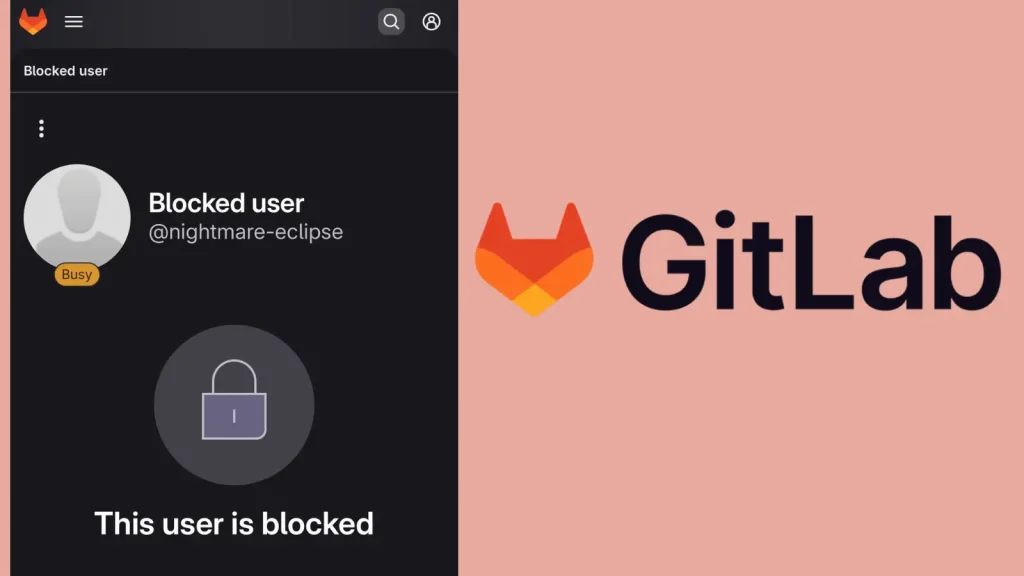
GitLab Suspends Windows Exploit Researcher Nightmare-Eclipse After GitHub Ban
The delicate balance between vulnerability disclosure, research ethics, and platform policies has taken a dramatic turn. An anonymous researcher, known as Nightmare-Eclipse, has found themselves at the center of a storm, facing account suspensions from two major code-hosting platforms within a week. This unprecedented situation underscores the escalating real-world consequences of their public zero-day campaign targeting Microsoft.
The Double Block: GitHub and GitLab Suspend Nightmare-Eclipse
On May 26, 2026, GitLab officially suspended the account of security researcher Nightmare-Eclipse. This action followed closely on the heels of GitHub, owned by Microsoft, terminating the researcher’s account just days prior. Nightmare-Eclipse had gained notoriety for publicly disclosing various vulnerabilities affecting Microsoft Windows, bypassing traditional responsible disclosure channels.
This dual suspension from essential developer platforms like GitHub and GitLab sends a clear message about the industry’s stance on this type of disclosure. These platforms are not merely hosting services; they are critical infrastructure for security research, collaboration, and open-source development. A ban from both effectively isolates a researcher from significant portions of the cybersecurity community and its resources.
Understanding Zero-Day Disclosure and Its Ramifications
A zero-day vulnerability refers to a security flaw unknown to the vendor, meaning there’s no publicly available patch. Researchers who discover these often face a dilemma: how to disclose them responsibly. Traditional responsible disclosure advocates for notifying the vendor privately first, allowing them time to develop and release a patch before public disclosure. This minimizes the window of opportunity for malicious actors to exploit the vulnerability.
Nightmare-Eclipse’s approach, however, has been to publicly release proof-of-concept (PoC) exploits and details without prior vendor coordination. While this method can sometimes pressure vendors into faster action, it also carries significant risks. Public zero-day disclosures can immediately be weaponized by threat actors, putting users and organizations at severe risk before they have a chance to secure their systems.
The Impact on Microsoft and the Wider Ecosystem
Microsoft, as a leading operating system vendor, is a frequent target for security research. The vulnerabilities disclosed by Nightmare-Eclipse, though specific details are not public in this context, inherently create pressure on Microsoft’s security response teams. Each public zero-day necessitates an expedited patch development and deployment cycle, stretching resources and potentially impacting product stability if not handled carefully.
Beyond Microsoft, the entire cybersecurity ecosystem is affected. Security teams globally must scramble to assess potential risks, implement temporary mitigations, and prepare for exploit attempts following such public disclosures. The actions of Nightmare-Eclipse have, in essence, created a continuous, high-stakes alert for system administrators and defenders.
Remediation Actions for Zero-Day Threats
While specific CVEs related to Nightmare-Eclipse’s campaign are not fully detailed in the provided source, the general principles of defending against zero-day threats remain crucial. Organizations should prioritize a proactive security posture:
- Patch Management: Maintain a rigorous and timely patching schedule. While zero-days, by definition, lack immediate patches, a well-patched system reduces the attack surface for other, known vulnerabilities.
- Endpoint Detection and Response (EDR)/Extended Detection and Response (XDR): Deploy robust EDR/XDR solutions capable of detecting anomalous behavior and potential exploit attempts on endpoints. These tools can often identify zero-day exploitation attempts even without specific signatures.
- Network Segmentation: Implement network segmentation to limit the lateral movement of attackers should an initial compromise occur. This can contain the damage from successful zero-day exploits.
- Principle of Least Privilege: Enforce the principle of least privilege for users and applications. Restricting permissions can significantly reduce the impact of an exploit.
- Security Awareness Training: Educate users about phishing, social engineering, and safe browsing practices, as initial access often comes through human vectors.
- Threat Intelligence: Monitor threat intelligence feeds from trusted sources. While specific details might be scarce for active zero-days, broad indicators of compromise (IoCs) can still be valuable.
- Vulnerability Management Program: Conduct regular vulnerability scanning and penetration testing to identify and address known weaknesses in your environment.
The Ongoing Debate: Researcher Ethics vs. Public Safety
The suspensions of Nightmare-Eclipse reignite the perennial debate about researcher ethics, responsible disclosure, and the appropriate boundaries of public vulnerability campaigns. On one side, some argue that public disclosure forces vendors to address critical flaws promptly, sometimes after years of unresponsiveness. On the other, the immediate risk to end-users and organizations from weaponized exploits is a serious concern.
Code-hosting platforms like GitHub and GitLab play a critical role in this ecosystem. Their policies often reflect a commitment to secure practices and responsible disclosure. Banning researchers who repeatedly bypass these norms signals a clear stance against methods that they perceive as potentially irresponsible or harmful to the broader community.
Conclusion: A Watershed Moment for Disclosure Practices
The highly public saga involving Nightmare-Eclipse and their subsequent suspensions from major code-hosting platforms marks a significant moment in the cybersecurity community. It underscores the profound real-world consequences tied to vulnerability disclosure methodologies. This situation serves as a stark reminder that while identifying vulnerabilities is crucial for improving security, the manner of their disclosure carries immense responsibility. For both researchers and platform providers, navigating the complex landscape of ethical bounds and public safety remains an ongoing, critical challenge.
For more detailed information, consult the original report: CybersecurityNews.com




