
Lateral Movement Attacks Explained
Lateral Movement Attacks Explained: A Comprehensive Guide to Cybersecurity
In the complex landscape of modern cybersecurity, understanding the tactics employed by malicious actors is paramount. Lateral movement attacks represent a sophisticated and increasingly prevalent threat, enabling attackers to extend their reach within an organization’s network. This guide will meticulously explain the intricacies of lateral movement, from its definition and significance to common scenarios and effective prevention strategies, empowering your security team to fortify your defenses.
Understanding Lateral Movement in Cybersecurity
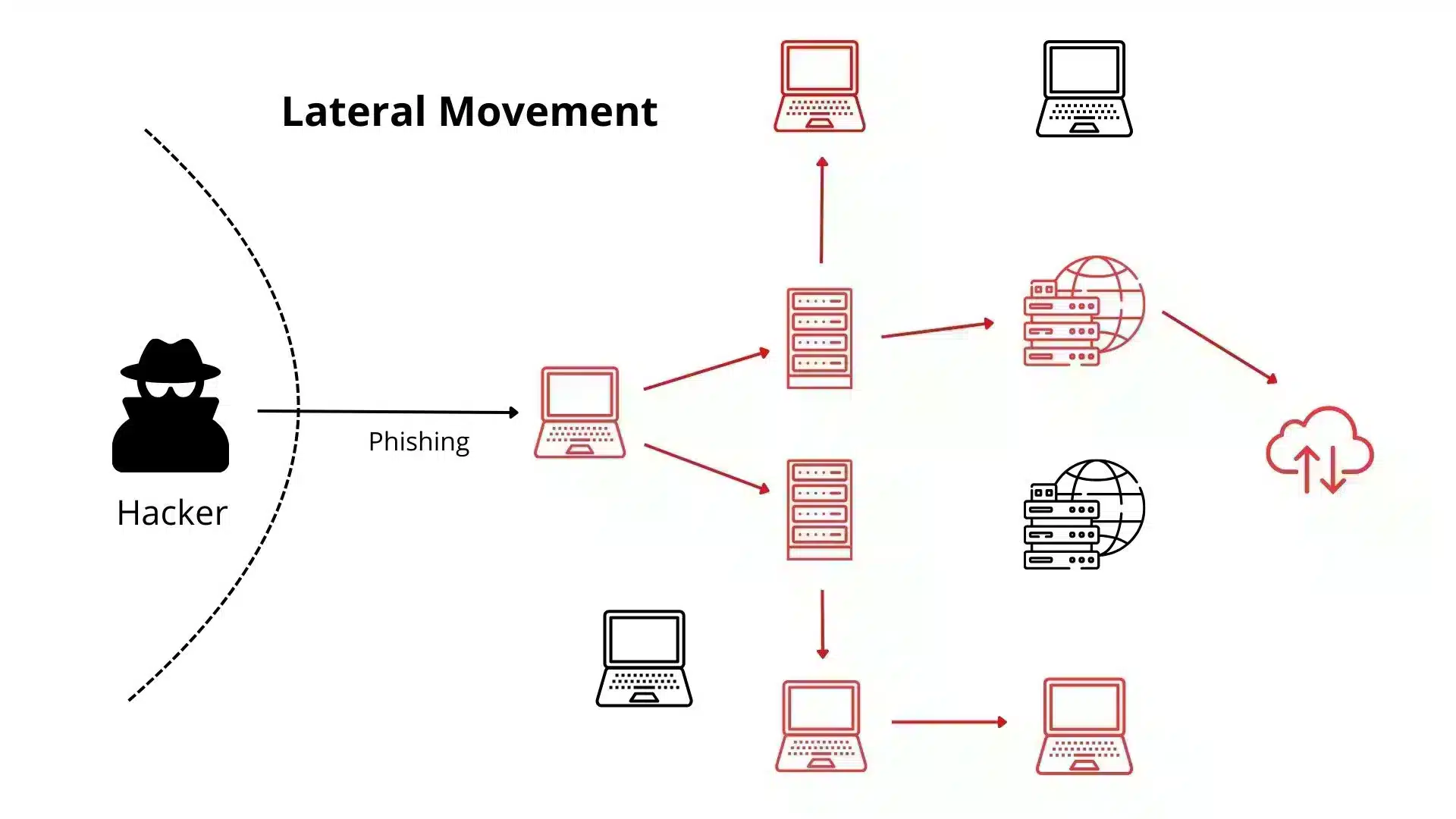
Lateral movement in cybersecurity is a critical concept that every organization must comprehend to adequately protect its digital assets. This phase of an attack allows a threat actor, having initially gained a foothold, to extend their presence across various systems and networks, thereby increasing the potential blast radius of an attack. It is a calculated and deliberate process that involves a series of steps to avoid detection while escalating privileges and accessing valuable resources, ultimately aiming to compromise sensitive data or disrupt operations.
Definition of Lateral Movement
Lateral movement refers to the techniques attackers use to move laterally within a network after an initial compromise, transitioning from one compromised system to another. This strategic process allows the attacker to discover and access additional resources, credentials, and sensitive data, often escalating their privileges in the process. Effectively, lateral movement is the process through which an attacker navigates deeper into an organization’s infrastructure, seeking out high-value targets and exploiting vulnerabilities to achieve their ultimate objective, whether it’s data exfiltration, a ransomware attack, or sabotage.
Importance in Cybersecurity
The importance of understanding and addressing lateral movement is a critical aspect of cybersecurity that cannot be overstated. A successful lateral movement attack can transform a contained initial breach into a widespread compromise, significantly increasing the risk and the damage incurred. Organizations must prioritize strategies to detect and stop lateral movement early to prevent attackers from achieving their objectives. Robust security solutions, coupled with vigilant monitoring, are essential to effectively prevent lateral movement and safeguard the integrity of an organization’s network and data.
Common Scenarios of Lateral Movement Attacks
In various common scenarios, attackers use lateral movement techniques to propagate through a network. Initially, an attacker might rely on lateral movement to compromise a low-privilege workstation via a phishing email. From there, they will move laterally, leveraging stolen credentials or exploiting system vulnerabilities to access other machines, often targeting domain controllers or servers hosting critical applications. This could involve using tools to harvest local administrator passwords, exploiting misconfigurations, or even using legitimate remote access tools. Recognizing these signs of lateral movement is crucial for any security team to mitigate the cyber threat effectively.
Stages of Lateral Movement
Initial Compromise
The initial compromise represents the critical first foothold an attacker gains within an organization’s network, marking the beginning of the stages of lateral movement. This pivotal stage often occurs through various vectors, such as successful phishing campaigns that trick employees into divulging credentials or executing malicious attachments, exploiting unpatched software vulnerabilities, or brute-forcing weak passwords on externally exposed services. The primary objective for the attacker at this point is to establish a persistent presence, often on a low-privilege system like a user workstation, from which they can then begin to explore and move laterally, expanding their reach and impact. Effectively preventing lateral movement hinges on robust initial security controls to repel these entry attempts.
Internal Reconnaissance
Following an initial compromise, attackers engage in internal reconnaissance, a critical phase where lateral movement involves diligently mapping out the network infrastructure and identifying potential paths. This process involves using lateral movement techniques to gather information about network topology, discover connected systems, identify active directories, enumerate user accounts, and locate high-value assets such as database servers or domain controllers. The goal of this reconnaissance is to understand the environment’s vulnerabilities and identify opportunities to move laterally, seeking out weaknesses or misconfigurations that can be exploited. Recognizing the signs of lateral movement during this phase, such as unusual network scanning or queries to Active Directory, is crucial for any security team aiming to detect and prevent lateral movement effectively.
Privilege Escalation
Privilege escalation is a fundamental step in many lateral movement attacks, where the attacker seeks to elevate their access rights within the compromised environment. Having gained initial access, often with low-level user privileges, the attacker aims to obtain higher-level permissions, such as local administrator or domain administrator credentials, which are essential to move laterally more freely and access sensitive resources. This can be achieved through various lateral movement techniques, including exploiting system vulnerabilities, leveraging misconfigurations, or using tools to harvest stored credentials from memory or configuration files. Successful privilege escalation significantly reduces the risk of detection and allows the attacker to further their objectives, making robust security solutions and continuous monitoring vital to stop lateral movement and mitigate the cyber threat.
Types of Attacks Using Lateral Movement
Credential Theft
Credential theft represents a highly prevalent and effective method within lateral movement attacks, enabling attackers to acquire legitimate access credentials, such as usernames and passwords, for various systems within the network. Attackers use lateral movement techniques like “Pass-the-Hash” or “Pass-the-Ticket” to leverage stolen credentials, often obtained through phishing, keyloggers, or memory scraping from compromised endpoints. These stolen credentials allow the attacker to move laterally by authenticating to other systems, thereby avoiding detection that might accompany the exploitation of zero-day vulnerabilities. Recognizing signs of lateral movement related to unusual login attempts or access patterns is critical for a security team to stop lateral movement and mitigate the cyber threat effectively, ensuring the integrity of security controls.
Exploitation of Trust Relationships
The exploitation of trust relationships is a sophisticated lateral movement technique where attackers leverage pre-existing, legitimate connections between systems or domains to move laterally within a network. This often involves targeting systems that have administrative trust over others, such as domain controllers or management servers, to expand the blast radius of an attack. Attackers use lateral movement by compromising a less secure system that is trusted by a more secure one, thereby gaining access without needing to re-authenticate or overcome additional security controls. Identifying such lateral movement paths requires a deep understanding of network security and continuous monitoring to detect lateral movement that indicates an abuse of established trust, which is crucial to detect and prevent lateral movement effectively.
Remote Access Tools (RATs)
Remote Access Tools (RATs) are frequently abused by attackers to facilitate lateral movement within a compromised network. While many RATs are legitimate tools used by IT administrators for remote management, attackers weaponize them to maintain persistence and covertly control compromised systems. Once an initial compromise is achieved, an attacker can install a RAT, allowing them to move laterally across the network, execute commands, exfiltrate data, and further their objectives, often escalating their privileges in the process. Proactive security solutions, including robust endpoint detection and response (EDR) systems, are essential to detect lateral movement associated with unauthorized RAT usage and effectively stop lateral movement, reducing the risk of a widespread ransomware attack or data breach.
Detecting and Preventing Lateral Movement
Indicators of Lateral Movement
Detecting lateral movement is paramount to an effective cybersecurity strategy, as early identification can significantly reduce the blast radius of an attack. There are several key indicators of lateral movement that a vigilant security team should monitor. These signs of lateral movement include unusual login attempts from unexpected locations or at odd hours, suspicious use of administrative credentials, or an increase in network traffic between systems that typically do not communicate frequently. Additionally, unauthorized access to sensitive files or unusual process execution on multiple endpoints can indicate lateral movement. Recognizing these patterns and anomalies is crucial to detect and prevent lateral movement, allowing security teams to intervene swiftly and stop lateral movement before it escalates into a major incident.
Security Solutions for Prevention
To effectively prevent lateral movement, organizations must implement a robust suite of security solutions designed to detect and deter attackers. Teamwin Global Technologica offers comprehensive IT security solutions, including advanced firewalls like FortiGate, Sophos, and Checkpoint, which are vital for network security and can restrict unauthorized traffic that attackers use for lateral movement. Our robust endpoint security is provided through SentinelOne and Crowdstrike, offering advanced threat detection and response capabilities to stop lateral movement at the endpoint. Furthermore, we provide privileged access management (PAM) solutions to secure credentials, enterprise AI-driven next-generation firewalls, and advanced cybersecurity services, all critical in reducing the risk of lateral movement and strengthening overall security controls against the cyber threat.
Best Practices to Stop Lateral Movement
Implementing best practices is essential to stop lateral movement and fortify an organization’s defenses against sophisticated cyber threats. A fundamental practice involves segmenting networks to create barriers that limit how far an attacker can move laterally if an initial compromise occurs. Regularly patching and updating all systems and software is critical to close known vulnerabilities that attackers exploit. Implementing strong credential management, including multi-factor authentication and privileged access management, significantly reduces the risk of credential theft, a primary lateral movement technique. Continuous monitoring with advanced threat detection capabilities, like those offered by Teamwin Global Technologica’s managed security services and Expert Network Security Assessment, helps detect lateral movement early, allowing for swift response and containment, thereby preventing a widespread ransomware attack.
Frequently Asked Questions about Lateral Movement

What is Lateral Movement?
Lateral movement refers to the techniques attackers use to move laterally within a network after gaining initial access to an endpoint or system. It is a critical phase in the kill chain where an attacker extends their reach, transitioning from one compromised system to another to access additional resources, credentials, and sensitive data. Lateral movement is the process through which an attacker navigates deeper into an organization’s infrastructure, seeking out high-value targets and exploiting vulnerabilities to achieve their ultimate objective, whether it’s data exfiltration, a ransomware attack, or sabotage. Understanding what lateral movement is the first step in building effective strategies to prevent lateral movement and secure your digital assets.
How do Attackers Utilize Lateral Movement?
Attackers utilize lateral movement by leveraging various lateral movement techniques to propagate through a compromised network. Initially, after gaining a foothold, attackers use lateral movement to conduct internal reconnaissance, mapping the network and identifying valuable targets. They then exploit vulnerabilities, steal credentials through methods like “Pass-the-Hash” or “Pass-the-Ticket,” or use legitimate remote access tools to move laterally between systems. This systematic progression allows them to leverage lateral movement to escalate privileges, access sensitive data, and establish persistence, all while attempting to avoid detection by security controls. The ultimate goal is to expand the blast radius of an attack, compromising critical assets and maximizing their impact, making it imperative for a security team to detect lateral movement early.
What are the Risks of Lateral Movement?
The risks of lateral movement are substantial and can have catastrophic consequences for an organization. Once an attacker can move laterally, a seemingly minor initial compromise can quickly escalate into a widespread breach, significantly increasing the impact of lateral movement and the blast radius of an attack. The primary risks of lateral movement include unauthorized access to sensitive data, leading to data exfiltration and potential regulatory fines, reputational damage, and loss of intellectual property. Furthermore, successful lateral movement can facilitate ransomware attacks, system disruption, and long-term network compromise, where attackers maintain persistence for extended periods. Reducing the risk of lateral movement is therefore paramount for maintaining strong network security, protecting critical assets, and ensuring business continuity against sophisticated cyber threats that leverage lateral movement.
How do cyber threat actors perform lateral movement and what lateral movement techniques do they use?
Lateral movement in cybersecurity refers to how attackers move through a network after initial compromise; it is how attackers expand their foothold and access critical assets. Common lateral movement techniques include credential theft and reuse, pass-the-hash, pass-the-ticket, remote command execution (e.g., SMB, RDP, WMI), exploiting unpatched services, and abusing trust relationships and misconfigured permissions. These techniques attackers use to navigate an environment often rely on stolen credentials, weak attack surface controls, and unsegmented networks, and lateral movement enables them to escalate privileges and reach high-value targets.
What subtle signs indicate lateral movement and how can teams detect lateral movement?
Detecting lateral movement requires attention to anomalies such as unusual logins across multiple systems, new or unexpected use of administrative tools, irregular authentication patterns (including long-distance or time-shifted access), and anomalous SMB/remote protocol usage. Lateral movement detection benefits from centralized logging, endpoint telemetry, and behavior analytics that highlight unusual sequences of activity. Identifying lateral movement early—through correlation of events, detection of credential misuse, and monitoring of lateral traffic—reduces the impact of lateral movement risks and helps contain breaches.
Why is lateral movement a critical cyber risk and how does it increase impact?
Lateral movement is a key attack method because it allows attackers to spread across an environment, escalate privileges, and access sensitive data or control infrastructure through lateral movement and privilege escalation. Lateral movement facilitates persistence and makes incident response harder, increasing the impact of lateral movement by widening the attack surface and exposing more assets. Understanding that lateral movement requires reconnaissance, credential access, and exploitation helps defenders prioritize defenses to mitigate lateral movement and its downstream effects like data exfiltration and ransomware deployment.
What lateral movement prevention and controls should organizations implement to defend against these attack methods?
Prevent lateral movement attacks by implementing layered lateral movement defense: network segmentation, least-privilege access, multi-factor authentication, and robust credential hygiene (e.g., password rotation, privileged access workstations). Deploy endpoint detection and response, restrict and monitor remote protocols, apply timely patching to reduce exploitability, and use honeytokens or simulated lateral movement to test controls. These lateral movement controls and mitigations help contain lateral movement and reduce reliance on legacy trust relationships that make lateral movement easier.
How can incident responders contain lateral movement and what approach to lateral movement defense works best?
Containment requires rapid identification of compromised accounts and hosts, isolating affected systems, revoking or rotating credentials, and applying network blocks or segmentation to prevent further spread. A proactive approach to lateral movement defense combines continuous monitoring, threat hunting to uncover subtle signs of lateral movement, and periodic simulation of lateral movement to validate defenses. Effective defense against lateral movement is an ongoing process that couples technical controls with policies and training to reduce the chances attackers can perform lateral movement and to limit how lateral movement increases breach impact.