
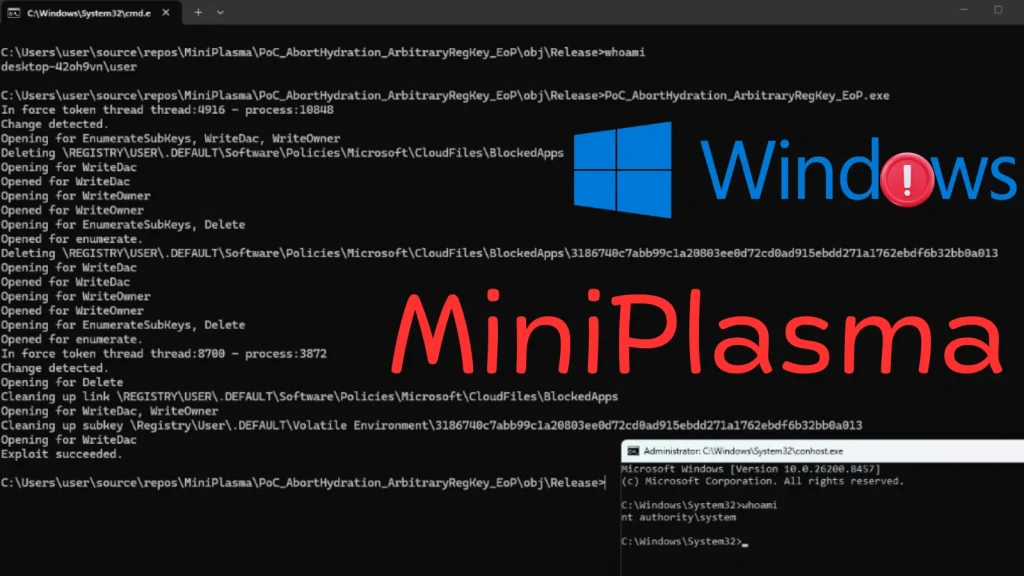
New Windows ‘MiniPlasma’ Zero-Day Let Attackers Gain SYSTEM Access – PoC Released
Unpacking the MiniPlasma Zero-Day: A Critical Threat to Windows Security
A new and alarming Windows privilege escalation zero-day vulnerability, dubbed “MiniPlasma,” has emerged, posing a significant threat to even fully patched Windows systems. The public release of a proof-of-concept (PoC) exploit means attackers can now leverage this flaw to gain SYSTEM-level privileges, effectively taking full control of compromised machines. This post will delve into the technical implications of MiniPlasma, its origins, and crucial remediation strategies.
What is the MiniPlasma Zero-Day?
The MiniPlasma vulnerability represents a critical flaw within the Windows operating system that allows an attacker to elevate their privileges from a standard user to SYSTEM. SYSTEM is the highest level of privilege on a Windows machine, granting complete control over the operating system, including the ability to install software, modify critical system settings, and access sensitive data. This type of vulnerability is particularly dangerous because it bypasses existing security safeguards, even on systems with the latest security updates applied.
Weaponized PoC and Its Implications
Security researcher Nightmare-Eclipse released a weaponized exploit for MiniPlasma on GitHub on May 13, 2026. This public disclosure dramatically increases the risk, as it provides malicious actors with the tools necessary to exploit the vulnerability immediately. The researcher’s claim that Microsoft either failed to patch or silently rolled back a fix for this issue is a significant concern, suggesting a potential gap in Microsoft’s vulnerability management process. The presence of a readily available PoC effectively transforms a theoretical risk into an imminent threat for organizations worldwide.
Severity and Impact
A privilege escalation vulnerability achieving SYSTEM-level access is among the most severe types of security flaws. Its impact can be broad and devastating:
- Complete System Compromise: Attackers can execute arbitrary code, install malware, create new user accounts, and modify or delete any data on the compromised system.
- Lateral Movement: With SYSTEM privileges on one machine, attackers can more easily move to other systems within the network, escalating the breach.
- Data Exfiltration: Sensitive organizational data stored on the compromised system or accessible from it can be stolen.
- Persistent Presence: Attackers can establish persistent backdoors, ensuring continued access even after initial detection efforts.
Remediation Actions
Given the unpatched nature and the public PoC, immediate and proactive measures are essential to mitigate the risk posed by MiniPlasma. While an official patch from Microsoft is pending, organizations should:
- Monitor for Indicators of Compromise (IoCs): Regularly review system logs, network traffic, and security alerts for any suspicious activity that might indicate an attempted or successful exploitation of MiniPlasma. Focus on anomalous privilege escalation events or unexpected process creations.
- Implement Principle of Least Privilege: Ensure all users and applications operate with the minimum necessary permissions. This can help limit the damage if an initial compromise occurs via another vector, even if MiniPlasma provides a pathway to escalation.
- Deploy Advanced Endpoint Detection and Response (EDR) Solutions: EDR tools can help detect and respond to exploit attempts that bypass traditional signature-based defenses, potentially identifying behaviors associated with MiniPlasma exploitation.
- Isolate Critical Systems: Where feasible, segment critical and sensitive systems from the rest of the network to reduce the blast radius in case of a successful exploit.
- Stay Informed: Continuously monitor official Microsoft security advisories and reputable cybersecurity news sources for updates and the release of an official patch.
- Consider Virtual Patching/IPS Rules: If available, implement Intrusion Prevention System (IPS) rules or network-based virtual patches that might proactively block known exploit patterns, even before an official fix is released.
Tools for Detection and Mitigation
While direct mitigation for an unpatched zero-day is challenging, these tools can aid in detection and overall system hardening:
| Tool Name | Purpose | Link |
|---|---|---|
| Microsoft Defender for Endpoint | Advanced post-breach detection, automated investigation, and response capabilities. | https://www.microsoft.com/en-us/security/business/microsoft-defender-for-endpoint |
| Sysmon (Sysinternals) | Logs detailed information about process creations, network connections, and file modifications, crucial for IoC detection. | https://learn.microsoft.com/en-us/sysinternals/downloads/sysmon |
| Snort/Suricata | Network intrusion detection/prevention systems (NIDS/NIPS) that can be configured with custom rules to detect exploit attempts. | https://www.snort.org/ / https://suricata.io/ |
| Privilege Escalation Scanners | Tools designed to identify potential privilege escalation paths on a system, though detection of MiniPlasma specifically relies on behavioral analysis until a signature is developed. | (e.g., BloodHound for Active Directory, PowerUp for Windows) |
Conclusion
The emergence of the Windows “MiniPlasma” zero-day with a public PoC is a severe development requiring immediate attention from all organizations running Windows environments. The ability to gain SYSTEM access on patched systems underscores the perpetual challenge of cybersecurity. Organizations must remain vigilant, implement robust defensive strategies, and continuously monitor for official patches and guidance from Microsoft to protect their critical assets.




