
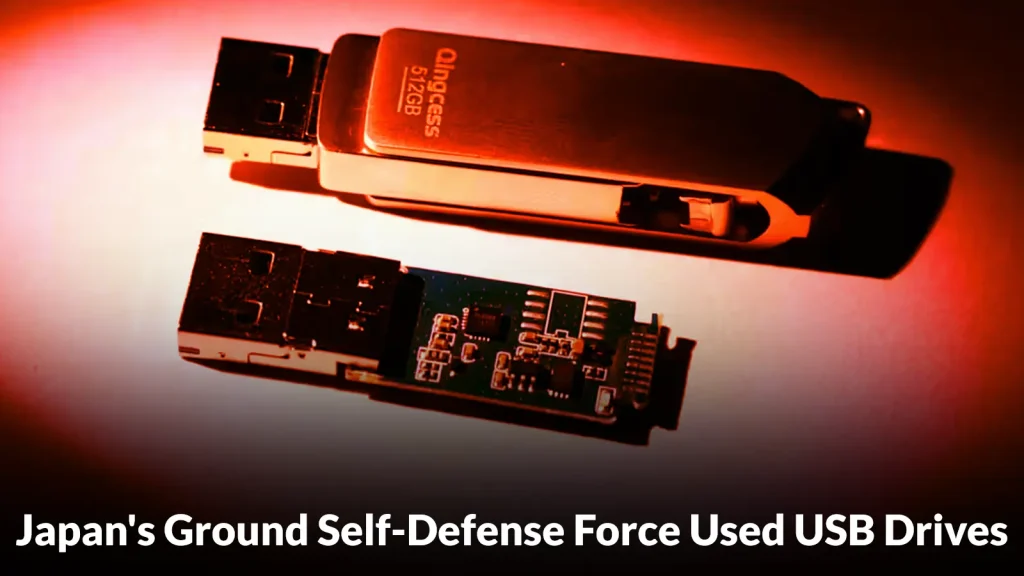
Nikkei Warns of Japan’s Ground Self-Defense Force Used USB Drives Infected with a China-linked Malware
A disturbing revelation has emerged from Japan, exposing a significant cybersecurity lapse within the nation’s Ground Self-Defense Force (JGSDF). For nearly a year, critical networks were compromised by malware-infected USB drives, a breach that went undetected for an alarming duration. This incident not only highlights the persistent threat of supply chain attacks and insider threats but also raises serious questions about the security protocols safeguarding highly sensitive military intelligence. The implication of a China-linked malware further amplifies the geopolitical ramifications of this security failure.
The Undetected Threat: Malware on JGSDF Networks
The core of this incident revolves around the JGSDF unknowingly utilizing USB drives that harbored malicious software. These infected devices were then connected to computers within classified military networks, creating a prolonged exposure window of almost a year before the compromise was identified. Such an extended period of undetected infiltration is deeply concerning, suggesting potential gaps in endpoint detection and response (EDR) mechanisms, regular security audits, and user awareness training.
The nature of the malware, reportedly linked to China, adds a layer of state-sponsored espionage concern. While specific details about the malware’s capabilities are undisclosed in the immediate reporting, the longevity of its presence strongly indicates its design for stealthy data exfiltration or persistent access, rather than immediate destructive actions.
Understanding the Attack Vector: USB Drive Malware
USB drives, despite their utility, remain a perennial cybersecurity risk. They serve as a common vector for malware introduction due to their ease of use and often overlooked security implications when inserted into network-connected devices. The JGSDF incident underscores several key attack principles:
- Physical Access Exploitation: This attack leveraged the physical interaction with IT infrastructure, a critical vulnerability often underestimated in the age of sophisticated network attacks.
- Supply Chain Vulnerability: The origin of the infected USB drives is crucial. Were they government-issued and compromised prior to distribution, or were they personal devices inadvertently introduced? Both scenarios point to significant supply chain or user policy weaknesses.
- Evasion Techniques: For malware to persist undetected for nearly a year on classified networks implies sophisticated evasion techniques, likely bypassing existing antivirus and intrusion detection systems.
The Geopolitical Dimension: China-Linked Malware
The attribution of the malware to China elevates this incident beyond a simple security breach. State-sponsored actors frequently employ advanced persistent threats (APTs) to gather intelligence, disrupt operations, or gain strategic advantages. If confirmed, this incident could signify successful espionage operations against Japanese military assets, potentially compromising sensitive defense information, operational plans, or technological secrets. This context demands urgent and thorough investigation, not just of the technical aspects, but also of potential human factors or internal vulnerabilities that might have been exploited.
Remediation Actions and Best Practices
Addressing an incident of this magnitude necessitates a multi-faceted approach, focusing on immediate containment, thorough investigation, and long-term preventative measures. Here are critical remediation actions:
- Containment and Isolation: Immediately disconnect any known or suspected infected systems from classified networks. Implement network segmentation to limit lateral movement of threats.
- Forensic Analysis: Conduct a comprehensive forensic investigation to determine the extent of the breach, identify compromised data, understand the malware’s capabilities, and pinpoint the initial infection vector. This includes analyzing system logs, network traffic, and memory dumps.
- Malware Eradication: Develop and deploy signatures for the identified malware across all endpoints. Implement a rigorous process for cleaning or, preferably, rebuilding affected systems from trusted images.
- Patch Management: Ensure all operating systems, applications, and firmware are fully patched to eliminate known vulnerabilities that malware might exploit for persistence or privilege escalation (e.g., specific CVEs like CVE-2023-21768 relevant to USB device handling if applicable).
- Enhanced Endpoint Security: Deploy or strengthen EDR solutions with behavioral analysis capabilities to detect anomalous activity indicative of new or polymorphic malware.
- Strict USB Device Policy: Implement a Zero Trust approach for external storage devices. This includes:
- Disabling USB ports on critical systems unless absolutely necessary.
- Implementing whitelisting for approved devices and enforcing strict scanning protocols for any external media.
- Using data diodes or air-gapped systems for data transfer where classified information is involved.
- User Awareness Training: Conduct mandatory, recurring cybersecurity training for all personnel, emphasizing the risks of unauthorized USB devices, phishing, and social engineering.
- Supply Chain Security Audit: Review and strengthen the security posture of the entire supply chain for hardware and software to prevent pre-infected devices from entering secure environments.
- Regular Security Audits and Penetration Testing: Routinely test network defenses and incident response plans to identify weaknesses before they are exploited.
Tools for Detection and Mitigation
Effective defense against USB-borne malware and similar threats requires a robust toolkit. Here are some categories of tools and example solutions:
| Tool Category | Purpose | Example Tools (Illustrative) |
|---|---|---|
| Endpoint Detection & Response (EDR) | Real-time monitoring, threat detection, and incident response at the endpoint level. | CrowdStrike Falcon, Microsoft Defender for Endpoint, SentinelOne |
| Network Intrusion Detection/Prevention (NIDS/NIPS) | Monitors network traffic for suspicious activity and blocks known threats. | Snort, Suricata, Palo Alto Networks NGFW |
| Antivirus / Anti-Malware | Detects and removes known malware signatures. | Sophos Intercept X, ESET Endpoint Security, ClamAV (open source) |
| USB Device Control Software | Enforces policies on USB device usage, whitelisting, and blocking. | Ivanti Device Control, CoSoSys Endpoint Protector |
| Forensic Toolkits | Aids in deep analysis of compromised systems, data recovery, and threat hunting. | Autopsy, Volatility Framework, SANS SIFT Workstation |
Conclusion
The JGSDF incident serves as a stark reminder that even highly secure military organizations are vulnerable to sophisticated and persistent cyber threats, especially those exploiting seemingly mundane attack vectors like USB drives. The alarming duration of the compromise and the potential attribution to state-sponsored actors highlight the critical need for continuous vigilance, robust security protocols, and comprehensive incident response capabilities. Organizations, particularly those handling sensitive data, must reinforce their physical and digital security perimeters, educate their personnel, and invest in advanced detection and prevention technologies to counter the evolving landscape of cyber warfare.




